26 July, 2026 | 10:31 AM


Violence against doctors raises fresh concerns
02-06-2026 12:00:00 AM
hema singuluri | Hyderabad
The recent assault on a resident doctor at the Bidar Institute of Medical Sciences has once again brought the growing issue of violence against healthcare workers into sharp focus. The incident has triggered concern among medical professionals, who say emergency wards are increasingly becoming vulnerable spaces where stress, delays in treatment and rising frustration among patient attendants can quickly escalate into confrontation.
According to officials, a first-year orthopaedic resident doctor was allegedly attacked inside the hospital’s emergency ward following a dispute related to medico-legal registration procedures. Hospital authorities and police said the situation escalated when a group of attendants reportedly entered the casualty ward, shouted at doctors and disrupted ongoing treatment. Resident doctors described the atmosphere as tense and chaotic, saying they struggled to continue providing care amid the disturbance.
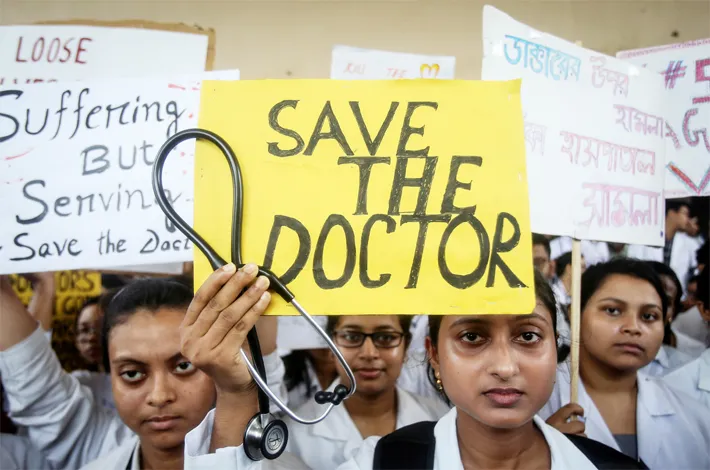
The doctor sustained serious injuries in the assault, prompting protests by resident doctors. Police arrested five accused in connection with the case, while discussions are underway on invoking more serious charges.
The incident has renewed debate over safety measures in government hospitals, particularly in emergency departments that often face overcrowding, staff shortages and heavy patient loads. Healthcare workers have repeatedly highlighted the risks they face while performing their duties under pressure. Reacting to the incident, Dr. Sivaranjani said that violence can never be justified, regardless of the circumstances. She stressed the need to restrict the number of attendants in critical care areas to one per patient and noted that a single security guard is often insufficient to prevent such incidents.
She also suggested introducing emergency alert systems within hospitals and emphasized the importance of public awareness about triaging, a process that prioritizes critically ill patients. Dr. Sivaranjani further pointed to the imbalance in doctor-to-nurse-to-patient ratios in government hospitals, saying systemic reforms are essential to improve both patient care and staff safety.