26 July, 2026 | 7:28 AM


Hybrid Mahanaadu creates record attendance, says Nara Lokesh
29-05-2026 12:00:00 AM
Metro India News | AMARAVATI
Telugu Desam Party working president and Andhra Pradesh minister Nara Lokesh on Thursday claimed that the party’s Mahanaadu, organised for the first time in a hybrid format, created a sensational record with more than 11 lakh party cadre participating across the state.
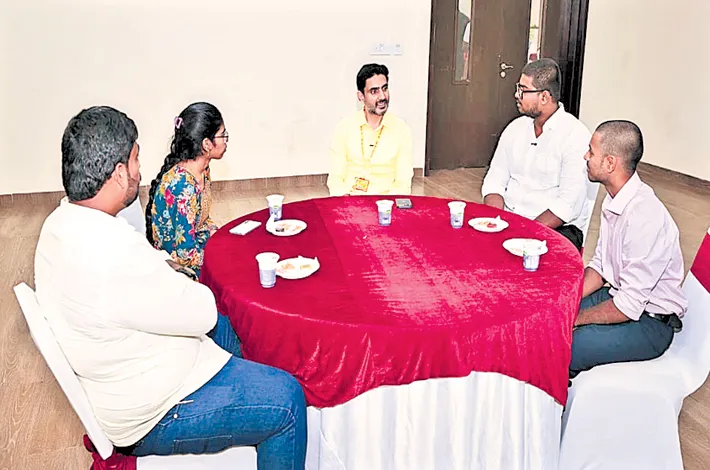
Interacting informally with the media at Mangalagiri during the second day of Mahanaadu, Lokesh said a total of 11.27 lakh cadre members had registered their attendance through the party’s e-attendance system by afternoon. The annual conclave was conducted simultaneously through physical and virtual platforms across various cluster centres in Andhra Pradesh.
Lokesh said the Telugu Desam Party has always believed in continuous reforms and organisational restructuring since the days of party founder N T Rama Rao. He asserted that the reforms being introduced within the party were ideological in nature and not merely election-driven exercises.
Stressing the need to adapt to changing political expectations, Lokesh said the party was preparing women leadership across all Assembly constituencies and reiterated TDP’s commitment to providing 33 per cent reservation for women. “What is wrong in giving 33 per cent reservation to women?” he asked, adding that the party would systematically promote capable women leaders at the grassroots level.
He also said the party was closely studying the aspirations of Gen Z youth and shaping reforms accordingly. “Political reforms are a continuous process. TDP has always been the pioneer in reforms, whether in governance or politics,” he remarked.
On local body elections, Lokesh asserted that the TDP was fully prepared and would conduct itself democratically. Taking a dig at former chief minister Y S Jagan Mohan Reddy, he alleged that nominations were forcibly withdrawn and large-scale irregularities took place during local body elections under the previous YSRCP regime. Lokesh also mocked Jagan Mohan Reddy over recent political remarks and said it was the former chief minister himself who had brought discussions about his family’s political history into public discourse.