18 September, 2026 | 1:16 AM


Corruption’s Grip on Politics
18-09-2026 12:00:00 AM
- Ease of Doing Business
- Gen-Z Offers Hope
CL Rajam
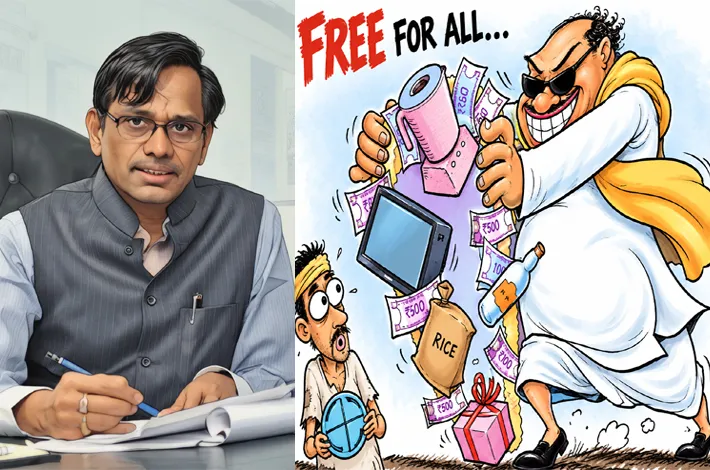
In the complex landscape of Indian politics, ease of doing business has emerged as a telling indicator of how different states manage the undercurrents of corruption. Maharashtra stands noticeably ahead of the Telugu states in this regard. Business leaders in Maharashtra often report a degree of predictability that their counterparts in Andhra Pradesh and Telangana struggle to find. The difference, observers say, lies less in the absence of graft and more in the structured manner in which it operates. Political power in the country frequently translates into sudden wealth for leaders, their relatives and close associates.
Land deals, government contracts and supply orders become the primary avenues through which fortunes are built. Contesting an election itself has become an expensive proposition. An MLA seat commonly demands investments ranging from 30 to 40 crore rupees, while a parliamentary contest can cost between 50 and 100 crore. Few candidates arrive with clean sources of funding sufficient to meet these figures. The money, critics argue, is recovered later through the very mechanisms of governance they control once elected.
Recent events have brought these patterns into sharper public view. The 22-A episode involving the Chief Minister and earlier land transactions linked to opposition figures have highlighted the scale at which such deals occur. When one side raises questions about the other’s property acquisitions, the response is often a reciprocal threat to dig into older transactions. The same dynamic appears in contract awards and supplier relationships. An allegation from the opposition is met with matching disclosures from the ruling side. The result is a cycle of mutual restraint rather than genuine accountability.
This mutual understanding is not unique to the Telugu states. Historical accounts from Tamil Nadu during MGR’s tenure as Chief Minister suggest that individuals seeking favours were sometimes directed first to meet opposition leader M. Karunanidhi. In Maharashtra, it is widely believed that informal percentages for kickbacks have long been fixed for both ruling and opposition parties.
When governments change, the shares may shift, but the overall system remains intact. Businessmen, contractors and other beneficiaries therefore experience continuity. Corruption is not eliminated; it is simply redistributed. The stability this creates is one reason Maharashtra ranks higher on ease of doing business metrics compared with the Telugu states, where political transitions can still disrupt established channels more abruptly.
Public reaction to these patterns is largely resigned. Most citizens believe the majority of political leaders are corrupt. Accusations traded between parties are seen as distractions from pressing public issues rather than serious attempts at reform. Few expect meaningful outcomes from inquiries. There will be no sustained series of revelations, many say. Instead, a quiet understanding prevails: do not target my deals and I will leave yours alone. In the meantime, the state and its people bear the cost. Elections arrive with fresh rounds of promises that few expect to be fulfilled.
Those who can mislead the electorate most effectively and extract the largest rents continue to dominate. Life moves forward while politicians quietly gather information on one another, keeping dossiers ready for the next confrontation.The costs of this system are visible in stalled projects, inflated contracts and eroded public trust. Government decisions on tenders, land allotments and major purchases often lack transparency.
Officials and elected representatives accumulate assets at rates that far exceed declared incomes, frequently through family members or associates. When power changes hands, investigations into previous regimes rarely lead to lasting consequences. The new government focuses on its own opportunities, and the opposition settles into a similar posture of restrained criticism. Against this backdrop, a growing view holds that only the Gen-Z generation can meaningfully address the problem. Younger citizens, less entangled in the old networks of patronage and more accustomed to digital transparency, appear better positioned to demand systemic change. Their relative distance from traditional political machines and their comfort with public data could shift the balance.
Whether this hope materialises depends on whether institutional reforms accompany generational change. Several concrete measures are frequently proposed. All government decisions involving purchases, tenders, land deals and official orders should be placed in the public domain in real time and in easily accessible formats. Greater transparency would make it harder to conceal preferential treatment or inflated costs. A more radical suggestion calls for a new law requiring that at least half of any assets acquired by political leaders or their close family members during their time in office be returned to the public or the government.
Such a provision, advocates argue, would discourage those seeking office primarily for personal enrichment and encourage more honest candidates to contest. These ideas remain largely aspirational. Existing laws on asset disclosure and anti-corruption have proven insufficient against the scale of the problem. Enforcement agencies themselves operate under political pressure, and the judicial process is slow. Without stronger institutional safeguards, even well-intentioned transparency rules risk becoming formalities.
The contrast between Maharashtra and the Telugu states underscores that the manner in which corruption is organised can matter as much as its mere existence. Where informal understandings create predictability for business, economic activity can continue with fewer disruptions. Where political competition remains more freewheeling, the costs of uncertainty rise. In neither case is the public interest the primary beneficiary.For ordinary citizens, the cycle feels endless. Leaders trade charges, media coverage flares briefly, and attention eventually drifts.
Behind the scenes, information continues to be collected and held in reserve. The next election brings another round of competing claims about integrity and development. Those who master the art of public messaging while maximising private gains tend to prevail.Breaking this pattern requires more than occasional scandals or opposition attacks. It demands structural changes that raise the cost of corruption and lower the rewards. Making every significant government transaction visible, imposing meaningful consequences on unexplained wealth, and creating space for a new generation of participants may gradually alter the incentives.
Until then, the gap in ease of doing business between Maharashtra and the Telugu states will continue to reflect deeper differences in how political power and commercial opportunity intersect.The challenge is not merely to expose individual cases but to redesign the environment in which those cases arise. Gen-Z voters and leaders, if they choose to prioritise institutional integrity over short-term political advantage, may prove better equipped for that task than those who have long operated within the existing system. The alternative is continued acceptance of corruption as an unavoidable feature of public life, with the costs borne by the broader population while political actors maintain their mutual arrangements.