30 April, 2026 | 11:49 AM


Boys in private, girls in Govt schools
06-03-2026 12:00:00 AM
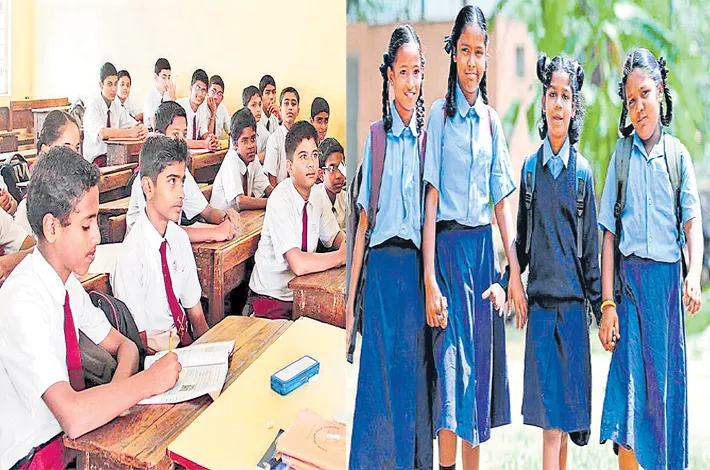
The gender divide is evident in the latest Telangana Education Commission’s report on the state’s school education system. The data indicates that parents opt for private schools for boys and Government schools for the girl child. Various factors are believed to influence such decisions. Financial difficulties, family background, economic pressures and household circumstances are among the reasons cited. In many families that have both a son and a daughter, parents may not have the financial capacity to send both children to private schools.
Across Telangana, there are a total of 41,714 schools including both government and private institutions. Of these, 13,244 are private schools. Government schools in the state currently have a total of 26,81,580 students enrolled. Among them, boys constitute 48 per cent, accounting for 12,87,158 students, while girls make up 52 per cent with 13,94,422 students studying in government schools.
On the other hand, private schools in the state have a total enrollment of 47,51,692 students. Of these, boys account for 54 per cent, which translates to 26,73,914 students, while girls constitute 46 per cent with 22,77,778 students studying in private institutions. These figures highlight a noticeable difference in enrollment patterns between boys and girls in government and private schools.
The report also points to gaps in digital infrastructure in schools. As many as 37 per cent of schools in Telangana do not have internet connectivity. According to the Union Education Ministry’s UDISE Plus 2024 data, only 63.3 per cent of government and private schools in the state currently have internet facilities. With this level of connectivity, Telangana ranks 23rd in the country in terms of internet access in schools.
Several smaller states and many northeastern states are ahead of Telangana in this regard. Delhi, Chhattisgarh and Lakshadweep have achieved 100 per cent internet connectivity in schools. Even Bihar has internet access in 84.8 per cent of its schools, while neighbouring Andhra Pradesh has internet connectivity in about 99 per cent of its schools.
The report also highlights concerns about enrollment and learning outcomes in government schools. Enrollment in Class 1 in government schools stands at only 26 per cent. Another worrying indicator is that only 6.3 per cent of Class 3 students are able to read a Class 2 level text, indicating that many students are struggling with basic reading ability.
There are also 1,920 schools in the state that have zero enrollment, placing Telangana in the second position in the country in this category. Teacher shortages remain a serious challenge as well. Around 36 per cent of government primary schools have only one teacher, while 82 per cent of government primary schools are following multi-grade teaching, where a single teacher handles multiple classes.
In terms of the quality of school education, Telangana ranks 26th in the country. The report also notes that the number of children between 3–18 age group in the state is estimated at around 80 lakh, highlighting the scale of the responsibility in ensuring access to quality early education for all children.