30 June, 2026 | 11:18 AM


Congress determined to complete Pranahita Chevella Project: Uttam
30-04-2026 12:00:00 AM
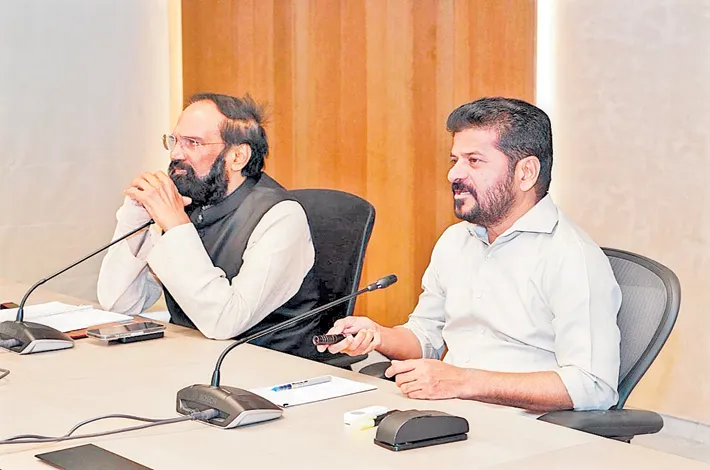
Four alignment options under review to link Tummidihatti and Yellampalli
metro india news I hyderabad
Minister for Irrigation and Civil Supplies N. Uttam Kumar Reddy announced that the State government is examining four alternative alignment proposals to draw water from Tummidihatti to Yellampalli. The initiative is part of broader efforts to optimise utilisation of waters from the Godavari River and strengthen irrigation infrastructure.
The Minister disclosed this during a preparatory review meeting held ahead of Chief Minister A. Revanth Reddy’s comprehensive assessment of ongoing irrigation projects. He stated that expert agencies, including IIT Hyderabad and RV Associates, were tasked with studying the feasibility of various alignment options. Their joint report has been submitted and is currently under detailed scrutiny, focusing on technical feasibility, cost implications, and overall efficiency.
Reaffirming the government’s commitment, Uttam Kumar Reddy emphasized that the Congress administration is determined to complete the long-pending Pranahita Chevella Project in line with its electoral promises. He noted that detailed proposals have already been prepared and that all efforts are being directed toward ensuring water diversion from Tummidihatti to Yellampalli, which would help provide irrigation to lakhs of acres across the State.
“Each proposal is being carefully evaluated in terms of its advantages, limitations, and financial viability. A final decision will be taken after detailed discussions with the Chief Minister,” the Minister stated.
In addition to planning new linkages, Uttam Kumar Reddy issued firm directives regarding the restoration of key barrages, including Medigadda Barrage, Sundilla Barrage, and Annaram Barrage. He instructed officials to complete all necessary structural and geotechnical tests before the onset of the monsoon.
The Minister mandated that Standard Penetration Tests be conducted at intervals of 1.5 metres, while permeability tests should be carried out every 3 metres to ensure structural safety. He further directed that boreholes must be drilled to a minimum depth of 5 metres even after encountering rock strata.
To expedite restoration works, the coordination committee has been asked to immediately visit project sites and establish clear timelines. He also stressed the need for the Director of CWPRS to be available at field level to oversee technical aspects.