30 April, 2026 | 1:01 PM


Where is ‘her’ place in politics?
05-03-2026 12:00:00 AM
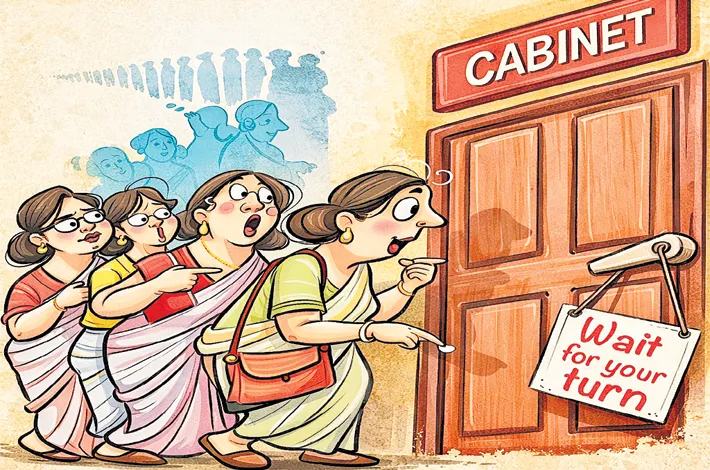
Women in Telangana Politics have power in name, not in practice
Political parties wax eloquent about women empowerment, but when it comes to real power and decision-making, women leaders continue to remain on the margins. From ruling parties to the opposition, the pattern appears strikingly similar — women’s wings exist, women presidents are appointed, but meaningful authority often remains out of reach.
In Telangana, the picture reflects this broader reality. The BJP’s Telangana Mahila Morcha is headed by Mekala Shilpa Reddy. The Congress party’s state Mahila Congress is led by Sunitha Rao. In the BRS, Gundu Sudha Rani previously served as women’s wing president, while currently there is no appointed president. Despite these positions, questions persist about how much political weight these leaders actually carry within their respective parties.
Women leaders actively participate in agitations, mobilizations and party-building activities. They contribute significantly during elections, campaigning and grassroots outreach. Yet when it comes to allocation of key posts, ministerial berths or electoral tickets for Assembly and Parliament seats, their presence diminishes sharply. Many women leaders argue that their roles remain largely symbolic, confined to titles rather than influence.
Across parties, women empowerment is prominently featured in speeches, manifestos and campaign promises. Leaders pledge adequate representation and equitable participation. However, during distribution of posts and tickets, women’s representation often becomes secondary. Even though the 33 percent Women’s Reservation Bill has been passed by Parliament nationally, critics argue that practical implementation in party structures and ticket allocation remains slow and limited.
In state and district committees of major parties, key decision-making posts are still predominantly occupied by men. Women’s wings have structured hierarchies — state presidents, district presidents and mandal-level committees — which appear strong on paper. But in core committees, politburos and ticket-selection panels, the percentage of women remains noticeably low.
Political observers note that whether it is the BJP at the national level, Congress as the principal opposition, or BRS as a key regional force, the emphasis on women empowerment often does not translate into proportional authority within party frameworks. The Narendra Modi government frequently highlights “Nari Shakti” at national platforms, while Congress leader Rahul Gandhi has repeatedly spoken about women’s rights in public meetings. However, analysts say that when it comes to ticket allocation and structural representation, substantial change is yet to be visible.
In Telangana’s political landscape, the situation appears similar across ruling and opposition parties. Women’s wings are active in organizing protests, dharnas and awareness campaigns. During elections, women leaders are pushed to the forefront to attract female voters, conduct special meetings and spearhead outreach programs. Yet, when it comes to final decision-making authority, their role is often limited.
At the grassroots level, many women leaders have risen step by step — serving as ward members, sarpanches, MPTCs and ZPTCs. They have participated in movements, strengthened party presence locally and built public recognition. Despite this, they frequently find their names missing from final lists for MLA and MP tickets. Internal lobbying, financial constraints and the influence of family-based politics are cited as major barriers to their advancement.
Critics also point out that in government, key ministries and strategic portfolios are largely entrusted to men. Women are often confined to departments such as Women and Child Welfare or Social Welfare. While special schemes and financial assistance programs for women voters are announced during elections, the number of women in decisive positions remains limited — sending contradictory signals about genuine empowerment.
Experts argue that legal provisions alone are insufficient. For meaningful representation, parties must undertake internal reforms. Suggestions include fixing a minimum percentage of tickets for women candidates, ensuring their inclusion in core committees, providing financial and political training, and curbing the dominance of dynastic politics. Without structural reforms, they warn, women’s wings risk remaining confined to symbolic roles.
In the BJP, despite an active Mahila Morcha, representation of women in state core and election strategy committees is reportedly low. Though women candidates are fielded, their overall share in tickets remains limited. Similarly, in Congress, while the Mahila Congress remains active, women leaders are said to have restricted influence in final decisions, with “winnability” calculations often favoring established male candidates. In BRS, women played a significant role during the movement phase, but observers claim their share in key decision-making posts declined during the party’s tenure in power. While nominated posts and corporation chairperson roles were given, decisive ministerial portfolios were comparatively few.
Across all major parties in Telangana, strong rhetoric on women empowerment continues. However, structural parity in political power remains elusive. Women leaders continue to climb step by step, yet top positions often seem distant. The larger question now confronting political parties is clear: Will women empowerment remain a slogan for campaign platforms, or will it evolve into genuine power-sharing within party structures?