30 July, 2026 | 1:17 AM


‘Balanced cooking oil use can better shield India from global price shocks’
12-05-2026 12:00:00 AM
Commodity Desk MUMBAI
India’s edible oil industry has welcomed the national push towards reducing excessive cooking oil consumption, calling it an important step in strengthening the country’s long-term food and economic security.
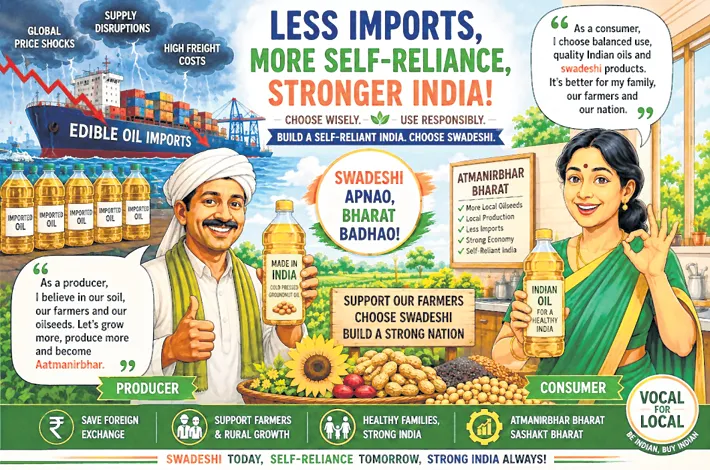
The Solvent Extractors’ Association of India (SEA) said the country’s growing dependence on imported edible oils leaves the domestic market exposed to international supply disruptions, freight volatility and sudden spikes in global prices.
The industry body believes that responsible consumption, along with higher domestic oilseed production, can help India gradually reduce this vulnerability. SEA Executive Director BV Mehta said the issue goes far beyond household consumption patterns and has now become a strategic economic concern for the country.
According to him, rising climate uncertainties, geopolitical tensions and tighter biodiesel mandates across major economies are increasing pressure on global vegetable oil supplies.
India currently imports nearly 60% of its edible oil requirement, making it one of the world’s largest buyers in the global vegetable oil market.
During the 2024-25 marketing year ended October, the country imported about 16 million tonnes of edible oils worth nearly ₹1.61 lakh crore. The association pointed out that recent tensions in West Asia have already influenced shipping costs, fuel prices, currency movements and broader commodity sentiment across international markets. These developments directly impact import-dependent countries like India, where edible oil prices remain sensitive to overseas supply conditions. Any major output decline in these countries may translate into higher import bills and food inflation for India. Mehta observed that excessive reliance on overseas edible oil supplies places considerable pressure on the national exchequer whenever international prices rise sharply.
The industry body further stressed that promoting balanced consumption habits, encouraging natural farming practices and boosting local agricultural output could collectively support India’s broader self-reliance goals while reducing pressure on foreign exchange reserves.