27 October, 2026 | 1:17 AM


When Indira honoured a mayor
27-10-2026 12:00:00 AM
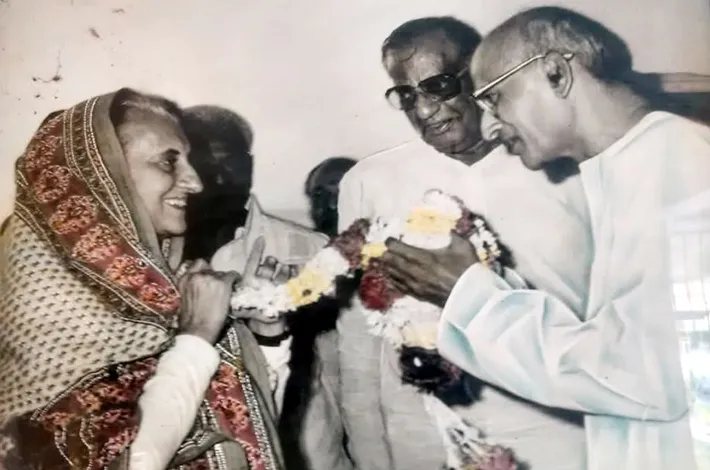
kiranmai tutika I amaravati : An account of former Prime Minister Indira Gandhi’s reported interaction with Vijayawada’s first mayor, Communist leader T. Venkateswara Rao, during her visit to the city in October 1982 has resurfaced amid a debate over the dignity of the mayor’s office and the importance of independent civic leadership.
Going back, Indira Gandhi arrived at Gannavaram airport on October 30, 1982, where the then Chief Minister, ministers and senior Congress leaders had gathered to receive her. However, the narrative claims that the Prime Minister asked for the mayor before proceeding with the formal reception.
Venkateswara Rao, who was reportedly waiting in a designated room in accordance with the arrangements, was then approached by Indira Gandhi. She is said to have addressed him respectfully, asking permission to enter his city. The mayor, in turn, welcomed her to Vijayawada.
Although independent documentary confirmation of the precise exchange is needed, the story has acquired symbolic significance as an illustration of the respect that elected civic representatives command in a democratic system. Its central message is that the dignity of an institution should not be measured solely by the constitutional rank or political influence of the person occupying it.
The mayor’s office represents the municipal government and its responsibility towards residents, urban infrastructure and public services. Historically, mayors in several Indian cities have played important roles in shaping civic priorities, from sanitation and roads to urban greenery and public amenities.
The account also recalls former Vijayawada mayor Jandhyala Shankar and initiatives reportedly undertaken during his tenure to plant seeds on hill slopes using helicopters. Such efforts were initially met with scepticism, according to the narrative, but are now cited by supporters as examples of long-term thinking about the city’s environment.
The broader argument is that urban development requires decisions whose benefits may become visible only years later.
The current debate, however, reflects concerns that municipal leadership has increasingly become entangled with party calculations, political patronage and competing interests. Critics argue that the mayor’s position should be treated as a responsibility towards citizens rather than merely as an extension of party power.
The forthcoming Vijayawada mayoral election has also drawn attention to independent candidate A. B. Venkateswara Rao, a former senior police officer whose candidature has become a focal point of the political discussion.
Supporters of the former officer are presenting the contest as an opportunity to examine whether voters will prioritise a candidate’s administrative experience, educational background and individual record over party loyalties and established political networks. The campaign rhetoric has also raised questions about the influence of caste affiliations, family-based politics and money in local electoral contests.
These arguments remain political claims rather than established conclusions about how Vijayawada’s electorate will vote. The outcome will depend on the applicable electoral process, the candidates’ support bases and the choices made by those entitled to participate in the election.
The controversy has also extended to social media, where allegations and counter-allegations concerning political personalities, including A. B. Venkateswara Rao, have contributed to a charged atmosphere. The mayoral contest has consequently become a wider debate about the relationship between civic responsibility and political identity.