27 October, 2026 | 1:19 AM


Joint Committee to review barrage height
27-10-2026 12:00:00 AM
Tummidihatti Barrage Review
Positive response
■ The Maharashtra Chief Minister acknowledged the developmental needs of the region and expressed his willingness to revisit Telangana's request
■ Maharashtra Chief Minister proposed the constitution of a joint committee of officials headed by the Principal Secretaries of the Irrigation Departments of both states
■ Maharashtra Chief Minister stated that if the project did not adversely affect Maharashtra or its people, his government would have no hesitation in supporting Telangana
■ The Maharashtra Chief Minister stated that the Central Water Commission (CWC) would continue its technical examinations
■ Government of Telangana was willing to compensate farmers in Maharashtra
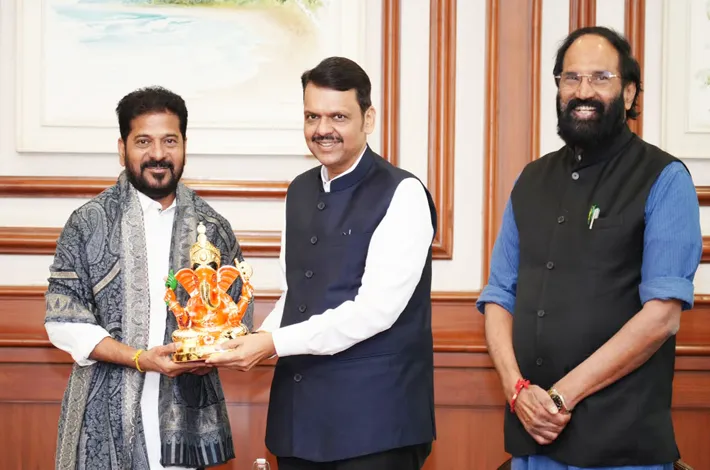
metro india news I hyderabad : In what can be termed as a positive development to the long-standing inter-state water debate, the Maharashtra Chief Minister Devendra Fadnavis expressed a positive approach towards reconsidering the proposed enhancement of the Tummidihatti Barrage height.
A high-level Telangana delegation led by Chief Minister A. Revanth Reddy met Maharashtra Chief Minister Devendra Fadnavis at the Sahyadri State Guest House in Mumbai on Monday. The two states agreed to constitute a joint committee of senior officials to re-examine the technical, environmental, and submergence aspects of increasing the proposed Tummidihatti Barrage height across the Pranahita River from 148 metres to 152 metres.
CM Revanth Reddy urged Maharashtra to extend its cooperation in a spirit of friendship, brotherhood and mutual understanding, keeping in view the larger objective of developing backward regions and improving the lives of tribal communities.
The delegation included Telangana Irrigation Minister N. Uttam Kumar Reddy, the Chief Secretaries of both states, and senior officials from the respective Irrigation departments. The committee would examine the proposed barrage height, water availability, submergence implications, affected agricultural lands, compensation requirements and other technical matters.
It would also examine the assessments and concerns of both states regarding the extent of submergence and the possible impact on land and local communities, including alternative approaches where necessary.
The Chief Minister suggested that officials and technical experts from both states work together to prepare a clear timeline and roadmap for further discussions and necessary action.
The subsequent meetings, technical consultations and the way forward would be worked out by the officials and experts of the two states.
Both Chief Ministers reiterated their shared commitment to the development of all regions of India, particularly the upliftment of economically backward areas and historically disadvantaged communities, especially tribal and Adivasi populations.
Telangana Irrigation Minister Uttam Kumar Reddy explained why the 2016 agreement, which provided for a barrage height of 148 metres, would not adequately address the irrigation requirements of the region.
The Minister emphasised that the present challenges relating to energy requirements, power costs, environmental concerns, climate change and long-term operational sustainability made it necessary to explore solutions that maximise the use of gravity for water conveyance.
He presented the technical and operational advantages of constructing the Tummidihatti Barrage at a height of 152 metres, describing it as the most viable solution for meeting the region's water requirements.
The Minister further conveyed that the Government of Telangana was willing to compensate farmers in Maharashtra for agricultural land
affected by submergence, in accordance with the land acquisition guidelines and compensation policies applicable in Maharashtra.
The Minister recalled that efforts to provide irrigation facilities to the region had been continuing since October 6, 1975. Despite several initiatives, proposals and discussions over the past five decades, the long-standing aspirations of the people had remained largely unfulfilled.
Referring to the historic Jal, Jangal, Zameen struggle led by tribal leader Komaram Bheem, the Chief Minister A. Revanth Reddy explained the decades-long aspirations of the people for access to irrigation and drinking water.
He emphasised that the construction of the Tummidihatti Barrage was important not merely as an irrigation project but also as an instrument for the social and economic transformation of one of the country's historically neglected tribal regions. The Chief Minister also highlighted the strategic national importance of the Adilabad region. He pointed out that the proposed defence and civilian airport facilities at Adilabad could become a major catalyst for the development of not only the erstwhile Adilabad district but also the adjoining regions of Maharashtra.