27 October, 2026 | 1:18 AM


Rainfall deficit, rising prices burden households
27-10-2026 12:00:00 AM
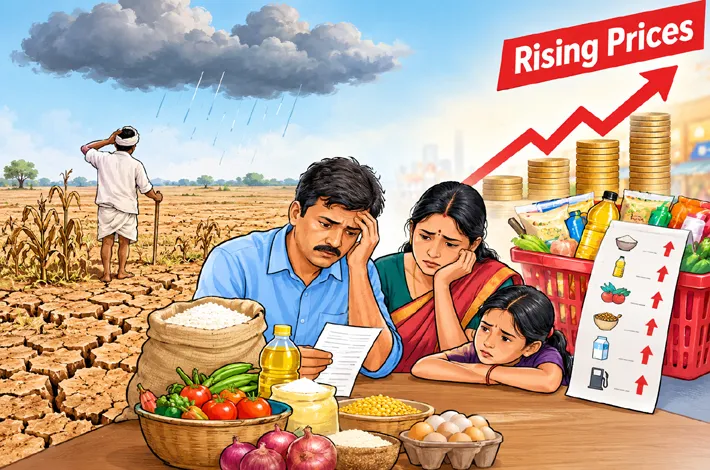
Metro India News | Hyderabad : Concerns over deficient rainfall and rising prices of essential commodities are adding to the financial burden on ordinary households. The impact of El Niño has contributed to below-normal rainfall, raising concerns about agricultural production and further price increases. If rainfall declines further, crop yields could suffer, putting additional pressure on food supplies and prices. With rice, pulses, sugar and vegetables becoming more expensive, consumers fear a further rise in kitchen expenses.
Rice, a staple food for most households in Telangana, has emerged as a major concern. Reports published in October 2026 indicate that certain varieties of fine rice are selling at Rs. 70 to Rs. 80 per kilogram. The price of a 25-kg bag, previously around Rs. 1,800, has reportedly risen to Rs. 2,150 for some varieties, adding approximately Rs. 350 to household expenses.
Rice cultivation depends heavily on water availability. Delayed rainfall, declining water reserves and rising cultivation costs could reduce the area under cultivation or overall yields. A decline in paddy supplies could push prices higher, while reduced cultivation of fine varieties could affect government procurement and pose challenges to the public distribution system.
Cooking oils, including sunflower, palm, soybean and groundnut oil, are also essential household items. However, their prices depend on global markets and import trends as well as weather conditions. Tomatoes, which previously sold for around Rs. 20 per kilogram, have reportedly reached Rs. 50, with some supermarkets charging Rs. 60. Onion prices have climbed from around Rs. 30 to Rs. 65 per kilogram in certain markets.
Milk and eggs are other essential items. High temperatures can affect livestock health and milk production, while drought conditions can reduce fodder availability and increase dairy farmers' costs.
Rising prices affect not only households but also hotels, eateries, catering businesses, schools and hostels that prepare meals in large quantities. Balancing remunerative prices for farmers with affordable food for consumers remains a major challenge for the government.
Advance planning crucial
Authorities must closely monitor agricultural production, market arrivals and commodity prices as the rainfall outlook becomes clearer. The Agriculture, Marketing and Civil Supplies departments should coordinate efforts to assess stocks, wholesale and retail price differences, and areas experiencing unusual price increases.
Timely weather forecasts, crop advisories and guidance on alternative cultivation methods could help farmers minimise losses. Measures to protect crops and maintain uninterrupted supplies would benefit both producers and consumers.
The coming months will be crucial in determining price trends. Rainfall patterns, agricultural output, market supplies and timely government intervention will play decisive roles. Proactive planning is essential to protect farmers' livelihoods, maintain adequate supplies and ensure access to essential food items at affordable prices.