13 July, 2026 | 9:06 PM


Telangana’s reservoirs run dry
07-04-2026 12:00:00 AM
Metro India News | Hyderabad
As summer intensifies, water levels in major, medium, and small reservoirs across the Telangana state are dropping rapidly, pushing many towards dead storage. This decline is affecting irrigation, drinking water supply, and hydropower generation. Critical reservoirs are experiencing significant depletion, putting pressure on delta systems and threatening agricultural activities. Interstate water disputes are also intensifying, with Andhra Pradesh expressing concerns over water usage. Experts warn that a delayed or weak monsoon could worsen the situation, putting drinking water security at risk. They emphasize the urgent need for strict water management, real-time monitoring, and emergency measures to prevent a severe crisis.
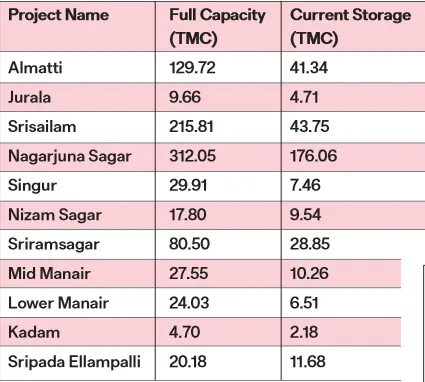
Major reservoirs are showing alarming drops in water levels. Srisailam, with a capacity of 215.81 TMC, currently holds only 43.75 TMC. Nagarjuna Sagar has 176.06 TMC left out of 312.05 TMC, while Sriramsagar in northern Telangana holds just 28.85 TMC of its 80.50 TMC capacity. Nizamsagar and Singur reservoirs also show critically low levels, with only 9.54 TMC and 7.46 TMC remaining, respectively. Smaller projects like Jurala have dropped below half of their capacity, with 4.71 TMC available from 9.66 TMC. Heavy irrigation releases, especially through the Godavari delta, which has used 4,881.11 TMC so far, and the Krishna delta, are accelerating this depletion. With the Rabi crop season in its final stage, water demand in delta regions remains high, making reservoir management increasingly challenging.
The declining water levels are raising concerns over drinking water security. Urban centers rely on reservoirs like Singur and Nizamsagar for supply, and reduced storage could disrupt distribution. Officials are prioritizing drinking water over irrigation, but shortages could lead to higher pumping costs, reduced water quality, and limited purification options. Hydropower generation is also affected, particularly at Srisailam, where turbine output depends entirely on water availability. As water levels drop, power production may decrease or even be suspended, increasing pressure on the energy sector.
The upcoming monsoon is crucial. Experts warn that a delayed or weak monsoon could push reservoirs to their minimum levels, complicating irrigation and drinking water management. Authorities are implementing strict monitoring, prioritizing water use, and adjusting releases according to actual requirements. Smaller projects are being closely watched, and alternative sources are being considered to conserve water until the monsoon arrives.
Experts also stress the need to curb interstate water overuse. Allegations of excess consumption by Andhra Pradesh are recurring, and failure to follow water-sharing agreements could worsen reservoir depletion. Real-time monitoring, strict enforcement of agreements, and stronger oversight by the central water board are recommended. Given the water shortage, decisive measures are required to safeguard the state’s resources and ensure water security for all sectors.