26 July, 2026 | 2:06 PM


RTC faces questions over private EV fleet
06-06-2026 12:00:00 AM
metro india news I hyderabad
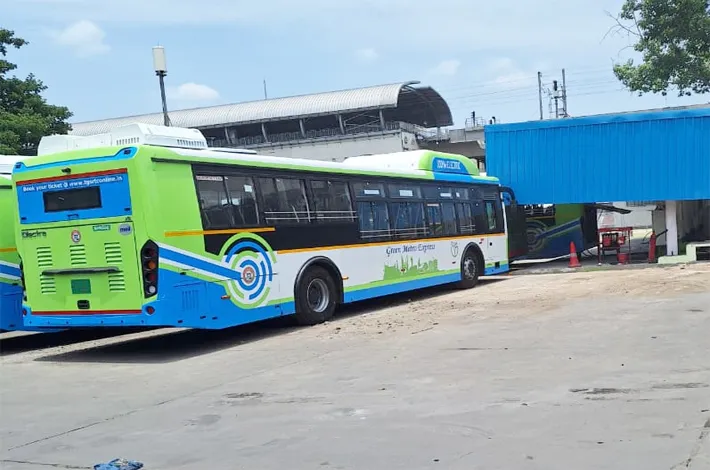
Allegations are being raised that while the Telangana government projects the induction of electric buses as a major step towards strengthening the State Road Transport Corporation (RTC), the vehicles being introduced are actually owned by private corporate companies and are being operated on a rental model.
The issue has triggered discontent among RTC employees, who claim that privately owned buses are being presented as RTC assets and that RTC infrastructure is increasingly being used for private operations.
Speaking at the launch of 60 electric buses at the Kukatpally RTC depot on May 27, Transport Minister Ponnam Prabhakar said the government was committed to the welfare of RTC employees and the strengthening of public transport. He noted that nearly 35 lakh passengers use RTC services in Hyderabad every day and said the corporation would become one of the best transport systems in the country through new recruitments and the induction of modern buses.
The minister stated that 545 electric buses are already operating in Hyderabad and that another 2,200 buses would be introduced in the state under a Central government scheme. He said the move would help reduce pollution, traffic congestion and dependence on petrol and diesel while improving connectivity to newly developing residential areas. He also announced that 60 electric buses had been allocated to the Kukatpally depot.
However, RTC employees and transport observers argue that the buses inducted under the EV programme are not owned by RTC. They point out that the buses launched at Kukatpally were supplied by private companies on a kilometre-based hire arrangement. According to them, the vehicles are owned by corporate operators, while the companies themselves employ the drivers, maintenance staff and other personnel required for operations.
Employees say that although the buses are hired vehicles, official programmes are being organised and publicised in a manner that creates the impression that RTC has purchased and deployed them. They contend that the future of public transport may depend on electric mobility, but the key issue is whether RTC will own these buses or increasingly rely on private operators.
Another concern being raised is the use of RTC depot space for the operation and charging of private EV fleets. Employees claim that nearly 600 electric buses inducted across various depots so far belong to private companies and that not a single vehicle is owned by RTC. They question why RTC land and facilities are being allotted to private operators and allege that charging stations for these buses are being established within RTC depots as part of a gradual expansion of private participation in the transport sector.
According to employee representatives, there are fears that private operators could eventually occupy a larger share of depot space, forcing RTC’s own fleet into a secondary role. They allege that the current policy could lead to a gradual shift of public transport infrastructure towards private corporate companies.
The debate has gained further attention following a recent incident in Jagtial district involving a driver of a hired RTC bus. During a protest over increased petrol and diesel prices, the driver reportedly made remarks suggesting that procurement of paddy should be prioritised before protests on fuel prices. The comments sparked controversy, and action was initially taken against him.
Subsequently, Transport Minister Ponnam Prabhakar clarified that the individual was a driver of a hired bus and not an RTC employee, leading to the withdrawal of the action. Employee groups now question how hired-bus personnel can be treated as separate from RTC employees in such cases while rented electric buses are publicly showcased as RTC additions during official launch events.
With more electric buses expected to be introduced in the coming months, the controversy has intensified discussions over ownership, operations and the future direction of Telangana RTC. Employee unions are demanding greater transparency from the government regarding the role of private companies in the EV expansion programme and the long-term implications for RTC infrastructure, workforce and public transport services.