24 August, 2026 | 10:01 AM


Rs 38,536-Crore dues put lift irrigation at risk
29-06-2026 12:00:00 AM
metro india news I hyderabad
Telangana’s lift irrigation schemes, regarded as the backbone of the state’s irrigation network, are facing a serious crisis due to power shortages, mounting electricity bill arrears and delays in government intervention. Although sufficient water is available in rivers, the lack of uninterrupted power supply to operate pumping stations has emerged as a major hurdle, raising concerns over irrigation management ahead of the Kharif season.
The crisis stems from massive unpaid electricity dues owed by the Irrigation Department to Transco. With arrears running into tens of thousands of crores, Transco has reportedly refused to provide round-the-clock power supply unless the pending bills are cleared. As a result, lift irrigation schemes that require 24-hour continuous electricity are currently receiving only about 12 hours of daytime power supply. The dispute between the Irrigation and Power Departments has also delayed the preparation of the seasonal power plan required for Kharif operations.
The situation has become more critical as weather experts have warned of possible El Niño conditions this year, which could result in below-normal rainfall. In such circumstances, dependence on lift irrigation projects is expected to increase significantly. However, uncertainty over power supply has raised fears over whether irrigation water will reach reservoirs, balancing tanks and tail-end ayacut areas on time, leaving farmers worried about the upcoming crop season.
Under normal practice, the Irrigation Department prepares detailed estimates every April on water requirements, pumping schedules and electricity demand for both Kharif and Rabi seasons. These projections are submitted to the government and the State Load Dispatch Centre (SLDC), enabling Transco to plan power generation and supply accordingly. This year, however, the process has reportedly stalled because of financial disputes over unpaid electricity charges and maintenance costs. With neither the payment issue nor the power schedule finalised, uncertainty continues to surround the operation of major lift irrigation schemes.
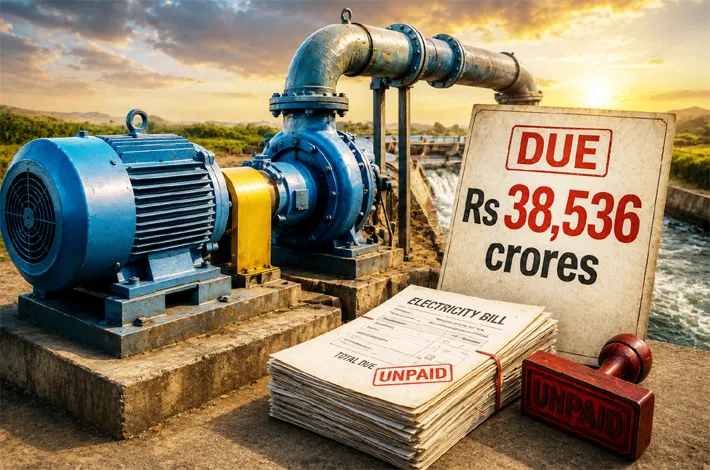
Officials say the outstanding liabilities have become the biggest obstacle to uninterrupted power supply. According to available figures, electricity bill arrears alone have reached around Rs.27,027 crore. In addition, Rs.863.51 crore remains pending for completed lift irrigation works, Rs.3,900.81 crore for pump houses and electrical infrastructure under construction, and Rs.1,745 crore towards operation and maintenance expenses. Together, the Irrigation Department’s total dues to Transco are estimated at Rs.38,536.32 crore.
Because of these pending payments, several lift irrigation projects have been operating on restricted daytime power supply since the previous season. Engineers say this limited supply is insufficient to achieve the required pumping targets, affecting reservoir filling, balancing tanks and water delivery to the last ayacut.
Irrigation engineers have also expressed concern over the "on-off" method of power supply adopted under the restricted schedule. Lift irrigation projects use high-capacity pumps and motors that are designed to operate continuously. Repeated interruptions in power supply cause sudden pressure fluctuations in pressure mains and take-off canals. Restarting the motors creates heavy electrical loads and intense vibrations that can damage impellers, bearings and other critical components.
Officials warn that repairs to such equipment could cost several crores and keep pumping stations out of service for days. At present, around 28 pumping stations are reportedly functioning under the on-off power supply system. Authorities say impellers at the Medaram and Ramadugu pumping stations have already suffered damage due to excessive vibrations.
Engineers further point out that nearly 35 major pumping stations are technically unsuitable for such intermittent operation because they use motors rated above 10 MW, long pressure mains and unlined take-off canals. Frequent shutdowns reduce pumping efficiency, delay water delivery to tail-end areas and prevent reservoirs and balancing tanks from reaching full capacity.
The impact of power shortages is expected to be most severe in areas dependent on major lift irrigation projects such as Kaleshwaram, Kalwakurthy, Nettempadu and Devadula. Irrigation officials fear that if pumping capacity is reduced, farmers may not receive water during critical crop stages, affecting agricultural productivity. They also recalled that several tail-end areas experienced delays in receiving irrigation water during the previous season for the same reason.
The possibility of El Niño has added another layer of concern. If rainfall remains below normal, natural inflows into reservoirs are likely to decline, increasing dependence on lift irrigation schemes to meet both irrigation and drinking water requirements. Experts stress that uninterrupted electricity supply will therefore be essential to ensure efficient pumping operations throughout the season.
Officials believe the government must immediately resolve the pending payment issue with Transco, finalise the power supply plan for the Kharif season and restore 24-hour uninterrupted electricity to lift irrigation pumping stations. They warn that unless timely action is taken, Telangana could face serious irrigation challenges during the current agricultural season, with farmers likely to bear the brunt of delayed water supply.