27 October, 2026 | 5:37 AM


India’s agri revolution fuels jobs, growth
10-06-2026 12:00:00 AM
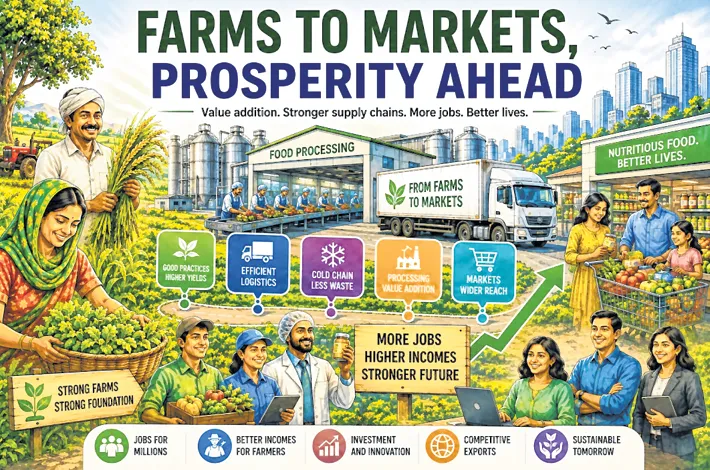
Food processing, storage and logistics investments can create millions of opportunities while boosting farmer incomes and reducing wastage
Commodity Desk MUMBAI
India has the potential to lead the next phase of agricultural transformation by focusing on food processing, storage, logistics and value addition, the World Bank Group said on Tuesday.
The organisation highlighted that moving beyond farm-level production can create jobs, attract investment, boost exports and significantly increase farmers’ incomes.
The remarks were made during the Regional High-Level Policy Dialogue organised by the Ministry of Food Processing Industries in collaboration with the World Bank Group-led SAPLING initiative in Ahmedabad.
According to the World Bank Group, South Asia is at a critical stage in its development journey. The region’s agriculture sector is valued at more than $700 billion annually and provides employment to nearly 43% of the workforce. Despite its scale, however, agriculture contributes only around 16% to the region’s GDP, highlighting the need for greater value creation beyond cultivation.
Experts noted that more than 30% of food produced in South Asia is lost or wasted every year, enough to feed nearly 300 million people. They said reducing these losses through better storage, transportation and processing infrastructure could unlock enormous economic benefits.
India’s agricultural sector has already witnessed remarkable progress over the decades. Foodgrain production has increased from 51 million tonnes in 1950-51 to over 330 million tonnes currently.
At the same time, processed food exports have more than doubled over the past decade, rising from about $4.9 billion to over $10 billion. The food processing sector now contributes nearly 9% of manufacturing value added and around 13% of India’s exports. However, experts believe the sector still remains underdeveloped relative to its potential, with a large share of agricultural output continuing to be sold without value addition. The World Bank Group said the next growth opportunity lies in expanding food processing facilities, cold chains, warehousing, logistics networks, marketing infrastructure and agro-industrial clusters. Such investments can improve efficiency, reduce wastage and create millions of productive jobs across rural and urban areas. To support this transformation, the World Bank Group is promoting initiatives such as AgriConnect and SAPLING. AgriConnect aims to connect 300 million farmers to markets by 2030 through infrastructure investments, policy reforms and private capital mobilisation.
Participants at the dialogue called for stronger collaboration between governments, businesses, investors and development institutions to build integrated agricultural value chains and accelerate India's transition into a global food processing and agri-business powerhouse.
As India seeks to strengthen rural incomes and improve food security, expanding the food processing ecosystem could become a major growth driver. Experts believe investments in cold storage, logistics, digital supply chains and value-added products can help reduce food wastage while creating employment opportunities.