27 September, 2026 | 6:32 PM


Digital India: Aadhar, AI and Future governance
14-03-2026 12:00:00 AM
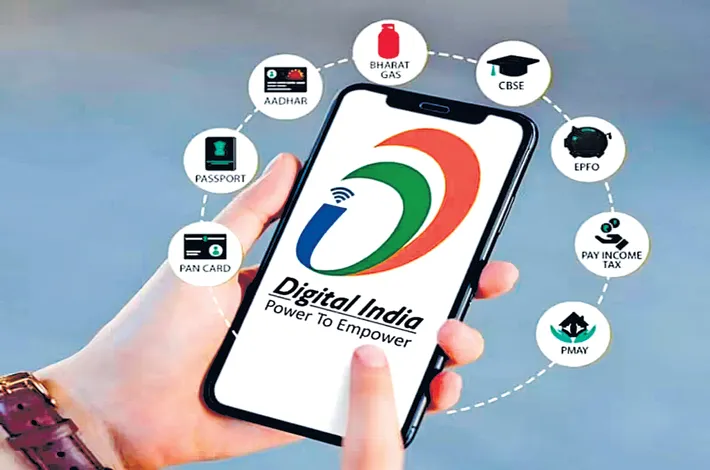
India's digital governance has emerged as a global benchmark, particularly through the transformative India Stack—a suite of digital public infrastructure that includes Aadhaar, UPI, and DigiLocker. At a recent discussion held by an NGO, the conversation explored Aadhaar's milestones, its role in service delivery, privacy safeguards, public-private synergies, AI integration, and lessons for other nations. The discussion opened with awe at Aadhaar's scale: over 1.4 billion 12-digit unique identity numbers issued since its inception in 2008.
A senior functionary of the Aadhaar Services Division at the National Informatics Centre (NIC) described Aadhaar as India's foundational digital identity, linking biometrics (including face authentication), demographics, and address to a single number. This infrastructure has enabled seamless delivery of government services, eliminating inefficiencies of the past. He illustrated this with the pension system: previously, retirees had to physically submit life certificates at banks or pension offices, a burdensome process especially for the elderly in remote areas. Now, using Aadhaar-linked face authentication or biometrics, individuals submit certificates digitally, with verification automatic and pensions transferred directly—no queues, no travel required. This shift from manual to digital processes , he opined exemplifies how Aadhaar intersects with social justice by reaching the last mile.
A professor from the Columbia Business School built on this, emphasizing that digital governance unlocks capabilities previously impossible. Beyond basic service delivery, it drives financial inclusion—enabling loans and credit access for those historically excluded. He extended the conversation to the private sector, where trust remains a barrier for strangers transacting online. Innovations like reputation systems in e-commerce platforms (e.g., enabling peer-to-peer hosting or ridesharing) have bridged this gap. In contrast, government-backed systems like Aadhaar inherently carry built-in trust, providing a foundation that private entities often lack.
The panel delved into public-private partnerships and the evolution of India's digital ecosystem. The NIC functionary highlighted the India Stack as an open API platform requiring only three core elements for service delivery: identity (Aadhaar), payments (UPI), and documents (DigiLocker). Examples abound: Aadhaar authentication powers paperless eKYC for telecom providers like Airtel and Jio; Digi Yatra allows seamless airport navigation without physical documents; scholarship applications pull verified data from DigiLocker, eliminating paperwork. Private players leverage this government infrastructure for efficient, secure operations.
Privacy and security concerns naturally arose in an increasingly digital world. A senior cyber security expert in a reputed IT firm assured that Aadhaar is a highly secure, robust system: biometrics are never stored on devices, residing only in fortified government data centres with stringent safeguards. All interactions use end-to-end encryption over secure networks, supported by Hardware Security Modules (HSMs). Hacking biometric data, he asserted, is virtually impossible within this ecosystem.
The professor shifted focus to the future, arguing that the next frontier in digital governance involves AI agents—autonomous systems acting on behalf of individuals for shopping, transactions, or decisions. As agents interact with one another (rather than people directly), new authentication, security, and risk layers emerge. Governments and platforms must prepare for this shift, he clarified, ensuring secure agent-to-agent transactions without introducing vulnerabilities. A top official of the Ministry of IT and Electronics confirmed active AI adoption in government services. Initiatives like Bhashini—an India-centric AI translation system—address linguistic diversity, enabling rural users unfamiliar with English to interact with apps and portals effectively. This bridges the digital divide. Other AI explorations enhance citizen services across government platforms.
On rapid adoption despite challenges like varying literacy levels, the NIC official credited the complementary ecosystem: a strong digital identity, direct benefit transfers (DBT) to Aadhaar-linked bank accounts (reducing leakage), and Common Service Centres (CSCs) in rural and urban areas. CSCs provide assisted access for those less comfortable with technology, ensuring no one is left behind. Governance, he stressed, must precede pure digitalization—technology serves people, not the reverse.
The professor from Columbia praised India's scaled deployment as impressive and instructive for other countries, including the US, which lacks comparable national systems. He posed broader questions: Could such infrastructure boost democratic participation, such as online voting to reverse declining election turnout (as seen in places like Estonia)? The possibilities extend beyond efficiency to re-engaging citizens. The session concluded on an optimistic note, recognizing India's digital revolution—where wallets are increasingly obsolete, QR codes ubiquitous, and reliance on apps like UPI and DigiLocker commonplace.