6 July, 2026 | 4:01 PM


Vijayasai Reddy critiques AP capital models, calls for Delhi like approach
20-04-2026 12:00:00 AM
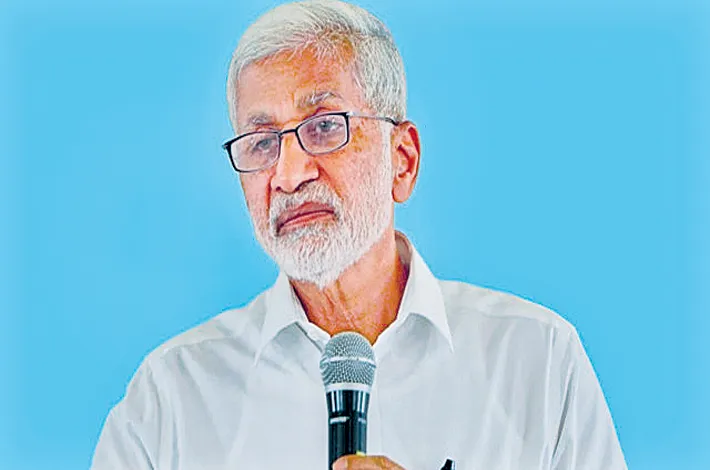
Explaining his perspective, Vijayasai Reddy pointed to the development of New Delhi as a benchmark. He noted that the city was built in 1911 over just 42.7 square kilometres, which is around 10,550 acres, housing key institutions
Metro India News | AMARAVATI
Former MP Vijayasai Reddy has once again weighed in on the contentious Andhra Pradesh capital issue, sharply criticising both the Amaravati model proposed by the TDP and the ‘Mavigan’ (Machilipatnam–Vijayawada–Guntur) concept earlier discussed by the YSRCP. In a detailed post on X , he outlined his vision for a more practical and economically viable capital, suggesting that Delhi should serve as the ideal model.
Explaining his perspective, Vijayasai Reddy pointed to the development of New Delhi as a benchmark. He noted that the city was built in 1911 over just 42.7 square kilometres, which is around 10,550 acres, housing key institutions such as the Rashtrapati Bhavan, Parliament, and Central Secretariat within that compact area. By the time construction was completed in 1931, the cost stood at Rs 10 crore, equivalent to roughly Rs 10,000 crore today.
In contrast, he argued that the Amaravati capital plan, spread across 217 square kilometres with an estimated cost of Rs 1.5 lakh crore, relies heavily on borrowings and may not be financially sustainable. “A capital city does not require massive land banks or excessive debt. What is needed is clarity of purpose and phased development,” he said.
He stressed that priority should be given to establishing core administrative infrastructure, including the Assembly, Secretariat, judiciary, and essential government offices, before expanding into large-scale urban development.
He also launched a strong attack on the Chandrababu Naidu-led government, alleging that promises made to farmers under land pooling were not fulfilled. He claimed that developed plots assured to farmers have not been delivered and that additional compensation mandated under the Land Acquisition Act, 2013, remains unpaid. Furthermore, he criticised the cancellation of 50,000 plots intended for the poor, calling it a grave injustice.
At the same time, Vijayasai Reddy dismissed the ‘Mavigan’ model, arguing that spreading the capital across a 100-kilometre stretch would lead to administrative inefficiencies and create uncertainty among investors.
Concluding his remarks, he emphasised the need for a unified capital built on financial discipline, strategic planning, and administrative efficiency, stating that Andhra Pradesh must adopt a realistic and sustainable approach to its capital development.