6 July, 2026 | 2:57 PM


AP launches ‘Project Punarvika’ to support children with genetic disorders
20-04-2026 12:00:00 AM
Metro India News | AMARAVATI
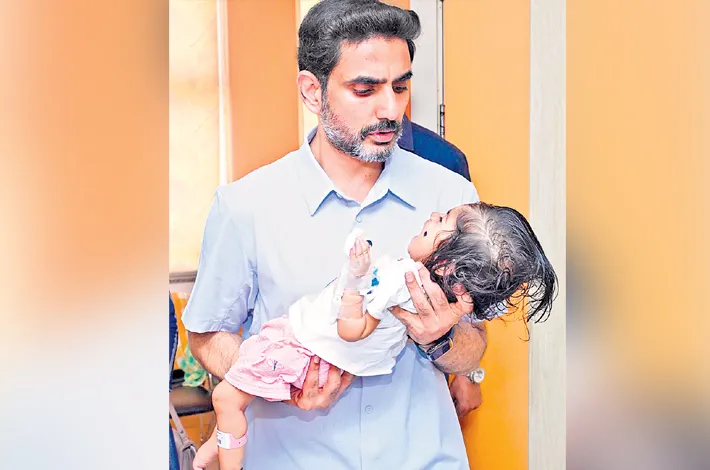
In a compassionate policy initiative, the Andhra Pradesh government has announced a new programme, ‘Project Punarvika’, to support children suffering from rare genetic disorders and ease the burden on their families. The initiative was unveiled by State Education and IT Minister Nara Lokesh, inspired by the recent life-saving treatment of an infant from Kurnool district.
The programme draws its name and purpose from Punarvika, an 11-month-old child who was administered a life-saving gene therapy injection worth ₹16 crore. Lokesh, who was present during the procedure, described the moment as one of the most emotional experiences of his life. “A fragile child silently fighting for life, it made me realise this is not just one case, but the story of thousands of families across the country,” he said.
Moved by the overwhelming public response to the child’s case, where people across India contributed donations, Lokesh said he decided to study the issue in depth. He examined the complexities behind such treatments, including their manufacturing, high costs, import procedures, and limited accessibility in India.
During this process, he interacted with several medical experts, including specialists in rare diseases, to understand the scale of the challenge. He noted that treatments for such conditions often cost crores of rupees, placing them beyond the reach of most families. “Punarvika was fortunate. But what about the many others who remain unseen?” he asked.
To address this gap, the government has conceptualised Project Punarvika as a comprehensive support system. Under the initiative, the state will collaborate with the Central government to develop policy support for rare diseases. It will also engage with global pharmaceutical companies to negotiate reduced costs for high-value treatments and work towards encouraging domestic production of critical medicines.
The programme also aims to build awareness among the public and create a structured support network so that no family has to fight such battles alone. Financial assistance, access to life-saving drugs, and coordinated medical support will be provided under the scheme.
Lokesh emphasised that a child’s future should never depend on a family’s financial capacity. “If one child can get a second chance at life, many more must too. Together, we can make it possible,” he said.