26 July, 2026 | 12:08 PM


The same wind now moves oil, rain and power
01-06-2026 12:00:00 AM
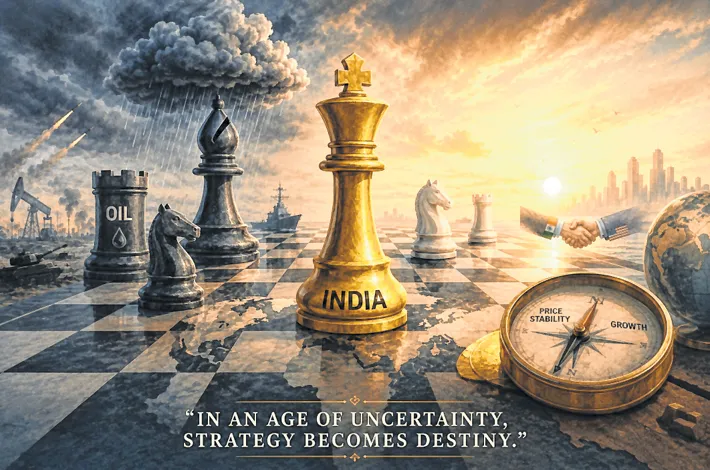
THE GREAT CONVERGENCE | From monsoon anxieties to fuel shocks, May redrew the fragile map of economic confidence
“When the roots of a tree tremble, every leaf receives the message.”
May felt less like a month and more like a gathering tide.
The old habit of treating oil, rainfall, diplomacy and monetary policy as separate stories quietly disappeared. Throughout May, these forces converged until they began speaking a common language.
By the month's end, India and much of the world stood at a crossroads where economics, climate and geopolitics had become inseparable companions. For readers, the lesson was equally clear.
In an age of endless headlines, wisdom lies not in consuming more news but in identifying the developments that truly matter. May was one such month, where a handful of interconnected events explained far more than an ocean of distractions.
For India, one visible reminder arrived at fuel stations. After months of stability, petrol and diesel prices were raised as crude oil surged amid tensions surrounding Iran and the Strait of Hormuz. The first increase came on May 15, when fuel prices rose by ₹3 per litre. Subsequent revisions lifted cumulative increases beyond ₹7 (nearly ₹7.5) per litre in many cities. The increases burdened consumers but also relieved state-owned oil marketing companies, which had been absorbing under-recoveries. Improved margins helped restore investor confidence and supported a recovery in major OMC shares.
Oil itself delivered one final surprise. On April 30, Brent crude briefly surged above $126 per barrel, a four-year high, as fears grew that escalating US-Iran tensions could disrupt the Strait of Hormuz. By May 30, however, Brent had retreated to the $92-94 range as diplomatic signals improved.
On May 31, Washington and Tehran continued exploring negotiations despite significant disagreements over uranium enrichment. Brent ultimately fell nearly 19% during May, easing concerns over inflation and currencies, though geopolitical risks remain unresolved.
Yet the greater concern remained in the skies. Forecasts pointing towards the weakest monsoon in eleven years transformed rainfall into India's most important economic variable. In a country where agriculture influences millions of livelihoods, the monsoon shapes food inflation, rural demand, fiscal planning and central-bank decisions.
The paradox was striking. Even as the government projected record foodgrain production of 376.56 mn tonnes, economists worried about future harvests. To strengthen buffers, New Delhi extended the ₹25,530 cr SARTHAK-PDS programme while assuring citizens that fuel supplies remain adequate despite global uncertainty. Meanwhile, the RBI spent May balancing confidence with caution. Its record ₹2.87 lakh cr surplus transfer strengthened public finances, yet warnings regarding crude volatility, inflation and global uncertainty revealed a central bank preparing for a more complicated environment.
Attention now shifts to the RBI MPC meeting beginning June 3, with a decision due on June 5. Markets largely expect rates to remain unchanged, but investors will closely examine the Reserve Bank’s assessment of inflation, monsoon risks, fuel-price transmission and currency stability. India's strategic significance also expanded.
A US delegation arrives today (June 1) to advance discussions on an interim trade arrangement covering critical minerals, semiconductors, artificial intelligence and advanced manufacturing.
Elsewhere, the world offered little tranquillity. Russia intensified attacks across Ukraine. Conflict persisted in Gaza and Lebanon. Yet India enters June with notable strengths: resilient domestic demand, healthy foreign-exchange reserves, insolvency recoveries exceeding ₹4 lakh crore, expanding infrastructure and one of the world's strongest growth trajectories. June arrives carrying neither certainty nor despair. If the monsoon proves kinder than feared and diplomacy proves stronger than conflict, resilience may once again become India's most valuable economic asset. The great lesson of May was convergence. The great test of June will be navigation.