9 July, 2026 | 4:54 AM


Telangana sees surge in illegal cotton seeds
15-04-2026 12:00:00 AM
Metro India News | BEJJUR
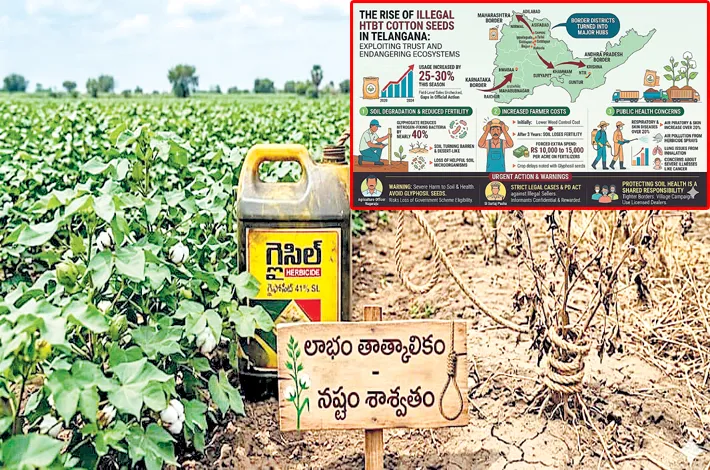
Illegal seed traders are once again exploiting farmers’ trust, as the banned HTBT (Herbicide Tolerant Bt) or “Glyphosil” cotton seeds are being sold discreetly in the market. Compared to last year, usage of these seeds has increased by nearly 25 to 30 percent this season, according to agriculture experts.
Border districts have turned into major hubs for this illegal trade. Large quantities of these banned seeds are entering the state through Adilabad, Nirmal, and Asifabad districts from the Maharashtra border. Similarly, the seeds are being transported freely from Andhra Pradesh’s Krishna, NTR, and Guntur districts into Khammam and Suryapet. From Karnataka’s Raichur region, they are also reaching the erstwhile Mahabubnagar districts. Though officials have seized some stocks during raids, field-level sales continue unchecked.
Disturbing data highlights the extent of the damage. Experts say that the use of glyphosate, the chemical associated with these seeds, reduces nitrogen-fixing bacteria in the soil by nearly 40 percent.
Farmers are also facing increased costs. While initial weed control expenses appear lower, after three years the soil loses fertility, forcing farmers to spend an additional Rs 10,000 to Rs 15,000 per acre on fertilizers.
Public health concerns are also rising. Chemicals used with these seeds and the herbicide sprays are reportedly increasing respiratory and skin-related diseases among agricultural workers by over 20 percent, according to preliminary studies.
Experts warn that glyphosate destroys beneficial soil microorganisms, gradually turning fertile land barren and raising the risk of it becoming desert-like in the future. The herbicide sprays also contribute to air pollution, affecting the lungs of farmers and laborers who inhale them. There are growing concerns about severe illnesses, including skin diseases and even cancer.
Selling or using unapproved seeds is a punishable offense under law, with penalties including fines and imprisonment.
Despite claims by agriculture department officials that inspections are being conducted, criticism persists that these raids are limited to small traders, while the major players behind the racket remain untouched. Although thousands of acres in the district are reportedly under Glyphosil cotton cultivation, enforcement actions are minimal, farmers allege.
In Bejjur mandal, farmers in villages such as Somini, Ippalaguda, Talai, Siddapur, Bejjur, and Kukuda are reportedly being sold these seeds at high prices. With no ban on certain herbicides in Maharashtra, some individuals are bringing them into the region and selling them at inflated rates.
There are also complaints that while normal cotton crops have been harvested on time, crops grown with Glyphosil seeds are getting delayed this season.
Farmers and experts stress that protecting soil health is a shared responsibility. Authorities must take stronger action to curb the source of these illegal seeds and tighten surveillance at borders. Awareness campaigns are needed at the village level to educate farmers about the long-term damage caused by such practices.
Agriculture Officer Nagaraju warned that the use of Glyphosil cotton seeds and banned herbicides like glyphosate severely harms soil fertility and poses risks to human health. He advised farmers to purchase only certified seeds from licensed dealers, adding that using banned seeds could also lead to loss of eligibility for government schemes.
SI Sartaj Pasha cautioned that strict cases will be registered under the PD Act against anyone found selling these illegal seeds. He assured that informants providing details about the sale or supply of such seeds would be kept confidential and rewarded appropriately.