9 July, 2026 | 8:26 AM


Recycling focus misses root cause
15-04-2026 12:00:00 AM
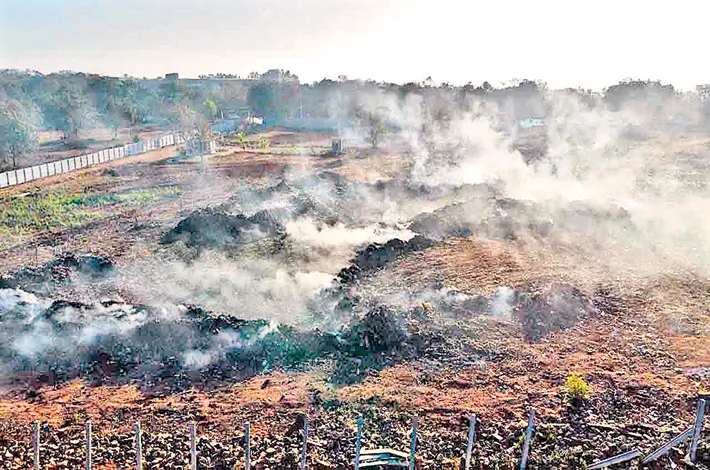
Hyderabad generates around 8,000 tonnes of waste daily, including over 1,000 tonnes of plastic
Hema Singuluri | Hyderabad
Burning waste, especially plastic across Hyderabad and India is increasing air pollution and carbon emissions, but policies mainly focus on recycling and bans instead of stopping waste at its source. Environmental researchers and policy experts describe this as an “upstream failure,” where the real issue, unchecked waste generation, is being overlooked while downstream solutions like recycling and disposal continue to dominate.
According to observations and data from the Greater Hyderabad Municipal Corporation (GHMC) and Telangana State Pollution Control Board (TSPCB), waste burning persists due to gaps in segregation, monitoring, and enforcement. Hyderabad generates around 8,000 tonnes of waste daily, including over 1,000 tonnes of plastic.
Much of this mixed waste ends up in landfills or is openly burned, contributing to rising air pollution and health risks. Studies also show PM2.5 levels have risen by about 15% since 2011, with waste burning identified as one of the contributing factors along with vehicles and industry. Audits and official reviews further reveal partial segregation, weak monitoring systems, and unreliable processed waste data, leading to unscientific dumping and burning. TSPCB inspections have also recorded complaints of open burning at dump yards affecting nearby residential areas. Despite initiatives like recycling plastic into tiles and clean-air action plans, open burning of mixed waste continues to persist.
On-ground officials also highlight operational challenges. P Anand, Sanitation Assistant Engineer (Solid Waste Management), Jubilee Hills, said only a few people are responsible for burning garbage, such as apartment watchmen, and that most cases occur in outskirts where dumping is more common. He stated, “We’ll inform citizens once in a while and educate them and also file challans if repeated.”
He also noted that littering on roads is increasing across Hyderabad, especially in slum areas and among daily laborers involved in unauthorized construction work. “We are creating awareness daily,” he added, mentioning coordination with residential welfare associations.
However, T Anil Kumar, Sanitation officer at Malkajgiri says, “Greater Hyderabad Municipal Corporation is divided into three corporations. He explains that in slum-affected areas like Jawahar Nagar, a major dumping yard has been established and operated by the private company Ramky Enviro Engineers. The focus remains on waste management and handling garbage generated by the public, with specific attention to identified Garbage Vulnerable Points (GVPs). Authorities note that there is a need for greater public awareness regarding proper waste disposal practices. While incidents of garbage burning in Hyderabad have reduced, they have not been fully eliminated.