25 September, 2026 | 2:35 PM


Teens and crime Should age matter
25-02-2026 12:00:00 AM
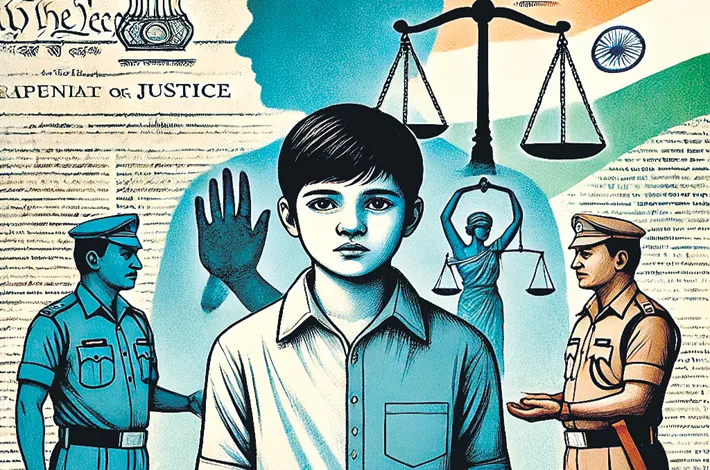
Data shows that between 2016 and 2021, over 9,000 juveniles were wrongly sent to adult prisons, where even brief stays can traumatize. Reform homes, intended to rehabilitate, are chronically underfunded—India reportedly spends just four paise per 100 rupees on child protection
In a gripping debate that drew survivors, legal experts, and child rights advocates, the nation’s most contentious question in juvenile justice was dissected: should teens be tried as adults for heinous crimes? The discussion, intense and emotional, explored the fine line between justice for victims and the potential for youthful redemption, touching on law, science, and socio-economic influences.
The session opened with heartrending personal stories that illustrated the devastating human cost of juvenile offenses. One participant recounted losing her husband in 2020 when a Harley Davidson he was riding collided with a car driven by two intoxicated teens, aged 16 and 17. The boys, from affluent families, were joyriding after a party without licenses. The husband was declared dead on arrival at the hospital, leaving the woman and her two sons, then 17 and 13, grappling with grief and financial struggles. She argued that unless juveniles committing serious crimes are tried as adults, tragedies will persist, and parental complacency will continue, emboldened by minimal consequences.
Another survivor shared a chilling case of a six-year-old girl who survived a brutal attack by a 17- or 18-year-old neighbor, who had slit her throat after raping her in a public toilet. Shockingly, the boy was released within a week, even returning to the victim’s family with sweets. The girl, scarred and fearful, could not resume school. Similar cases were cited, including a young boy raped in a school library by three juveniles, forcing surgery and relocation, while offenders escaped punishment. These accounts painted a grim picture of systemic failures, showing how juveniles can be exploited by adult criminals under lenient laws.
Aayushi, a child rights advocate, emphasized that children in conflict with the law are often both perpetrators and victims. She cited a 16- or 17-year-old who killed his abusive father to protect his mother, only to be abandoned by her. Socio-economic backgrounds, she argued, shape behavior; many children lack education, stability, or nurturing. The law mandates that preliminary assessments by psychologists and boards evaluate maturity before trying teens as adults. "Nobody is born a criminal," she said, advocating for rehabilitation over retribution. She suggested that improved counseling or admonishment could correct behaviors without producing repeat offenders.
The debate shifted to implementation gaps. While the Juvenile Justice Act provides a sound framework, corruption, police negligence, and resource shortages often undermine it. One participant noted the suspension of a police officer for failing to follow GPS tracking protocols. Data shows that between 2016 and 2021, over 9,000 juveniles were wrongly sent to adult prisons, where even brief stays can traumatize. Reform homes, intended to rehabilitate, are chronically underfunded—India reportedly spends just four paise per 100 rupees on child protection. Conviction rates for juveniles are high at 88.3%, compared to 27.3% for adults, but without proper rehabilitation, these numbers offer little solace.
Survivors pressed for deterrence and accountability, arguing that planning a rape or murder demonstrates awareness of consequences. Cases like Nirbhaya were referenced, showing that media pressure can extend juvenile custody, though inconsistently. Leniency, they warned, invites criminal networks to manipulate children. Emotional maturity tests were challenged, as trauma does not automatically lead to crime. Punishment, they argued, works as a societal signal, akin to a teacher disciplining a student to prevent repeat mistakes, complementing—but not replacing—rehabilitation.
Several cases illustrated the law’s delicate balance. In Rajasthan, a child bride who killed her abusive husband was spared an adult trial due to her victimhood. In Bombay, two boys accidentally killed a playmate, hiding the body in panic; the court emphasized context and maturity rather than age alone. Conversely, some privileged juveniles escaped consequences, spending a single night in custody despite evidence against them.
The discussion concluded with recognition that juvenile crimes account for roughly 1% of all offenses, yet their societal impact is profound. Scientific research and compassion argue for second chances, but victims’ irrevocable losses demand accountability. Experts agreed that bridging implementation gaps, supporting survivors, and ensuring fair enforcement of laws are essential to balancing justice with rehabilitation. The debate underscored that while no single solution exists, continued dialogue, listening to affected voices, and nuanced approaches are vital to addressing this complex issue.
This debate left one truth undeniable: age may influence judgment, but justice and societal responsibility cannot be ignored. Balancing rehabilitation with accountability remains the challenge society must face head-on.