30 April, 2026 | 1:37 PM


Controversy Erupts
25-02-2026 12:00:00 AM
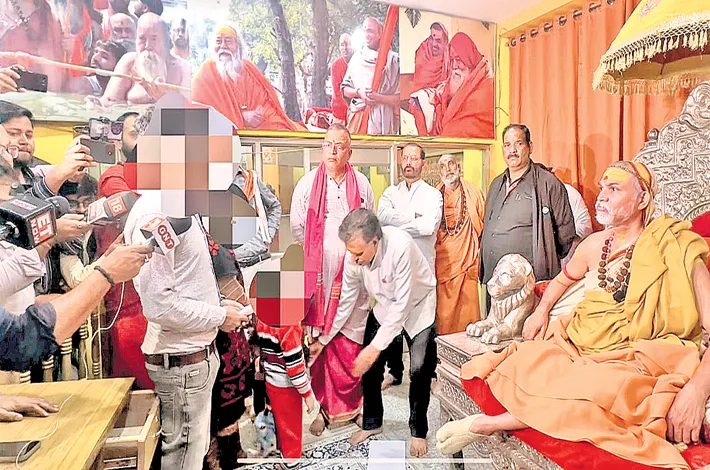
FIR Against Shankaracharya Under POCSO Act Sparks Political and Religious Storm
In a development that has ignited fierce debate across India's political and religious landscapes, a special POCSO court in Prayagraj, Uttar Pradesh, on February 21 ordered the registration of an FIR against Swami Avimukteshwaranand Saraswati, the self-proclaimed Shankaracharya of Jyotir Peeth, and his disciple Mukundanand Giri. The allegations involve the sexual exploitation of two minor boys, aged 14 and 17, at the seer's ashram during the recent Magh Mela and Maha Kumbh events. The court directed the Jhunsi Police Station to investigate under sections of the Bharatiya Nyaya Sanhita (BNS) related to sexual assault and relevant POCSO Act provisions, including Sections 3, 5, 9, and 17. This case, filed following a petition by Ashutosh Brahmachari Maharaj, a disciple of Jagadguru Rambhadracharya, has been labeled by critics as a potential vendetta by the Yogi Adityanath-led BJP government against the outspoken seer.
The complainant, Ashutosh Brahmachari, is no stranger to controversy. Described in some reports as a "history-sheeter" with a record of filing allegedly false cases, he hails from Kandhla police station in Shamli district. Brahmachari's petition accused the Shankaracharya of forcing the minors into sexual acts under the guise of "guru seva" (service to the guru), supported by statements from the boys recorded in court. Despite earlier complaints to the Prayagraj Police Commissioner, no action was taken until the court's intervention, which included reviewing a preliminary inquiry report. The FIR, registered late on February 21, also invokes Section 351(3) of the BNS and additional POCSO clauses, marking a significant escalation in what many see as a clash between state power and religious authority.
Swami Avimukteshwaranand has vehemently denied the charges, calling them "fabricated" and politically motivated. In statements to the media, he asserted that the alleged victims "never entered our Gurukul" and questioned the credibility of the evidence, including claims of CCTV footage and a CD submitted by the complainant. He expressed shock at the "low blow," stating, "I never imagined such a vile attack," and linked it to his ongoing disputes with the UP government. The seer, who has been vocal on issues like cow slaughter bans and the Kedarnath gold scam, emphasized his readiness to cooperate with the investigation, even if it leads to arrest. In a media conference, he drew parallels from Hindu epics, referencing Vibhishana's advice to Ravana to release Sita, warning against hubris with the Sanskrit adage "Vinasakale Vipareetha Buddhi" (When doom approaches, one's intellect works adversely).
The case's timing has fueled suspicions of political interference. Tensions between the Shankaracharya and the Adityanath administration boiled over during the Magh Mela on Mauni Amavasya (January 18, 2026), when police allegedly obstructed his procession for a holy dip at the Sangam, leading to clashes and injuries among his followers. The seer staged a protest, demanding an apology and labeling the incident an "insult to Sanatan Dharma." In response, the Mela Authority issued a notice questioning his use of the "Shankaracharya" title, citing a pending Supreme Court case on his legitimacy. Chief Minister Yogi Adityanath addressed the Assembly, asserting, "No random individual can use the title of Shankaracharya. No one is above the law," and accused the seer of creating deliberate controversy. He also mocked the opposition Samajwadi Party (SP) for supporting him, recalling their own lathi charge on the seer in 2015 under Akhilesh Yadav's rule.
Opposition leaders have rallied behind the Shankaracharya, framing the FIR as harassment. SP chief Akhilesh Yadav accused the government of digging up a "20-year-old incident to humiliate" the seer, calling it an insult to Hinduism. This narrative aligns with broader criticisms that the BJP's professed Hindu nationalism is selective, targeting dissenters within the faith. Some X posts and reports highlight divisions among Hindu leaders, with figures like Swami Rambhadracharya indirectly criticizing the seer's actions, while others condemn the government's approach as an attack on spiritual traditions. Reports indicate that the FIR has "shaken" Hindu spiritual leaders nationwide, prompting unity in condemnation and plans for a meeting to support the seer, though concrete evidence of widespread protests remains limited.
This episode echoes historical precedents where governments clashed with Shankaracharyas, often leading to political repercussions. In 2004, Tamil Nadu's Jayalalithaa government arrested Kanchi Seer Jayendra Saraswati on murder charges, a move widely seen as vendetta that contributed to her electoral downfall in 2006. Similarly, during Mayawati's tenure as UP CM, harassment of a Shankaracharya preceded her ouster. Akhilesh Yadav's administration ordered a lathi charge against Avimukteshwaranand in Varanasi, correlating with the SP's 2017 defeat. Even Indira Gandhi's government faced backlash after firing on sadhus protesting cow slaughter in 1966, a factor in her 1977 electoral loss. These patterns fuel speculation: Will Yogi Adityanath face similar "karmic" fallout, as suggested by the seer's invocation of divine retribution?
An independent journalist publicly confessed to being lured into supporting a false accusation against the seer. The incident, which unfolded amid heightened tensions following the FIR registration on February 21, 2026, has added fuel to claims of political vendetta and fabricated charges.
According to accounts circulating on social media and reported in select circles, the journalist—identified in posts as Hardoi-based Ramashankar Dixit—was approached by Ashutosh Brahmachari Maharaj (also referred to as Ashutosh Pandey in some contexts), the complainant in the POCSO case. Brahmachari allegedly offered incentives, including money, to frame the Shankaracharya in a false case involving sexual exploitation, initially proposed through the use of a girl or minors. Feeling guilty and fearful after participating or being drawn into the scheme, the journalist reportedly experienced a crisis of conscience.
On or around February 23, the journalist went directly to Swami Avimukteshwaranand, confessed the entire matter in his presence, broke down in tears, and publicly apologized for his role in the alleged plot. He admitted to being lured into the deception as part of a broader effort to defame the spiritual leader. Videos and posts describing the emotional encounter show the journalist expressing remorse, stating he could no longer be part of "dirty lies and propaganda." Supporters hailed his decision as a rare display of integrity, urging others to "choose the truth" and respect his conscience.
This confession aligns with the Shankaracharya's longstanding defense that the POCSO allegations are "fabricated" and motivated by ulterior motives. The seer has repeatedly highlighted Brahmachari's background as a "history-sheeter" from Kandhla police station in Shamli district, with a record of filing allegedly false cases. In media interactions following the FIR, Swami Avimukteshwaranand reiterated that the purported victims "never entered our Gurukul" and that evidence like marksheets from a Hardoi school disproves any association. He has accused the case of being a conspiracy, possibly linked to his prior clashes with the Uttar Pradesh administration, including the Mauni Amavasya obstruction during Magh Mela.
The journalist's open admission in the Shankaracharya's presence has intensified speculation about external pressures behind the complaint. Posts suggest multiple individuals were involved in the offer, with the journalist refusing to proceed further due to moral qualms. This development has resonated strongly among the seer's supporters, who view it as vindication and evidence of a smear campaign. It has also prompted calls for a thorough, impartial probe, with some demanding involvement from non-BJP-ruled state police to ensure fairness.