30 September, 2026 | 1:37 PM


When Home Deaths turn into Paperwork Battles
25-02-2026 12:00:00 AM
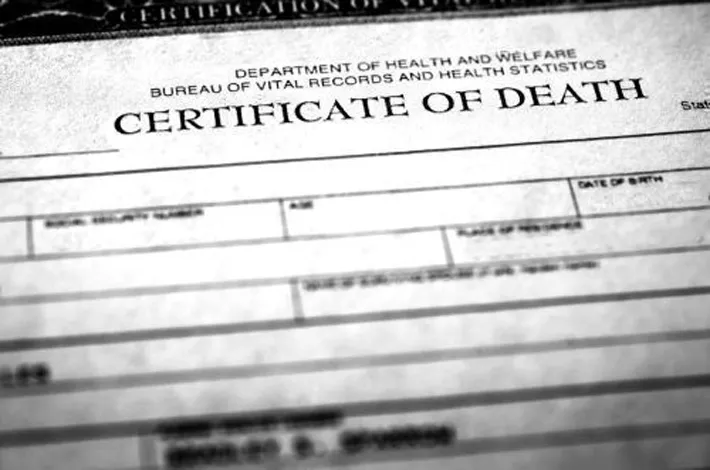
Despite clear medical certification rules, lack of awareness and failure to follow prescribed norms in city peripheral areas are leaving grieving families entangled in delays and hurdles to obtain death certificates
In several neighbourhoods of Uppal and other merged municipalities under the erstwhile Greater Hyderabad Municipal Corporation now trifurcated into three Municipal Corporations, a quiet administrative crisis is unfolding behind closed doors. Families grieving the loss of loved ones at home are increasingly finding themselves caught in a procedural maze — unable to secure death certificates as they are completing the last rites without getting mandatory medical certification from authorized doctors. What should be a straightforward legal formality has, in many cases, turned into an additional emotional and bureaucratic burden.
At the centre of the issue is the implementation gap between law and practice. The Registration of Births and Deaths (Amendment) Act, 2023 — enacted to modernize and streamline India’s civil registration system — clearly mandates medical certification of cause of death, even for home deaths. Yet on the ground, officials report mounting complaints, delays, and informal workarounds that risk undermining both legal compliance and public health data integrity.
There are clear provisions in the Act and officials in Uppal report a worrying trend. Dr. N Venkataramana, Assistant Medical officer of Health (AMOH) of Uppal, Hyderabad says “around 40 to 50 home deaths are being recorded every month, a figure he describes as “shocking.”
“For example, if a 70-year-old lady dies at home, she must have consulted some doctors in the past. We need that doctor, at least an MBBS-qualified practitioner to sign the prescription letter stating that it was a natural death, say cardiac arrest,” he explained.
He stresses that unnatural deaths require a postmortem. “If it is not a natural death, then a postmortem report is mandatory,” he says. The concern, according to him, is procedural as much as medical. “Later, if family members raise questions or disputes, we may not even have the body to examine.”
Dr. Venkataramana notes that as of now, 54 complaints relating to home deaths have been pending since December.
He acknowledges that part of the problem lies within the system itself. “We do have delays in government corporations too. Technically, from the government side, that is also causing some of these denials. Operating systems must improve,” he says candidly.
Awareness and Accountability
The AMOH points to a lack of awareness beyond the city’s core areas. “Only core areas have awareness,” he observes. Uppal alone has 28 cemeteries, yet he indicates that many families proceed without following proper documentation procedures.
“In Uppal, many people say they know someone and try to manage things informally. We must respect forensic terminologies, and no one is doing that,” he says with deep distress. He also added that nearby hospitals cannot refuse involvement. “Every death needs to have a cause,” he insists.
Every legitimate death, including those occurring at home, must be recorded lawfully and efficiently. In Uppal, however, officials and families appear caught between statutory obligations and operational bottlenecks.
Dr. Venkataramana believes the way forward lies in education. “Awareness on home deaths should increase in cities too. We need educational programs, including for police personnel and cemetery staff,” he says. Until that happens, families dealing with grief may continue to face an additional burden: navigating a system that, while clearly defined in law, remains uneven in practice.
What the Law clearly says
Under Section 10 of the Act (Certificate of Cause of Death), if a person dies outside a hospital but had been treated during the last illness by a registered medical practitioner, that doctor is legally bound to issue, free of cost and without delay, a medical certificate stating the cause of death. The family must then submit this certificate to the local Registrar at the time of registering the death.
For deaths in hospitals, public or private, the attending doctor must provide a Medical Certificate of Cause of Death (MCCD) free of charge to both the Registrar and the nearest relative. Importantly, while the medical certificate mentions the cause, the official death certificate issued to the family must not disclose the cause of death.