27 September, 2026 | 1:26 PM


Shocking Governor reshuffle-Political strategy or routine affair?
08-03-2026 12:00:00 AM
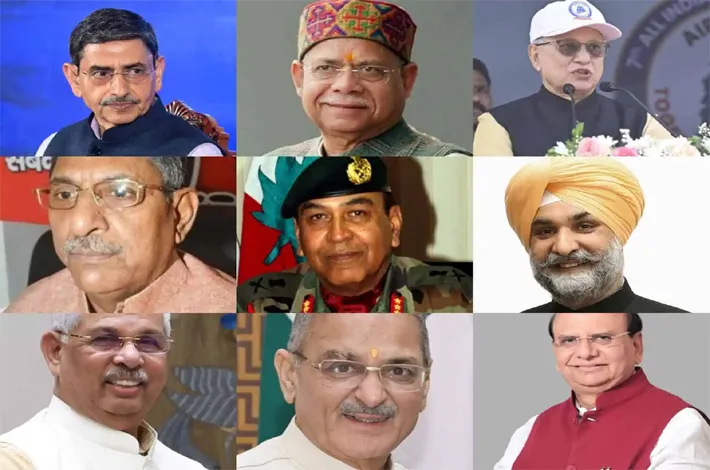
In a dramatic overnight development on March 5, 2026, President Droupadi Murmu approved one of the most extensive gubernatorial reshuffles in recent Indian history. Nine governors and lieutenant governors across key states and Union Territories were appointed, transferred, or reassigned in a single sweep. This major administrative overhaul has sent ripples through India's political and bureaucratic landscape, particularly as it comes ahead of crucial assembly elections in states like West Bengal and potentially others.
The changes affected politically sensitive regions, including Tamil Nadu, West Bengal, Bihar, Nagaland, Telangana, Maharashtra, Himachal Pradesh, Delhi, and Ladakh. Among the prominent moves: Vinai Kumar Saxena, the Lieutenant Governor of Delhi, was transferred to become the Lieutenant Governor of Ladakh. Veteran diplomat Taranjit Singh Sandhu was appointed as the new Lieutenant Governor of Delhi. Shiv Pratap Shukla shifted from Himachal Pradesh to Telangana, with Kavinder Gupta taking over as Governor of Himachal Pradesh. Jishnu Dev Varma moved from Telangana to Maharashtra. In the Northeast, former Bihar Assembly Speaker Nand Kishore Yadav was named Governor of Nagaland, while retired Army General Syed Ata Hasnain assumed the governorship of Bihar.
The most contentious appointment involved Tamil Nadu Governor R.N. Ravi, who was transferred to West Bengal following the abrupt resignation of C.V. Ananda Bose. Bose stepped down without public explanation just weeks before anticipated assembly elections in the state. Kerala Governor Rajendra Vishwanath Arlekar was given additional charge of Tamil Nadu in the interim. The timing of these shifts, especially in poll-bound or opposition-ruled states, immediately sparked speculation about whether the changes were driven by administrative needs or strategic political calculations.
Opposition leaders quickly cried foul, accusing the central government of undermining federalism and treating Raj Bhavans as partisan outposts. West Bengal Chief Minister Mamata Banerjee expressed shock in a post on X, stating that Union Home Minister Amit Shah informed her of R.N. Ravi's appointment without any prior consultation, breaching established conventions. She emphasized that such unilateral decisions erode the spirit of cooperative federalism and the Constitution. The Trinamool Congress cited recommendations from the Sarkaria and Punchhi Commissions, which advocate for involving state governments in gubernatorial appointments.
In Tamil Nadu, the DMK government reacted with a mix of relief and sarcasm. Chief Minister M.K. Stalin reportedly lamented losing a "star campaigner" in the form of R.N. Ravi, whose tenure had been marked by frequent clashes. Stalin suggested Ravi's confrontational style had inadvertently benefited the DMK by fuelling anti-incumbency against the governor's perceived alignment with BJP interests. The party highlighted ongoing disputes, including delays in clearing state bills (some of which reached the Supreme Court) and public criticisms by Ravi on issues like education and unemployment.
A BJP spokesperson defended the reshuffle as a routine constitutional process, dismissing opposition complaints as habitual negativity. He challenged critics to point to specific constitutional violations rather than moral or conventional grounds, noting that past Congress regimes had also faced accusations of misuse of power. He insisted the timing was not unusual, citing historical precedents, and described the changes as refreshing and normal.
A senior journalist provided historical context, acknowledging that gubernatorial appointments are the prerogative of the central government and that consultations with opposition-ruled states have often been nominal across regimes. He noted political and administrative calculations behind such moves, including periodic assessments by the Home Ministry. While emphasizing the legitimacy of the reshuffle, he pointed to patterns under the current NDA government where governors in non-BJP states have frequently clashed with elected governments, sometimes leading to Supreme Court interventions on issues like withholding assent to bills.
A DMK leader offered a Tamil Nadu perspective, detailing R.N. Ravi's tumultuous tenure: withheld bills (prompting Supreme Court orders), walkouts from assembly sessions, boycotts of state events, and public criticisms seen as politically motivated. He argued Ravi acted more like a BJP spokesperson than a neutral governor, yet ultimately "lost" confrontations as the state prevailed through judicial routes. He predicted difficulties for Ravi in West Bengal against the "iron lady" Mamata Banerjee, who he believed would not tolerate similar tactics, unlike the more composed M.K. Stalin. He went further, calling for the abolition of the governor's post, labelling it an unnecessary burden on state exchequers due to lavish expenses on residences, staff, and events funded by states despite central allegiance.
The episode highlighted recurring tensions between governors and opposition-ruled states, with recent Supreme Court reprimands against prolonged delays on bills.