27 September, 2026 | 12:59 PM


Role of women in Kerala's politics A timely debate ahead of elections
08-03-2026 12:00:00 AM
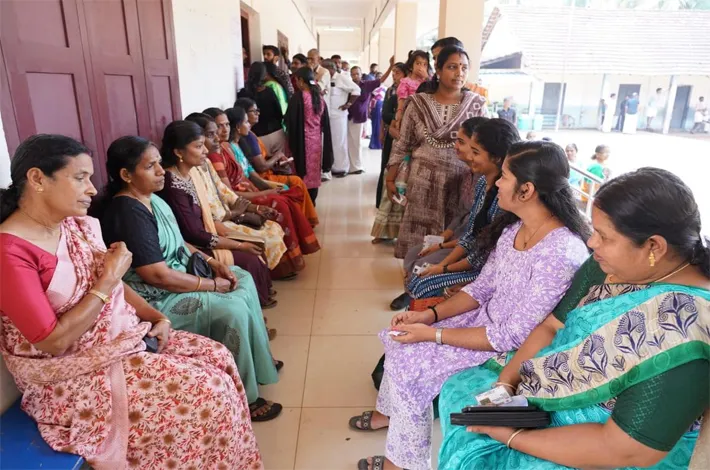
As Kerala gears up for its upcoming assembly elections the spotlight is firmly on the significant influence of women in the state's political landscape. With a total electorate of approximately 2.68 crore voters, women constitute a majority at 1.38 crore, outnumbering male voters. This demographic edge makes women's participation not just relevant but pivotal. In a panel discussion hosted by a news channel, representatives from major parties—Congress, CPM, and BJP—delved into the nuances of women's roles in politics, sharing insights, personal anecdotes and spirited debates on empowerment, challenges, and future aspirations.
The conversation kicked off with a broad question on the role of women in Kerala's politics. The Congress representative emphasized the numerical strength of women voters, noting that over 52% of the electorate in both India and Kerala are women. She highlighted the impending implementation of women's reservations as a catalyst for greater female involvement, arguing that politics must open more spaces for women to step forward.
The CPM representative, drawing from her experience as an elected representative, tied women's political roles to Kerala's strong social indicators. She pointed out that factors like social empowerment have facilitated women's entry into politics, making Kerala a more privileged environment compared to other states. However, the BJP leader offered a counterpoint, acknowledging general empowerment but underscoring persistent oppression at the grassroots level—in families, society, and institutions—despite the narrative of empowerment.
The debate deepened when discussing what has aided women's political participation in Kerala. The CPM leader attributed it to social empowerment, where women feel relatively safer and more supported. Congress representative shared a personal story of her arrest during a protest, describing jail as a profound loss of freedom that curtailed even basic rights like speaking freely. Yet, she credited her vocal nature to family support and the relative safety in Kerala for expressing opinions, contrasting it with potential risks elsewhere, like in Gujarat.
BJP panelist challenged this sense of safety, recounting her own experience in 2021 when a Facebook post criticizing the Pinarayi Vijayan government's PR campaign led to a police notice and case during the COVID lockdown. Though the case was later withdrawn, she argued it highlighted restrictions on free speech, a sentiment echoed by CPM representative who mentioned similar incidents involving friends and family, including phone confiscations.
As the discussion turned to electoral prospects, particularly in Thiruvananthapuram, where a recent local body election saw BJP gain representation for the first time, opinions diverged sharply. The Congress leader predicted another tight contest, attributing it to the constituency's history and diverse population, including migrants who shift voting patterns—potentially benefiting CPM. The CPM female leader expressed confidence in CPM's statewide advantage, citing development under LDF.
However, the BJP leader criticized the lack of progress, emotionally pointing to the stalled Thiruvananthapuram metro project. Congress countered by crediting Congress-led initiatives like the Vizhinjam port, Kochi metro, and Kannur airport, accusing LDF of claiming undue credit. The debate heated up over central-state relations, with the CPM leader defending state efforts like attracting Adani investments, while the BJP representative highlighted central contributions to projects, dismissing state complaints about insufficient federal support.
On what women in Kerala expect from the next government, especially amid International Women's Day 2026 themed around justice and equality, the panelists aligned on core demands but sparred over delivery. The Congress representative invoked cultural reverence for women but stressed practical needs like better public health and education, showcasing a handbook from ASHA workers as emblematic of grassroots issues. CPM praised LDF's welfare schemes, development, and public healthcare, including recent honorarium increases for ASHA workers despite state limitations, and questioned federal inaction.