2 October, 2026 | 6:16 PM


RTI reveals Rs 2.77 Cr spent on Telangana Govt Iftar at LB Stadium
08-03-2026 12:00:00 AM
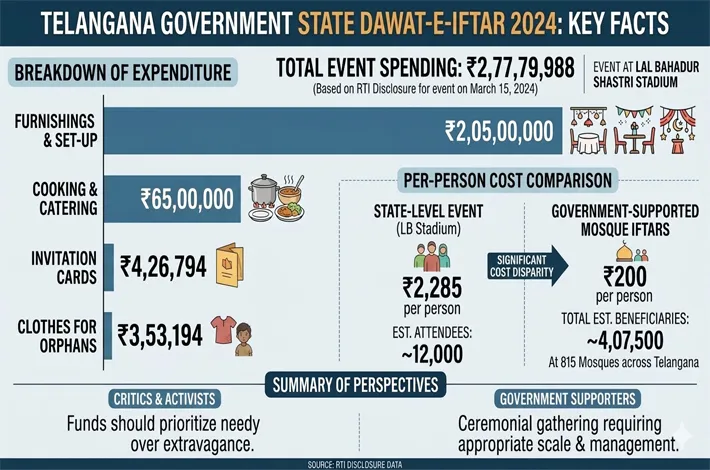
According to the RTI reply provided to me, the Government spent Rs 4,26,794 lakh just for invitation cards and another Rs 2, 05, 000 for furnishings. The amount could well be spent for the needy instead of such extravagance for a single evening
Lubna Sarwath, Social Activist
■ Rs 2.77 crore spent on the state Dawat-e-Iftar held at Lal Bahadur Shastri Stadium, according to an RTI reply.
■ Per-person cost estimated at Rs2,285 for around 12,000 attendees at the stadium event.
■ Furnishings alone cost Rs2.05 crore, far higher than other expenditure heads.
■ Iftar meals at 815 mosques cost about Rs200 per person, benefiting roughly 4.07 lakh people across Telangana.
T P VENU | Hyderabad
An RTI disclosure has put the spotlight on the expenditure incurred by the Telangana government for its annual state Dawat-e-Iftar hosted at the Lal Bahadur Shastri Stadium, with figures indicating that nearly Rs2.77 crore was spent on the event held on March 15, 2024.
According to details provided in the RTI reply, the government organised the Iftar dinner for approximately 12,000 attendees at the stadium. Lubna Sarwath, social activist says, “The Government spent Rs 4,26,794 lakh just for invitation cards and another Rs 2, 05, 000 for furnishings. The amount could well be spent for the needy instead of such extravagance for a single evening.” The expenditure included Rs2.05 crore on furnishings, Rs65 lakh on cooking arrangements, and about Rs4.26 lakh on invitation cards. In addition, around Rs3.53 lakh was spent on clothes distributed to orphans.
The total spending for the event stood at Rs2,77,79,988, the RTI documents show.
Based on these figures, critics have estimated the per-person cost of the Iftar dinner at roughly Rs2,285, after excluding the amount spent on clothing for orphans and dividing the remaining expenditure by the estimated number of attendees.
The RTI response also notes that 19,000 invitation cards were printed for the event, even though attendance was estimated at around 12,000 people.
The figures have triggered comparisons with government-supported Iftar arrangements organised at mosques across Telangana. As per the RTI data, the government facilitated Iftar meals at 815 mosques, including 448 within GHMC limits and 367 in districts.
Officials indicated that about 500 people were served Iftar at each mosque, bringing the total number of beneficiaries to an estimated 4,07,500 individuals, largely from economically weaker sections.
The per-person cost of these mosque-level Iftar meals was estimated at around Rs200, significantly lower than the cost calculated for the state-level event. Activists and some community members have questioned the disparity, arguing that public funds allocated for minority welfare should prioritise programmes that benefit a larger number of economically disadvantaged people.
However, supporters of the government note that the state Iftar is a ceremonial gathering attended by community leaders, religious scholars, and public representatives, and involves large-scale arrangements including seating, decoration, and event management, which contribute to the higher cost.
The RTI disclosure has renewed debate over the balance between symbolic government events and direct welfare spending under minority welfare programmes.