25 August, 2026 | 5:53 AM


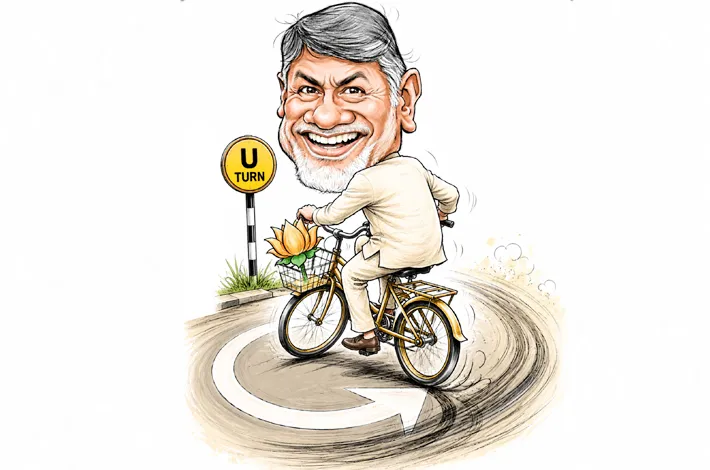
Naidu’s Delimitation U-Turn
17-06-2026 12:00:00 AM
From Southern Sentinel to NDA Ally
VJM Divakar
In the high-stakes arena of Indian federal politics, few shifts have raised as many eyebrows as Andhra Pradesh Chief Minister N Chandrababu Naidu’s apparent reversal on the contentious issue of delimitation.
Once a vocal advocate for safeguarding southern states’ political representation against population-driven redistribution, Naidu now emerges as a staunch supporter of the exercise, dismissing threats to the South and championing assurances from the Centre. This pivot, occurring amid delicate NDA coalition dynamics, offers a master class in pragmatic realpolitik but invites scrutiny over consistency, long-term federal equity, and Southern states interests.
Delimitation—the periodic redrawing of Lok Sabha and Assembly constituencies based on population—has long been a fault line in India’s diverse democracy. Frozen since the 1970s (with the last major boundary readjustment using 2001 data in 2008), the next exercise, tied to the post-2026 census, threatens to amplify the North’s demographic heft.
Southern states, having reaped the benefits of family planning and lower fertility rates (Andhra’s Total Fertility Rate hovers around 1.5, below the replacement level of 2.1), fear a dilution of their parliamentary voice. Northern states like Uttar Pradesh, Bihar, and Rajasthan, with higher populations, stand to gain dozens of seats. Chandrababu Naidu’s past stance aligned firmly with southern concerns.
In earlier years and as recently as pre-2026 statements, he echoed worries that unchecked population-based delimitation would penalize states for developmental success. During the Vajpayee era, as a key NDA partner, he played a role in the 2001 constitutional amendment that froze inter-state seat allocation based on the 1971 census until after 2026, precisely to protect southern representation. In interviews and assembly remarks around 2025, he expressed confidence in Prime Minister Modi’s wisdom to address southern sensitivities, hinting at the need for safeguards beyond pure population metrics.
Fast-forward to March 2026: Speaking in the Andhra Pradesh Legislative Assembly, Naidu unveiled a pioneering (and controversial) population management policy. With Andhra’s TFR at 1.5, he urged families to have two or more children, offering incentives like Rs 25,000 for a second child, additional support for third children, extended maternity/paternity leave, and even amendments to allow those with more than two children to contest local elections.
This marked a sharp reversal of decades of family planning norms in the state. Naidu framed it as essential for “demographic balance” and to prevent an aging population crisis by 2047. Critics saw it as a direct response to the looming delimitation shadow—boosting numbers to secure more seats.
By April 2026, as a delimitation-linked constitutional amendment bill (tied to women’s reservation) came before Parliament, Naidu’s tone transformed. He criticized opposition parties—DMK, Congress, and others—for blocking the bill, calling it a “great disservice to the nation” and a “betrayal” of women.
He asserted there was “no threat” to South India, backed Home Minister Amit Shah’s verbal assurance of a proportional 50% increase in seats across all states (potentially expanding Lok Sabha from 543 to around 850), and claimed this would offset population disparities while maintaining relative shares.
TDP MPs supported the bill after last-minute engagements with Shah and Law Minister Arjun Ram Meghwal, securing promises that Andhra’s share (around 4.6%) would not erode.
Chandrababu Naidu has repeatedly highlighted his role in the 2001 freeze and argued that a uniform proportional increase, combined with post-delimitation boundary exercises, ensures fairness. He challenged critics: “Delimitation is inevitable. Is there a better formula?” In campaign speeches in Tamil Nadu and elsewhere, he questioned how a 50% boost harms the South. Post the bill’s defeat in Parliament, he pushed for state-specific delimitation in Andhra under the 2014 Reorganisation Act and urged reintroduction with the proportional clause.
What explains this U-turn?
What are the coalition compulsions? TDP’s 16 Lok Sabha MPs are crucial to the NDA’s stability. With major developmental asks—capital city Amaravati, special category status, Polavaram project funding, and industrial investments—Naidu’s government relies on central largesse. Aligning on a flagship agenda like women’s reservation and delimitation strengthens his bargaining position. Assurances from Shah and Modi, whom Naidu describes as sensitive to national interest, provide political cover.
Moreover, Naidu’s population policy signals a strategic long game: even if current assurances hold, higher future fertility could position Andhra better in subsequent delimitations. His emphasis on “no state will lose seats” reflects optimism (or calculation) that internal redistribution within Andhra, plus overall expansion, could net the state more constituencies.
However, the pivot is not without risks or contradictions. Verbal assurances lack statutory backing; Article 81 of the Constitution still ties representation to population. Future governments or census data could alter dynamics. Southern allies like Tamil Nadu’s DMK and Karnataka leaders remain wary, accusing Naidu of compromising regional solidarity for alliance perks. Opposition figures, including Congress MP Manickam Tagore, have slammed him for prioritizing “political survival” over Andhra’s future.
Broader Implications: This episode underscores the fragility of India’s federal compact. Delimitation is constitutionally mandated for equitable representation, still it exposes deep North-South developmental divergences. Success in education, health, and women’s empowerment in the South is being indirectly penalized. Naidu’s shift may accelerate national consensus but could erode trust if assurances falter. For Andhra, short-term gains in central projects must be weighed against long-term demographic and representational arithmetic.
Chandrababu Naidu, the veteran “development man,” has always prided himself on pragmatism over ideology. His delimitation journey—from architect of the freeze to its enthusiastic backer—exemplifies that. Whether this U-turn delivers for Andhra and the South, or becomes a cautionary tale of alliance-driven compromises, will unfold with the next census and delimitation commission. In India’s evolving political geography, today’s assurances are tomorrow’s battlegrounds Now the TDP has been overshadowed by an obscure Nationalist Citizens Party of India!
one nation, one election one party
Once the Delimitation and Women Reservation Bills are passed both the Houses with required 2/3 Majority, the BJP led NDA government will not need any support from its allies like the TDP or others. Text next move will be towards, one nation, One Election, and One party. The BJP, Modi, Amit Shah slogan and their aim of Congress Mukth Bharat will be realised along with Opposition Mukth Bharat. Then there will not be any Opposition worth its salt and country will become another democracy without any credible Opposition.
On April 16, 2026, the TDP itself had suggested an amendment to the Constitution Amendment Bill being discussed that would make clear that the present strength of each state in the Lok Sabha would also increase by 50%. But the super-confident, super-arrogant Union Home Minister never actually moved such an amendment that the TDP was asking for. That is the REAL question—what devious games was the self-declared Chanakya - who stood brutally exposed on the evening of April 17 2026 - playing?