25 August, 2026 | 7:04 AM


Building Telangana's Green Future
17-06-2026 12:00:00 AM
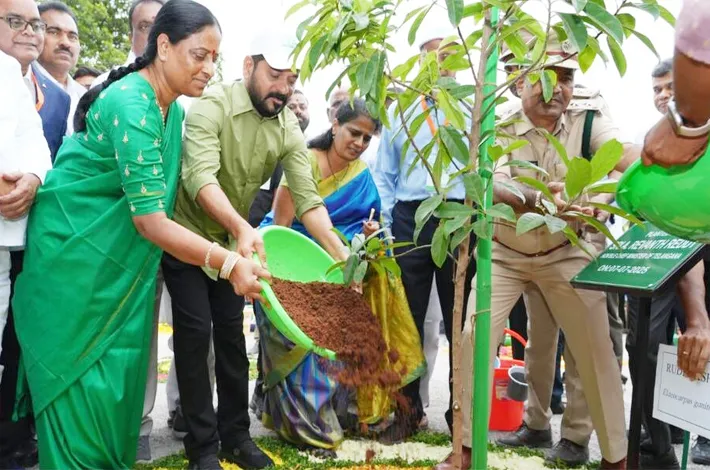
Metro India News | Hyderabad
As Telangana prepares for Vana Mahotsavam 2026, the state’s environmental transformation is increasingly being viewed as a model for balancing development with ecological conservation. Over the past decade, Telangana has demonstrated that economic growth and environmental protection can move forward together, creating a framework for sustainable development.
When the state was formed in 2014, it inherited not only the aspirations of a new government but also the responsibility of safeguarding its natural resources. Since then, Telangana has made significant strides in expanding its forest and tree cover, adding thousands of square kilometres of greenery across the state. However, the achievement extends beyond the large-scale planting of saplings.
It reflects a broader effort to restore ecosystems, strengthen biodiversity, conserve water resources, and secure a greener future for coming generations. A defining feature of Telangana’s success has been its ability to transform afforestation into a public movement. Schools, local bodies, communities, and citizens have actively participated in environmental initiatives, helping make green awareness an integral part of the state’s social fabric rather than merely a government programme. The state’s Urban Forest Parks have emerged as a notable example of this vision.
These green spaces are helping reduce urban heat, improve air quality, support biodiversity, and provide recreational spaces for residents. At a time when climate challenges are becoming more severe, such ecological infrastructure is proving as vital as conventional public infrastructure. Telangana’s expanding green cover is also contributing to climate resilience by improving air quality, supporting water security, and protecting soil health.
The state’s approach highlights the growing recognition that environmental security and economic progress are complementary rather than competing goals. The recently launched Ecotourism Policy 2025 marks the next phase of this journey. From the forests of Amrabad and Kawal to the scenic hills of Ananthagiri, the policy seeks to promote responsible nature-based tourism while creating livelihood opportunities for local communities. Despite these achievements, challenges remain.
Climate change, rapid urbanisation, and increasing pressure on natural resources require continued efforts to improve forest quality, protect native species, restore ecological corridors, and deepen public participation. Telangana’s experience offers a powerful lesson that environmental conservation is not an obstacle to progress but a foundation for long-term sustainable development.
-Dr. Priyanka Varghese, Senior IFS Officer, expressed these views in a personal capacity.