25 June, 2026 | 10:08 AM


Mideast see-saw keeps D-St nervously swinging
08-05-2026 12:00:00 AM
Palazhi Ashok Kumar mumbai
Beneath the dazzling towers of India’s financial capital, another uneasy trading session unfolded on Thursday as the see-saw politics of West Asia continued to cast long and shifting shadows across Dalal Street.
Markets rose, fell, recovered, and retreated again — not merely on earnings or valuations, but on every whisper emerging from Washington, Tehran, and the oil routes of the Gulf. Investors remained cautious as geopolitical uncertainty, foreign fund outflows, and volatile crude prices combined to produce another day of fragile sentiment.
The 30-share BSE Sensex closed 114 points lower at 77,844.52 after swinging violently through a 671.49-point band between 78,384.70 and 77,713.21. The NSE Nifty slipped 4.30 points to settle at 24,326.65, reflecting the market’s deep uncertainty over crude oil, global liquidity, and the future of the Iran nuclear question. The rupee, however, strengthened modestly, offering a measure of relief amid relentless foreign portfolio outflows and geopolitical strain.
Market strategists believe Washington remains unwilling to permit any arrangement that may ultimately strengthen Iran’s nuclear ambitions, particularly amid growing unease within Arab Gulf nations. Reports suggesting a possible US-Iran understanding over the gradual reopening of the Strait of Hormuz briefly pushed crude below $100 a barrel, easing inflationary fears. Yet optimism faded swiftly as uncertainty returned.
“The market is swinging between hope and fear,” observed market expert Dr. VK Vijayakumar, warning that crude prices themselves have begun to mirror the political see-saw of West Asia.
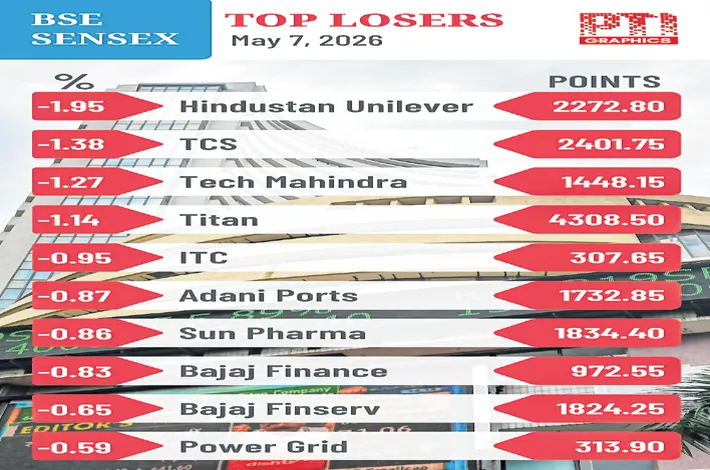
Technology and FMCG shares remained weak, with Hindustan Unilever, TCS, Tech Mahindra, Titan, Sun Pharma and ITC among the laggards, while select auto, healthcare and banking counters offered support. Beneath the volatility lies a larger truth: global capital now chases the AI boom in the US, South Korea and Taiwan, leaving emerging markets vulnerable to sudden reversals, fragile sentiment, and the unforgiving mathematics of geopolitical risk.