23 September, 2026 | 2:59 AM


Madhav Gadgil(1942-2026)- A life dedicated to ecology and equity
06-02-2026 12:00:00 AM
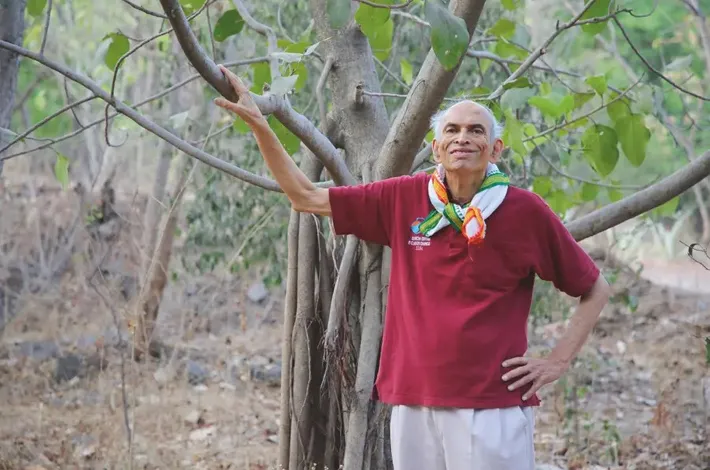
Madhav Dhananjaya Gadgil, one of India's most influential ecologists and a tireless advocate for sustainable development, passed away recently on January 7th , at his residence in Pune, after a brief illness. He was 83. Gadgil's death marked the end of an era in Indian environmental science, where he bridged rigorous academic research with grassroots activism, emphasizing the integration of human communities into conservation efforts.
His work, particularly on the Western Ghats, reshaped national policies on biodiversity and resource management, earning him accolades from both scientific bodies and environmental activists. Born on May 24, 1942, in Pune (then Poona) during the British Raj, Gadgil grew up in a household steeped in intellectual pursuits. Gadgil graduated in biology from Fergusson College, University of Pune, in 1963, and earned a master's degree in zoology from Mumbai University in 1965.
Pursuing higher education abroad, Gadgil enrolled at Harvard University, where he completed his PhD in 1969 under the guidance of William H. Bossert. Post-doctorate, he received an IBM Fellowship at the Harvard Computing Center and lectured in biology for two years. One of Gadgil's earliest and most impactful involvements in Kerala was his role in the Save Silent Valley Movement during the late 1970s and early 1980s.
The proposed hydroelectric dam in Silent Valley, a pristine tropical rainforest in Palakkad district, threatened to submerge vast areas of unique biodiversity, including rare species like the lion-tailed macaque. Gadgil contributed scientific scrutiny and advocacy that questioned the ecological viability of the project.
His most nationally and regionally significant contribution came through chairing the Western Ghats Ecology Expert Panel (WGEEP), popularly known as the Gadgil Commission, appointed by the Ministry of Environment and Forests in 2010. The panel's comprehensive 2011 report assessed the entire Western Ghats ecosystem across six states, with a strong emphasis on Kerala's vulnerability.
It recommended designating about 64% of the Western Ghats as Ecologically Sensitive Areas (ESAs), with graded regulations to curb destructive activities like unregulated quarrying, mining, large-scale infrastructure, encroachments, and deforestation. In Kerala, this included large swathes in districts such as Wayanad, Idukki, Pathanamthitta, and Palakkad.
The report warned of cascading ecological failures from unchecked development, predicting increased risks of landslides, floods, and biodiversity loss due to soil erosion, habitat fragmentation, and altered hydrology. Gadgil emphasized that conservation must be "environment-friendly and people-oriented," requiring community consent for projects and respecting local livelihoods tied to cash crops, agriculture, and small-scale resource use.
He proposed a Western Ghats Ecology Authority to oversee implementation, promoting participatory governance. His inputs, alongside other scientists and environmentalists, reinforced arguments for preservation, helping turn the campaign into India's first major successful environmental movement.
The project was eventually shelved by the central government in 1983, and Silent Valley was declared a national park in 1984, safeguarding one of the last remaining undisturbed rainforests in the Western Ghats. His advocacy extended to policy frameworks like the Biological Diversity Act of 2002 and the creation of People's Biodiversity Registers, which empowered communities to document and manage local resources.
Gadgil authored over 250 scientific articles and several books, including This Fissured Land: An Ecological History of India (1992, co-authored with Ramachandra Guha), Ecology and Equity: The Use and Abuse of Nature in Contemporary India (1995, also with Guha), Nurturing Biodiversity: An Indian Agenda (1998), Diversity: The Cornerstone of Life (2005), and Ecological Journeys: The Science and Politics of Conservation in India (2005). He wrote popular columns on natural history for The Hindu (1999-2004) and the Marathi newspaper Sakal, making complex ecological issues accessible to the public. In recognition of his efforts, a tree species, Elaeocarpus gadgilii, was named after him in 2021.
Telecom entrepreneur and former advisor Sam Pitroda shared personal memories on January 8: "My heart felt condolences to the family & friends of Dr. Madhav Gadgill- a leading #environment #scientists & activist. I had an opportunity to work with him as a member of the Science Advisory Council of the PM of #India, Rajiv Gandhi in 1980s. We miss him." Memorial events followed, including one at the Pune International Centre on February 2, where speakers like R.A. Mashelkar reflected on his "moral clarity, ecological humility, and unwavering belief that conservation in India must be rooted in social justice.
" Gadgil's legacy endures in the policies he shaped and the minds he inspired. He argued for ethical stewardship, where science serves people and nature equitably. In a time of climate crises, his vision of participatory conservation remains more relevant than ever, urging future generations to heed his call for balance between progress and preservation.