3 July, 2026 | 12:33 PM


Andhra Pradesh brings farming to classrooms
06-02-2026 12:00:00 AM
kiranmai tutika I amaravati
In a major reform aimed at reconnecting young minds with India’s agrarian roots, the Andhra Pradesh government has decided to introduce Agriculture as a Value Education subject in school curriculum from the upcoming academic year. The initiative will be implemented in both government and private schools across the state.
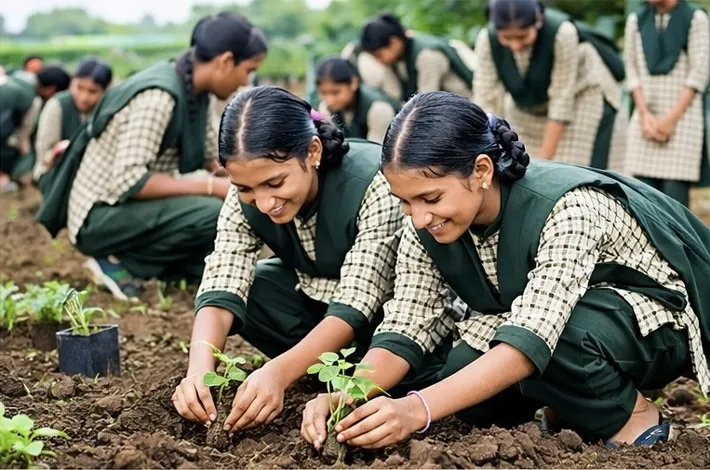
Under the new programme, students will not only learn the theoretical aspects of agriculture but will also gain practical, hands-on experience through field activities, school gardens, and structured farm visits. The objective is to create awareness among children about farming practices, food security, environmental sustainability and the importance of agriculture in the state’s economy.
Officials of the Samagra Shiksha Abhiyan (SSA), which will coordinate the programme,
said the subject will be integrated into the existing value education framework rather than being treated as a conventional academic subject. “As part of the curriculum, students will be introduced to basic concepts such as soil health, crop cycles, irrigation methods, organic farming, and the use of modern technology in agriculture. More importantly, they will experience real farming practices through interactive learning,” Sunita, Project In-charge explained.
Samagra Shiksha Abhiyan confirmed the initiative and outlined its objectives. “The idea behind introducing agriculture as a value education subject is to inculcate respect for farming and farmers among the younger generation. Many children today are disconnected from the source of their food. This programme will help them understand agriculture scientifically and socially,” the official said.
The guidelines make it mandatory for private schools as well to participate in the programme. All schools will be required to organise regular field visits to nearby farms, agricultural research stations, nurseries, or government demonstration plots. Students will also be assigned project work based on these visits.
According to SSA, practical components will include activities such as preparing school kitchen gardens, composting, seed germination experiments, water conservation practices, and interaction with progressive farmers. Assessment will be activity-based rather than examination-oriented. “Every school will have to ensure at least two agriculture-related field visits per academic year. Students will prepare reports, presentations and small projects based on their learning. The programme is designed to be experiential and engaging,” the SSA official added.