24 August, 2026 | 3:57 AM


Inside India's millionaire village
08-07-2026 12:00:00 AM
metro india news I Ahmednagar
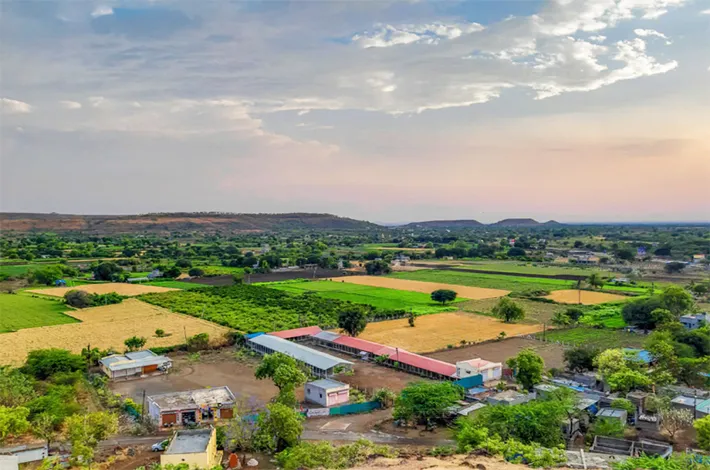
In a country where farmer distress and water scarcity remain persistent challenges, Hiware Bazar, about 17 km from Ahmednagar in Maharashtra's drought-prone Ahilyanagar district, has emerged as a remarkable example of community-led transformation. Once plagued by drought, poverty, migration and alcoholism, the village of around 1,250 people is today recognised as India's "Village of Millionaires" and a model for sustainable rural development.
During the 1970s and 1980s, Hiware Bazar suffered severe water shortages, with annual rainfall of barely 400 mm. Repeated droughts left fields barren, wells dry and fodder scarce. Forests were stripped for firewood and illicit liquor brewing, crime increased, and large numbers of villagers migrated to Mumbai and Pune. By the late 1980s, only about 12% of cultivable land was productive and most families lived below the poverty line.
The turnaround began in 1989 when Popatrao Baguji Pawar, the village's only postgraduate, was elected sarpanch. Inspired by nearby Ralegan Siddhi, he led a community-driven revival centred on water conservation and social reform.
With support from government schemes and extensive shramdaan (voluntary labour), villagers treated nearly 1,000 hectares by constructing earthen and stone bunds, check dams, percolation tanks and over 40,000 contour trenches. They regenerated forests, banned open grazing, promoted drip irrigation and shifted from water-intensive crops such as sugarcane to onions, tomatoes, flowers and millets.
The results were dramatic. Wells more than doubled to over 200, irrigated land expanded to 260 hectares, and dairy production increased from 150 litres to 4,000 litres a day. Agricultural incomes rose sharply, per capita monthly income increased from Rs 830 in 1995 to around Rs 30,000 by 2012, and dozens of families became rupee millionaires. Reverse migration brought villagers back home.
Economic progress was reinforced by social reforms, including bans on liquor, tree felling and open grazing, improved sanitation, family planning and compulsory HIV testing before marriage. Literacy climbed from about 30% to 95%, while the village school became a regional education centre.
Hiware Bazar's greatest strength lies in participatory governance. The gram sabha decides water budgets, crop patterns and development priorities, ensuring government schemes are driven by local needs.
Honoured with the National Water Award in 2007, Hiware Bazar has inspired thousands of villages across India. Though climate change continues to pose challenges, its journey shows that ecological restoration, community participation and disciplined water management can transform even the most drought-prone regions into thriving rural economies.