23 October, 2026 | 2:52 AM


Gen Z’s Housing Struggle
07-09-2026 12:00:00 AM
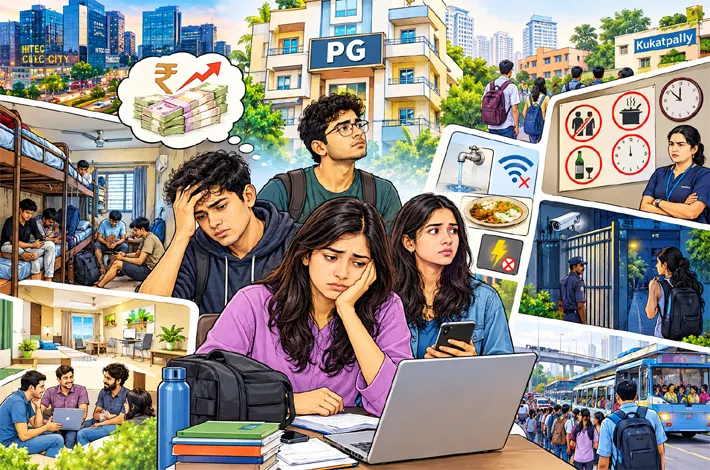
Why Paying Guest Accommodations in Hyderabad Are Failing Young Renters
metro india news I hyderabad
In the neon-lit streets of Madhapur and the student-heavy lanes of Kukatpally, a quiet crisis is unfolding among Gen Z. Fresh graduates, IT trainees, and college students in their early twenties are discovering that finding a decent Paying Guest (PG) accommodation in Hyderabad is no longer a simple matter of budget and location. It has become a daily battle against skyrocketing rents, inconsistent facilities, restrictive rules, and a growing sense of insecurity.
Paying Guest accommodations have long been the default choice for young people arriving in Hyderabad. The city’s booming IT corridor, educational institutions, and relatively lower cost of living compared to Bengaluru or Mumbai made it a magnet for Gen Z. PGs offered furnished rooms, meals, and the promise of community without the hassle of independent house hunting.
Today, that promise is fraying. Rents have risen sharply. In high-demand areas such as Hitech City, Gachibowli, and Kondapur, a basic shared room in a PG that once cost ₹6,000–8,000 a month now routinely demands ₹10,000–15,000, often excluding food. Single occupancy options frequently cross ₹18,000–22,000. Many young professionals earning entry-level salaries of ₹25,000–40,000 find themselves allocating 40–50 percent of their income to housing alone. Security deposits of two to three months’ rent further strain limited savings.
When tenants try to leave, recovering the deposit can take months of follow-ups, with deductions for “damage” that residents claim never occurred. Quality of facilities varies widely and is frequently disappointing. Multiple accounts from young renters describe overcrowded rooms with three or four people sharing spaces designed for two, erratic water supply, poor ventilation, and intermittent power backups. Wi-Fi, essential for remote work and online classes, is often slow or shared among too many users.
Food, advertised as “home-style,” is a frequent source of complaint—repetitive menus, limited hygiene standards, and little accommodation for dietary preferences common among Gen Z, such as vegetarian, vegan, or high-protein options.
Safety and privacy concerns add another layer of stress. While many PGs market themselves as secure, residents report inadequate CCTV coverage, poorly monitored entry points, and insufficient female staff in women’s hostels during night hours. Restrictions that feel outdated to a generation raised on independence are common: strict curfews of 9 or 10 p.m., bans on opposite-gender visitors even in common areas, and rules against cooking or hosting friends.
For many young women, the combination of high rents and limited safe options leaves them feeling trapped between financial pressure and personal safety.Location compounds the problem. Affordable PGs are increasingly pushed to the city’s periphery, forcing long commutes on overcrowded buses or expensive cab rides to workplaces in the IT hubs. Students near universities in areas such as Habsiguda or Tarnaka face similar trade-offs between proximity and livability.
The post-pandemic shift toward hybrid work has not eased demand; instead, more young professionals prefer the flexibility of PGs over long-term leases, intensifying competition.
The supply side has struggled to keep pace with changing expectations. Many PG operators are individual landlords or small operators who entered the market years ago and have not upgraded infrastructure. Newer, professionally managed PGs and co-living spaces have appeared, offering better amenities and slightly more progressive rules, but they come at a premium that prices out large sections of Gen Z.
Online listing platforms have improved discovery, yet reviews frequently warn of misleading photographs and sudden rule changes after booking.Mental health impacts are becoming visible. Young people speak of constant anxiety over money, the inability to invite friends or family, and the lack of personal space after long workdays.
Some report delaying career moves or choosing less suitable jobs simply to remain near more affordable housing. Others share rooms with strangers for years longer than planned, postponing the independence they expected upon entering the workforce.Efforts to address the situation remain limited. Local authorities have occasionally issued guidelines on safety and registration of PGs, but enforcement is uneven.
Student groups and young professional networks have begun sharing informal blacklists and recommendation channels on social media and messaging apps. A few startups are experimenting with curated co-living models aimed specifically at this demographic, focusing on transparency in pricing, better food options, and more flexible house rules.
Whether these can scale to meet demand is still uncertain.Hyderabad’s Gen Z is not asking for luxury. They want clean rooms, reliable utilities, reasonable rents relative to entry-level salaries, and basic respect for their privacy and schedules. Until the market and policy frameworks respond more effectively, Paying Guest accommodations—once a practical solution—risk becoming another source of frustration for a generation already navigating uncertain job markets and rising living costs. The city’s growth story will remain incomplete if the young people driving its workforce cannot find a place they can afford to call home, even temporarily.