20 September, 2026 | 3:24 AM


From growth to transformation: The policy agenda for a new India
20-09-2026 12:00:00 AM
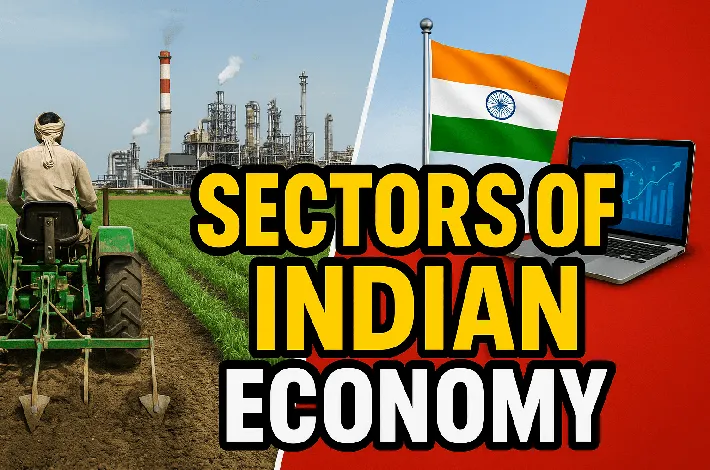
Metro India News | Hyderabad : India emerged as one of the world's high-growth economies in the last two decades. However, higher GDP growth has not contributed to a rise in productivity across all sectors equally. In this context, structural transformation is necessary to make India a developed nation by 2047. India's growth over the last three decades was supported by high-value-added service exports rather than by agricultural and industrial exports. In the process of accelerating economic growth, the manufacturing sector was neglected, while the service sector emerged as skill-intensive.
Transformation in various sectors:
The average annual growth of the agricultural sector rose from 2.1 percent in the first three decades after attaining independence to 4 percent for the period 2016-17 to 2025-26. Agriculture's contribution to India's GDP declined from 53.1percent of GDP in 1950-51 to 15.2 percent in 2025-26, and employed 43 percent of the workforce in 2025(PLFS). In recent years, India's manufacturing sector has undergone a transformation driven by the Make in India and Production-linked Incentive schemes. The average annual growth of the service sector increased from 4.5 percent for the period 1951-80 to 8 percent during 2016-17 to 2025-26.
The speed at which structural transformation is taking place has slowed down since more people are still working in the agricultural sector, the manufacturing sector is unable to absorb the surplus labor, there is poor education and gaps in skills, there are limitations arising from the infrastructure, and delays have occurred in the completion of projects because of regulatory problems The modern services sector cannot take in the low-skilled workforce that is moving out of agriculture. If the service sector is growing rapidly, then there should also be a sufficient expansion of labor-intensive manufacturing.
The fact that 65 percent of the population is under 35 means that young people must have the appropriate kind of education, training, and employment opportunities. Priority should be given to the production of electric vehicles, semiconductors, equipment for renewable energy, and biotechnology. Structural shifts should contribute to a rise in per capita income, lower inflation, deeper global integration, and enhanced competitiveness and economic efficiency of the economy
Dr. Tamma Koti Reddy
-The writer is a financial and economic expert and Professor of Economics at ICFAI Foundation for Higher Education, Hyderabad