20 September, 2026 | 1:45 AM


Roadmap for Viksit Bharat 2047
20-09-2026 12:00:00 AM
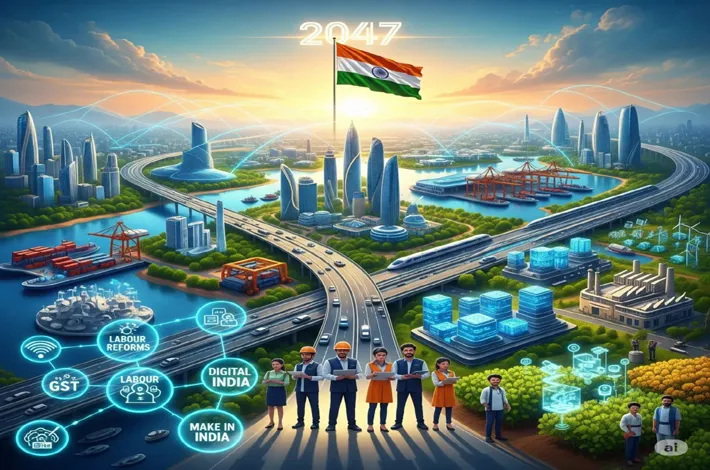
Beyond GDP, a roadmap for a developed and responsible India
As India looks towards the centenary of its Independence in 2047, the idea of Viksit Bharat is increasingly being framed as more than a target for economic expansion. The larger challenge is to define what a developed India should look like in the daily lives of its citizens from the quality of jobs and public services to the strength of institutions, environmental security and social trust.
The official Viksit Bharat vision has been developed through consultations and public participation, including the Viksit Bharat@2047 ideas initiative launched through MyGov in 2023. Government discussions have also emphasized that achieving the goal requires participation from citizens, institutions, and governments.
Development beyond numbers
Economic strength will remain central to the transformation. A NITI Aayog approach paper has set out an aspiration for India to reach a $30 trillion economy with per-capita income of about $18,000 by 2047, requiring sustained growth and a move beyond the middle-income trap. More recent NITI Aayog work continues to describe a trajectory towards a $30 trillion economy and per-capita GDP above $18,000.
But GDP alone cannot describe the condition of a society. A country can become wealthier while continuing to face inequality, weak public services, institutional shortcomings or environmental stress. The Viksit Bharat framework therefore needs to measure development through the quality of life and opportunities available to ordinary citizens.
At its core should be the principle of putting the last person first. The idea of Daridra Narayan, which places dignity at the centre of concern for the poorest and most vulnerable, offers a moral lens for evaluating development. Education, healthcare, clean water, nutritious food, housing, justice, safety and economic opportunity must reach those furthest from privilege.
Reforming the State
The transformation will depend on individuals, institutions and processes working together. Better policies cannot deliver lasting results if institutions remain weak or public systems are inefficient.
Governance must increasingly be experienced as service rather than control. Public representatives hold office to serve citizens, while civil servants and institutions must operate with transparency, accountability and efficiency. Courts, police, regulators, schools, hospitals, local governments and public utilities need stronger capacity and greater citizen orientation.
The responsibility, however, does not rest solely with government. Citizens too must contribute through honesty, tax responsibility, respect for public property, discipline, compassion and adherence to the rule of law. A developed country requires civic character alongside administrative reform.
Five measures of progress
The proposed roadmap can be organised around five broad dimensions.
Economic opportunity must translate national growth into productive employment, stronger MSMEs, competitive manufacturing and services, agricultural prosperity, innovation, exports and greater participation of women in the workforce.
Human development and quality of life must cover learning outcomes, healthcare, nutrition, housing, sanitation, drinking water, skills, life expectancy and security. The test is whether every child, worker, family and senior citizen can live with dignity.
Institutions, governance and rule of law require accessible justice, responsive policing, transparent decision-making, effective grievance redressal and capable local governments. Government consultations on Viksit Bharat have specifically identified ease of living, drinking water, electricity, health, schooling and land-related services as major governance priorities.
Environment and natural resources must become integral to economic planning. Air and water quality, forests, biodiversity, groundwater, waste management, renewable energy and climate resilience will determine whether growth can be sustained. NITI Aayog’s recent Viksit Bharat and Net Zero scenario studies similarly highlight clean energy, circularity, climate resilience and sustainable agriculture as important elements of the transition.
The fifth dimension — an egalitarian society, character, values and goodness — concerns how citizens treat one another. Social trust, dignity, gender equity, civic participation, ethical conduct and respect for law are as important to a mature democracy as economic output.
Preparing for 2047 and Beyond
The final challenge is future-readiness. Artificial intelligence, automation, cyber threats, climate change, biological risks, geopolitical uncertainty and changing global supply chains could reshape India's economic and social landscape.
That makes research, skilled human capital, resilient infrastructure, digital public infrastructure and evidence-based policymaking critical. India must also ensure that emerging technologies are governed responsibly so that innovation expands opportunity instead of creating new forms of exclusion.
The Viksit Bharat journey, therefore, is ultimately about the kind of society India wants to build by 2047. The economic target provides one measure of ambition, but the broader test will be whether prosperity reaches the last citizen, institutions command public trust, natural resources are protected and citizens share responsibility for the common good.
The objective is not simply a richer India, but a country that combines economic capability with social dignity, technological advancement with sustainability, and modern institutions with a strong sense of responsibility.
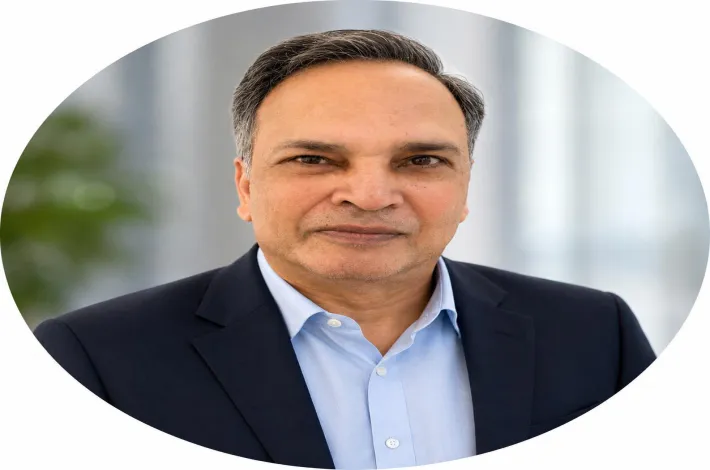
(S K Joshi served as Chief Secretary of Telangana from February 2018 to December 2019.)