20 September, 2026 | 1:45 AM


Khush Raho with Sangeeta Super Brain Ganesha
20-09-2026 12:00:00 AM
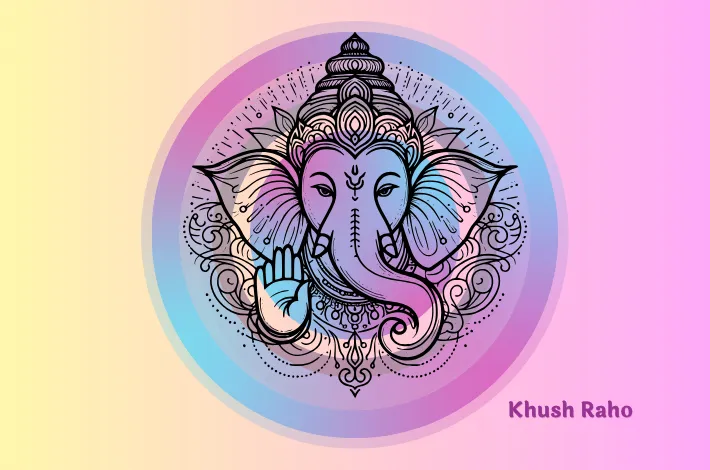
Memes in my feed this past week have been mostly Ganesha themed. Many represent him as a Disney style cartoon version of the powerful, complex lord of mythology he is, shown eating or coveting ‘modak’, or sweets of some kind. His image has been rendered in various materials: flowers, leaves, wood, paint, clay, metal of all sorts. It feels like a vast expression of people's affection for him.
Through all the hoopla and the special decorations, it was at a Ganesh temple that I was reminded of my favourite Ganesha inspired practice, the most potent lesson we could use for our wellbeing — a man was performing an exercise most of us would recognise from our school days. Back then it was a source of embarrassment, which often directed our resentment toward the teacher.What I have learnt since then is that this practice has a very long history in the old education systems, in the schools called gurukuls. Named Gunjillu in Telugu and Thopukaranam in Tamil. It was administered to help students learn from their mistakes, and at its core it is an aid to memory and to greater intelligence and wisdom.
Lord Ganesha is associated with and known to be a highly intelligent being, as his large elephant head suggests; an encoded way of telling us that his memory is like that of elephants, who are known to have remarkably long lasting memories. Lord Ganesha's special powers were called upon by Vyas Rishi when he was penning the Mahabharat. He requested Ganesha to do the actual writing, because Vyas Rishi was in creative flow, downloading and speaking out the Mahabharat, and needed someone who could write it all down with complete fidelity.
It is no coincidence then that this ancient practice is associated with Ganesha, the remover of obstacles and the lord of intellect. His big ears and his large head are not merely physical attributes — they are his ‘laddoo’ or gift to us: listen deeply, think clearly, and remember well. When we do this exercise, we are doing something that the ancient gurukul teachers understood intuitively, and that modern energy science now explains. We are energy beings. Our invisible aura has chakras, the organs of the subtle body. When we perform this exercise, we are connecting the brain with the lower chakras, which act like pumps and send energy up to the brain, making it more active, alert, and functioning at a higher frequency. This is why this practice is called Super Brain Yoga.
The steps are as follows. Take the left hand across the chest and hold the right earlobe with the thumb facing forward. Then take the right hand across the chest and hold the left earlobe with the thumb facing forward. This is important because the left and right brain have different capacities and processing abilities, and by doing this we are making them work in harmony as we pump energy upward. Inhale and go down on the knees to squat, keeping the back straight. This opens the lower chakras, the Root or Muladhara chakra and the Sacral chakra, expanding them. As we exhale and come up, these chakras push energy upward to the brain.
This simple exercise can be repeated in multiples of seven sets. For young children and elderly people, seven repetitions is a good level. For those with healthy knees who are not on their monthly cycle, or pregnant, this can be taken up to fourteen repetitions daily. We face East; seniors face North.
This is a divine, ancient, encoded way of charging ourselves and developing a super brain. The so-called punishment was never meant to humiliate — it was meant to prepare the mind for better functioning, better learning, and better memory. Children may be introduced to this practice as soon as they can follow the inhale-exhale pattern while exercising. Start with seven repetitions and increase as they grow older.
PS: For those who cannot practise this, another way to invite Ganesha's energies into our life is by chanting the mantra 'Aum Gaum Ganpataye Namah' for the removal of obstacles.
(Sangeeta Bhalla
is an Energy Healer, Instructor,
Therapeutic Aromatherapist.
She can be reached at sangeetabhalla.net)