20 September, 2026 | 9:13 PM


Arrogance of Power
04-08-2026 12:00:00 AM
Lessons from Bankipur
VJM Divakar
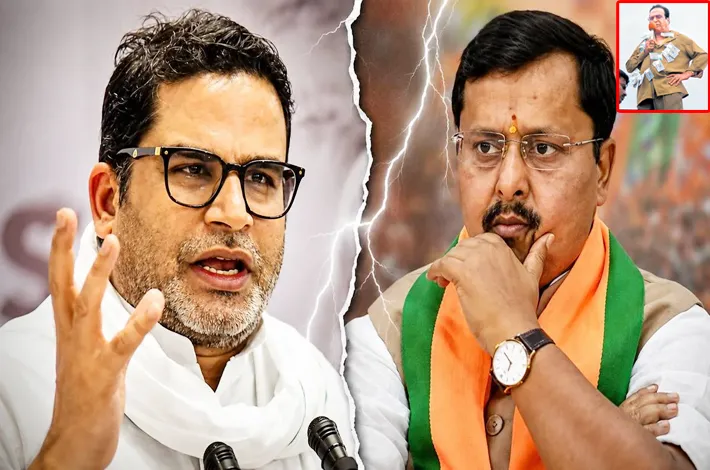
The familiar observation that power corrupts and absolute power corrupts absolutely finds fresh illustration in the Bankipur Assembly by-election in Bihar. Absolute power often breeds absolute arrogance, and arrogance frequently hastens political decline. On Monday Jan Suraaj Party founder Prashant Kishor defeated the Bharatiya Janata Party candidate Neeraj Kumar Sinha by a margin of nearly 19,000 votes. The seat, a BJP stronghold continuously held since 1995 and most recently represented by Nitin Nabin, who vacated it after his election to the Rajya Sabha, slipped from the party’s grasp despite an intensive campaign. Reports indicated that the BJP deployed substantial resources, including multiple MPs, Union ministers, MLAs, and Bhojpuri film personalities, to campaign against Kishor.
Confidence within the party ran high. A remark widely attributed to senior Bihar BJP leader Ravi Shankar Prasad claimed that the party could field a dog or a cat in Bankipur and still win on the strength of Prime Minister Narendra Modi’s popularity. Prasad later described the attribution as a false narrative. Another reported comment suggested that the candidate’s attire, whether pyjama or shorts, would make no difference to the outcome. The central leadership also reportedly selected its own candidate rather than fully endorsing the preference of the leader who had vacated the seat. Such displays of overconfidence carry risks.
Political history in India repeatedly demonstrates that when power settles too comfortably in the minds of leaders or parties, electoral setbacks often follow. In the 1970s, a senior Congress leader proclaimed “Indira is India and India is Indira.” The slogan reflected the height of the party’s dominance under Indira Gandhi. Subsequent events led to the Congress losing power at the Centre after the Emergency.
The 1977 general election delivered a sharp rebuke, ending a long period of Congress hegemony. A similar episode unfolded in undivided Andhra Pradesh in 1989. Telugu Desam Party leader and then Chief Minister N.T. Rama Rao, a matinee idol with a massive following, contested two Assembly seats. In Kalwakurthy in Mahbubnagar district, he did not campaign intensively. When asked about the decision, NTR remarked in characteristic style that even a photograph of his would secure victory. He lost that seat to a relatively unknown Congress candidate, J.C. Chittaranjan Das.
The defeat underscored that personal charisma and past success offer no permanent immunity against voter dissatisfaction or organisational complacency. The Bankipur result carries echoes of these earlier moments. Kishor, making his electoral debut, focused his campaign on issues resonating with younger voters and the broader public: unemployment, large-scale migration from Bihar, rising prices, and the quality of education. He leveraged social media to reach rural audiences and connect with Gen Z voters.
Coverage of the contest noted that after visible youth mobilisations, including protests associated with Jantar Mantar, sections of younger voters appeared to throw support behind his platform. High youth engagement and targeted messaging on local grievances helped convert discontent into votes. Parallel developments appeared in Madhya Pradesh’s Datia by-election, held around the same time. Congress candidate Kuwar Ghanshyam Singh defeated the BJP’s Ashutosh Tiwari by a margin of approximately 6,016 votes. Singh secured 66,757 votes (42.39 percent) against Tiwari’s 60,741 (38.57 percent). The seat had previously seen competitive contests, and the bypoll outcome added to the sense of pressure on the ruling party in certain regions.
These results do not automatically signal a nationwide shift. Bypolls often reflect local factors, candidate strength, and immediate grievances more than national trends. Analysts caution against over-reading single-constituency outcomes as predictors of larger elections. Bankipur’s long history as a BJP bastion made the margin of defeat particularly striking. Early celebrations within BJP circles, including distribution of sweets, turned ironic as counting progressed and Kishor’s lead widened steadily across rounds. The underlying pattern remains consistent. When a party or leader projects invincibility, voters sometimes respond by testing that claim.
Arrogance can alienate cadres, reduce grassroots responsiveness, and create openings for challengers who address everyday concerns with greater urgency. Kishor’s emphasis on unemployment, migration, and education quality allowed him to frame the contest around tangible local realities rather than pure organisational muscle. Social media amplified these messages among younger demographics, who form an increasingly decisive segment of the electorate. Historical parallels reinforce the point. Indira Gandhi’s Congress recovered later, and NTR continued to dominate Andhra politics for years after the Kalwakurthy setback.
Power is rarely permanent, and setbacks can prompt course correction. For the BJP, the Bankipur loss ends a three-decade hold on a prestigious Patna seat and raises questions about candidate selection, campaign tone, and the limits of national leadership appeal in local contests. For Jan Suraaj, the victory marks a significant electoral breakthrough and validates a strategy centred on youth and governance issues.In a democracy, voters retain the final authority to humble even the most entrenched forces. Bankipur joins a longer list of contests where overconfidence met organised opposition and issue-based mobilisation.
The data from counting—Kishor’s margin approaching 19,000 votes after full rounds—provides a concrete measure of that response. Political parties that ignore the warning signs of arrogance risk repeating cycles of rise and correction that Indian electoral history has already recorded multiple times. The Bankipur outcome, alongside the Datia result, serves as a contemporary reminder that power demands constant humility if it is to endure.
History is witness
Power is rarely permanent, and setbacks can prompt course correction. For the BJP, the Bankipur loss ends a three-decade hold on a prestigious Patna seat.
Political history in India repeatedly demonstrates that when power settles too comfortably in the minds of leaders or parties, electoral setbacks often follow. The 1977 election is a case in point.
Even the mighty fall!
In undivided Andhra Pradesh in 1989. Telugu Desam Party leader and then Chief Minister N.T. Rama Rao, a matinee idol with a massive following, contested two Assembly seats. In Kalwakurthy in Mahbubnagar district, he did not campaign intensively. When asked about the decision, NTR remarked in characteristic style that even a photograph of his would secure victory. He lost that seat to a relatively unknown Congress candidate, J.C. Chittaranjan Das.