20 October, 2026 | 12:40 AM


AP local polls face fairness test?
20-10-2026 12:00:00 AM
metro india news I amaravati : Andhra Pradesh’s local body elections have triggered a political confrontation between the ruling Telugu Desam-led coalition and the opposition YSR Congress Party, with allegations of intimidation, nomination papers being torn up, candidate abductions and the misuse of official machinery threatening to overshadow the electoral process.
While YSRCP has accused the ruling alliance of systematically preventing opposition candidates from contesting, Chief Minister N. Chandrababu Naidu has countered that the present elections demonstrate the difference between democratic governance and the alleged authoritarian practices of the previous regime.
The controversy intensified on Monday as Naidu addressed the media, YSRCP leaders approached the State Election Commissioner (SEC), and election authorities announced measures to address disturbances reported at nomination centres.
Chandrababu accuses YSRCP of political violence
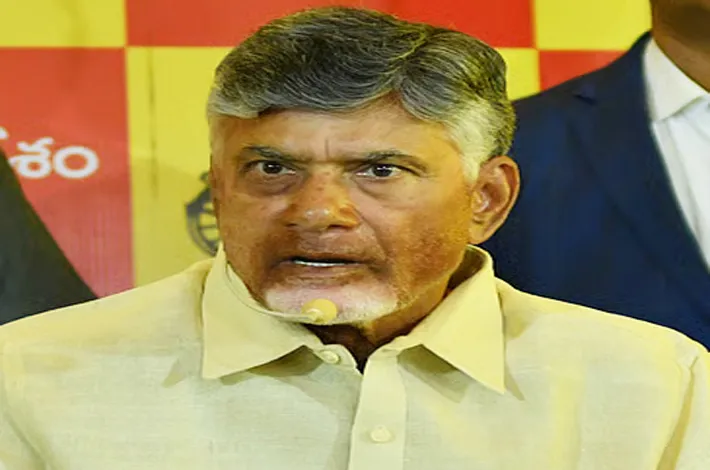
At his press conference, Naidu accused the YSRCP leadership of resorting to violence and intimidation to regain political power. Comparing the party president’s alleged political methods to those of international crime figures, he claimed that the opposition was pursuing a destructive agenda while the coalition government was focused on development.
The Chief Minister alleged that the previous YSRCP government manipulated local body elections through official interference and coercion. He cited unopposed victories in 24 per cent of Mandal Parishad Territorial Constituency (MPTC) seats and 19 per cent of Zilla Parishad Territorial Constituency (ZPTC) seats during the previous regime. In comparison, he said, unopposed victories under the TDP government in 2014 accounted for just two per cent of MPTC seats and 0.09 per cent of ZPTC seats.
Naidu further alleged that opposition candidates had been prevented from filing nominations in Pulivendula and that attempts had been made to implicate rivals by planting liquor bottles in their homes. He contrasted those allegations with the current elections, claiming that candidates from different parties, including YSRCP, had been able to file nominations in Kuppam, Pithapuram and Pulivendula.
“Violence has no place in my life. But I will not run away from criminals and rowdies,” Naidu said, asserting that his government would act against intimidation and political violence.
He appealed to voters to elect coalition candidates, arguing that the coming two decades would be crucial to Andhra Pradesh’s development. YSRCP, however, has presented a sharply contrasting account, alleging that ruling coalition supporters, particularly TDP workers, obstructed its candidates during nominations and scrutiny. The party claimed that nomination papers were torn, candidates were attacked or abducted, and police personnel failed to protect opposition nominees.
The opposition cited incidents in Kuppam, Tadipatri, Proddatur, Atmakur, Rajampet, Nandyal and other locations. Among its principal allegations were the disappearance of Kuppam chairperson candidate Vijay Kumar, the reported disappearance of candidate Mohammed Jafar in Tadipatri, and the destruction of nomination papers belonging to candidates in Proddatur and Atmakur.
In Rajampet, YSRCP alleged that chairperson candidate Nadigadda Reshma’s nomination was initially accepted but subsequently rejected over alleged deficiencies in property-tax documents. The party also raised concerns about reported attacks on candidates and party workers, obstruction of scrutiny proceedings and the handling of objections by returning officers.
YSRCP state general secretary and MLC Lella Appi Reddy, accompanied by former MLA T.J.R. Sudhakar Babu and other leaders, met SEC Anil Chandra Punetha and submitted three representations along with video material on a pen drive.
Appi Reddy claimed that the party had managed to file nominations in only 321 of the 809 wards and divisions across 22 affected urban local bodies, leaving 488 without YSRCP nominations. He also alleged that nominations for eight chairperson posts had been obstructed.
The party demanded fresh nominations or postponement of elections in the affected urban local bodies, citing the postponement of elections in Mydukur following the reported destruction of nomination papers. It sought the preservation of CCTV footage, effective police protection, action against those responsible and a fresh opportunity for candidates affected by alleged intimidation.
YSRCP further demanded that the Commission ensure compliance with court directions concerning surveillance and transparent election procedures.
Responding to the controversy, SEC Punetha said the Commission had sought reports from district collectors on incidents reported at nomination centres. He confirmed that elections in Mydukur municipality had been halted after a district collector’s report indicated that nomination papers had been torn following disturbances.
The SEC said reports from Kadapa and other districts were being examined and that appropriate action would follow. A video conference with district collectors, municipal commissioners and police officials was scheduled for Monday evening to review law-and-order arrangements and prevent further incidents.
The Commission also announced the notification for elections to 659 ZPTC and 9,829 MPTC seats, covering approximately 2.81 crore voters, with 35,333 polling stations planned. Of these, 9,966 were classified as sensitive and 9,186 as highly sensitive.
The competing claims have placed the spotlight on the Election Commission’s responsibility to ensure equal access to nominations, impartial scrutiny and protection for candidates irrespective of political affiliation. The ruling coalition insists that the current process marks a departure from the alleged coercion of the previous government, while YSRCP argues that the reported incidents undermine that claim.
Ultimately, the credibility of the elections will depend not on political accusations alone, but on whether the Commission investigates complaints impartially, verifies the evidence, protects candidates and provides remedies wherever violations are established. In a democracy, electoral legitimacy begins with the right to contest freely—and ends with voters deciding the outcome without fear or coercion.