8 September, 2026 | 3:25 AM


US–India trade deal lifts AP, Telangana exports
08-02-2026 12:00:00 AM
Metro India News | new delhi
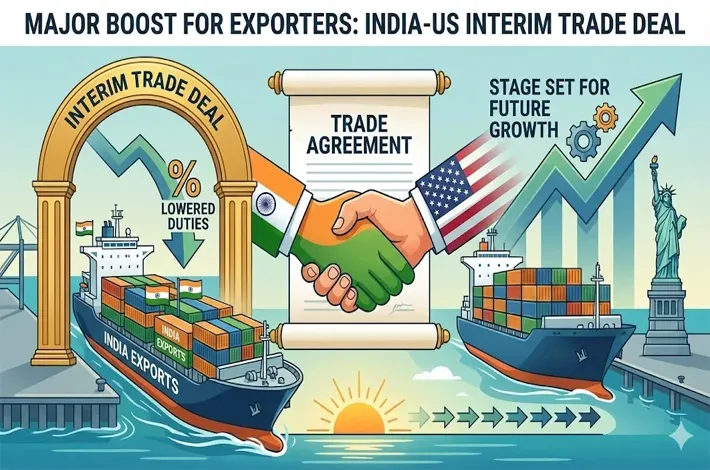
The US–India trade framework agreement announced on February 6, 2026, has generated fresh optimism across southern India, especially in export-driven Andhra Pradesh and Telangana. The interim deal cuts US tariffs on Indian goods to 18% from earlier peaks of up to 50%, while India agrees to reduce duties on several US industrial and agricultural products to zero. For the two states, deeply linked to the US market, the agreement offers prospects of export revival, job creation and economic stability, even as some challenges remain.
Andhra Pradesh, India’s leading aquaculture hub, stands to gain significantly. The state exports shrimp and seafood worth about Rs 20,000 crore annually, with nearly 80% going to the US. Earlier tariff hikes had sharply hurt the sector, reducing export volumes by 15% and squeezing processor margins to nearly 5%. With the new 18% tariff—lower than those faced by competitors such as China and Vietnam—industry bodies expect margins to recover to 7–8% and exports to return to pre-tariff levels by late 2026. The Seafood Exporters Association of India termed the agreement a turning point, noting the US remained Andhra’s largest market at $2.78 billion in 2024–25.
Beyond seafood, Andhra’s rice and agro exports to the US, valued at Rs 43,000–45,000 crore, are expected to gain momentum. Zero-duty access for processed foods and spices aligns with the state’s strengths, while emerging electronics and textile clusters may attract new investment. State leaders have highlighted improved prospects for farmers and MSMEs, particularly in coastal regions linked to global supply chains.
Telangana’s export economy, centred on Hyderabad, is also set to benefit. Pharmaceutical exports to the US, worth Rs 36,893 crore, already enjoy relative tariff stability, but the agreement’s provisions for generics could further strengthen the sector. Organic chemicals, biotech products, electrical machinery and aerospace components are likely to gain from reduced trade barriers, with industry estimates suggesting up to 20% export growth in the coming year. Telangana’s participation in global aerospace supply chains, including Boeing, may expand, supporting high-skill employment.
Agriculture in Telangana may see indirect effects. While zero-duty US imports raise some concerns for marginal farmers, staples like rice and wheat remain protected, limiting direct competition. MSMEs in textiles and engineering, hit earlier by trade uncertainties, are expected to recover.
Energy costs could rise due to India’s shift towards US and Venezuelan oil imports, but long-term gains from technology and raw material access may offset this. Overall, despite criticism over transparency, the framework is widely seen as positive for Andhra Pradesh and Telangana, positioning them as key beneficiaries as negotiations move toward a full bilateral trade agreement.