8 September, 2026 | 5:02 AM


TG to introduce anti hate-speech bill concerns about misuse galore
08-02-2026 12:00:00 AM
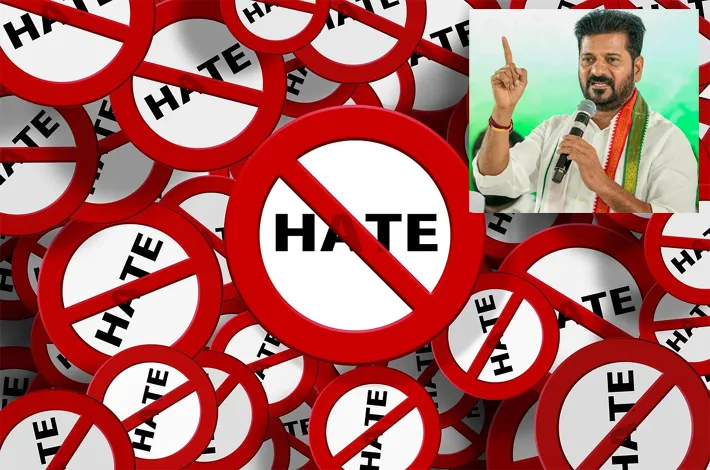
In a move that has sparked intense debate, Telangana Chief Minister Revanth Reddy recently announced plans for an anti-hate speech law during a speech at a Jamaat platform. Critics argue this represents a glaring irony, as the announcement came from the stage of a sectarian religious organization rather than the secular confines of the state assembly. The CM's vow to curb hate speech is seen by some as hypocritical, especially given the platform's association with figures who have previously advocated for placing Sharia above the Indian Constitution in other states like Kerala.
This selective approach raises questions about neutrality and whether the law is truly aimed at fostering harmony or merely masquerading as appeasement politics. The proposal echoes a similar law passed in Karnataka, which is currently awaiting presidential assent. Experts have flagged concerns over vague definitions and expansive powers granted to the state, potentially allowing governments to dictate what citizens can say, share, or forward online.
Under both proposals, state authorities could compel digital platforms to remove content deemed as hate speech—a power currently held by the central government under existing IT laws. With ample laws already on the books to address hate speech, such as sections under the Bharatiya Nyaya Sanhita (BNS), the need for an additional layer is being questioned. Critics warn that this could lead to every state becoming its own speech regulator, blurring lines between criticism and criminality.
The Supreme Court's 2015 ruling emphasized that speech-restricting laws must be precise and narrowly tailored to avoid a chilling effect on free expression. Yet, the Telangana initiative, modeled after Karnataka's, appears to follow a familiar template from Congress-led governments. Proponents argue it's a legitimate effort to combat hate, but detractors fear it could silence dissent under the guise of maintaining public order. This harks back to historical concerns about an "emergency mindset" reminiscent of past Congress impulses, prompting scrutiny of whether this is genuine reform or a rehearsal for authoritarian control.
A Congress representative defended the Karnataka law, asserting its sections are not vague enough for misuse and dismissed criticisms as biased when coming from opposition-led central institutions. He urged waiting for Telangana's draft to be public before judgment, arguing that laws are deemed unconstitutional only when enacted by non-BJP governments. However, when pressed on individuals jailed for speeches that didn't incite violence, Jen maintained a general stance, emphasizing that potential incitement should be addressed proactively.
A Telangana BJP leader argued that the bill is purely for appeasement, targeting a specific vote bank amid ongoing municipal elections. He criticized the focus on protecting minorities, questioning why hate cannot be addressed as an issue between humans or groups without dividing people into majorities and minorities.
He drew parallels to Karnataka's bill, which faced criticism for vague terms reminiscent of Section 66A's abuses, and accused Congress governments of a history of curtailing fundamental rights, starting from Nehru's first amendment and continuing through Indira Gandhi's era. He warned that the bill could be a "death knell" to freedom of speech, especially if not applied even-handedly with clear definitions
A journalist echoed these concerns, focusing on the law's ambiguity. He questioned whether everyday scenarios, like criticizing a government or even viewing an advertisement, could be twisted into hate speech cases. He warned that such vagueness victimizes citizens through prolonged legal processes, eroding the relationship between state and individual. He highlighted how the bill could target specific groups or voters, potentially fining political criticism as hate speech, thus infringing on freedom of expression.
A Telangana Congress spokesperson however defended the bill as a necessary strengthening of existing provisions, increasing punishments from three years to up to ten years to ensure seriousness. He emphasized that the Hate Speech and Hate Crime Prevention Bill does not target any specific religion and applies to everyone who engages in hate speech or provocative communal statements.
He clarified that the law aims to control such acts across the board, not just for minorities, and pointed out that the Chief Minister has addressed this issue in multiple platforms including the last assembly session. He assured that discussions in the assembly would allow input from opposition parties like BJP and BRS, and stressed that the law would hold anyone accountable, regardless of background, for promoting communal hatred.
An Advocate highlighted the legal concerns, noting that hate speech laws should encompass attacks based on a wide range of characteristics like gender, sexual orientation, age, nationality, disability, and social class, without vaguely broadening terms like "disharmony" or "ill will." He warned of the potential for selective enforcement, enabling the targeting of political opponents, and pointed out the duplication with existing BNS provisions.
He argued that the process itself—non-bailable and cognizable offenses—could become a punishment, leading to arrests at the threshold stage. He expressed fears that the law might deviate from parliamentary committee definitions, creating disharmony by unevenly applying protections, where hate against majorities might be overlooked while speech against minorities is strictly penalized. He also noted that law and order is a concurrent subject, potentially requiring central assent if it contradicts national laws.
The episode underscored the tension between curbing hate and preserving freedom of expression, with fears that state-specific laws might lead to biased enforcement and a chilling effect on public discourse. While proponents argue for stricter measures to protect vulnerable groups, opponents see it as redundant and prone to abuse, potentially creating disparities in how speech is policed.