8 September, 2026 | 4:48 AM


Orange economy anyone?
08-02-2026 12:00:00 AM
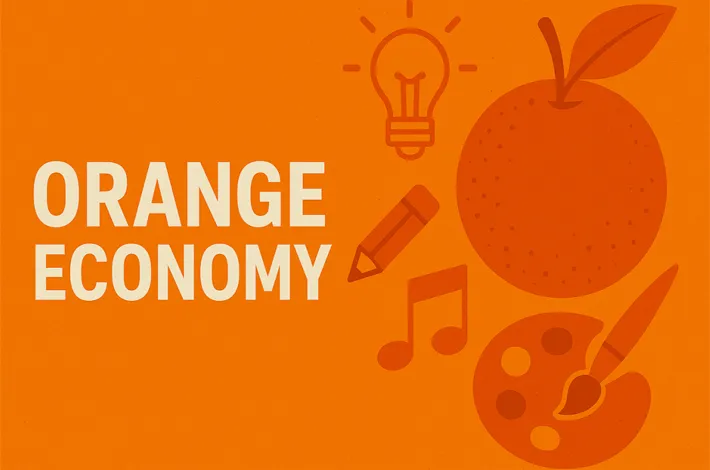
The orange economy—a term recently highlighted by India's Finance Minister Nirmala Sitharaman in the Union Budget 2026-27—refers to economic activities driven by creativity, culture, and intellectual property. Unlike traditional sectors reliant on physical goods or manufacturing, this "creative economy" generates value through ideas, artistic expression, knowledge, and cultural content.
It encompasses a wide range of fields, including media and heritage, design and fashion, social media content creation, visual effects, gaming, comics, animation, filmmaking, music, live concerts, experiences and more. In multiple recent discussions, the Finance Minister emphasized the orange economy's potential as a major driver of growth, employment, exports, and cultural influence.
Initiatives in the 2026 Budget, such as establishing AVGC (Animation, Visual Effects, Gaming and Comics) content creator labs in thousands of schools and colleges, aim to skill millions for this sector, projecting demand for around two million professionals by 2030. This marks a shift toward viewing creativity not just as a passion but as a structured economic pillar, alongside phenomena like the gig economy and non-traditional 9-to-5 careers.
Founder of a mutual funds and stock broking firm explained that many creators, artists, musicians, and filmmakers are already earning significantly in this space. However, he cautioned about the harsh "90-10" rule: in most fields, 90% of participants are mediocre or below average, while the top 10% capture the majority of rewards—and this disparity widens in creative domains, where success demands innate talent honed over time.
While the orange economy offers exciting prospects, he advised starting as a hobby or side hustle without quitting education or a stable job. Only once it generates consistent returns should one consider going full-time. A finance content creator and exhibitor echoed this pragmatic approach, noting the recent government buzz around the creator economy has inspired many to jump in, but not everyone can monetize effectively.
She recommended evaluating it financially: track earnings over a consistent 6-8 months, and only transition to full-time if creative income reliably exceeds 50-60% of total earnings. Emotional decisions or hype-driven moves risk failure. A startup expert specialized in content writing outlined three key rules for creative professionals-Avoid heavy fixed commitments like large EMIs or debt, especially in the first 2-3 years; retain a regular income source (like a job) initially for financial freedom, enabling better creativity and the ability to reject unsuitable projects; build a robust emergency fund—ideally 12 months of expenses (versus the usual 6), parked in safe, liquid options like fixed deposits, zero-coupon bonds, floating-rate funds, or even structured products for some returns.
On investing irregular "fits and starts" income, a senior editor advised shifting from monthly to quarterly planning. Quarterly SIPs (systematic investment plans) in mutual funds can help manage taxes and cash flow better than forcing monthly commitments. She urged sticking to understandable basics—mutual funds over speculative areas like crypto or individual stocks unless knowledgeable.
She opined that even if creatives feel they'll never truly "retire," building a corpus via the FIRE (Financial Independence, Retire Early) principle provides a safety net. A diversified mutual fund portfolio—mixing multi-cap, flexi-cap, small-cap, or asset allocation funds—can help weather dry spells when creativity wanes or ideas stop clicking. As India increasingly backs the creative sector through policy, the orange economy represents both immense opportunity and the need for disciplined financial planning to turn passion into sustainable success.