22 September, 2026 | 12:41 PM


Telangana reservoirs hit rock bottom
20-07-2026 12:00:00 AM
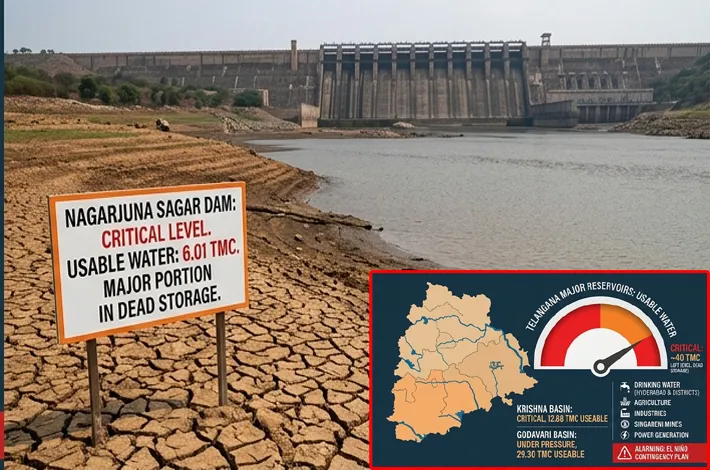
Just 40 TMC usable water remains
metro india news I hyderabad
Alarm bells have begun to ring as Telangana is reeling under deficit rainfall and only 40 TMC of usable water is left in major and medium irrigation projects.Poor rainfall and declining reservoir levels have pushed several projects towards dead storage levels. Normally, reservoirs receive significant inflows by mid-July, but deficient rainfall this year has created an alarming situation.
The crisis is expected to intensify as forecasts indicate continued rainfall deficit for the next three months. The state has already recorded nearly 30 per cent rainfall deficit, with 28 districts receiving below-normal rainfall.
The Krishna basin is facing the worst situation, with only 12.88 TMC of usable water available in major and medium projects. Nagarjuna Sagar has just 6.01 TMC of usable water, while other medium projects together have 5.88 TMC. Though the total storage in Nagarjuna Sagar appears higher, a major portion is under dead storage, leaving limited water for actual utilisation.
The available water in Nagarjuna Sagar is crucial for Hyderabad’s drinking water supply and the needs of Nalgonda, Suryapet and Khammam districts. It also supports irrigation through the Nagarjuna Sagar left and right canals, covering lakhs of acres. With low storage levels in upstream states, additional inflows into Telangana are also expected to remain limited.
The Godavari basin, although comparatively better, is also under pressure. The basin’s seven major and 28 medium reservoirs have a total storage of 66.50 TMC, but 37.21 TMC is classified as dead storage. Only 29.30 TMC is available for use.
Several key projects in North Telangana are operating with minimum reserves. Sri Pada Yellampalli has 4.54 TMC, Singur 3.66 TMC, Lower Manair 3.60 TMC, Mid Manair 1.17 TMC, Nizam Sagar 0.63 TMC, Sri Ram Sagar 0.28 TMC and Kadam project 0.22 TMC of usable water remaining.
The situation has created concerns for districts dependent on Godavari projects, including Adilabad, Nirmal, Nizamabad, Jagtial, Peddapalli, Karimnagar, Rajanna Sircilla and Kamareddy, where agriculture, drinking water supply and industries depend on these reservoirs.
28 districts recorded below-normal rainfall
Meanwhile, rainfall conditions continue to remain worrying. From June 1 to July 14, Telangana received only 158 mm rainfall against the normal 228 mm, resulting in a 30 per cent deficit. Out of 33 districts, 28 recorded below-normal rainfall, while only five districts received normal rainfall.
The government estimates that rainfall deficiency may continue in the coming months, with a possible 15 per cent deficit in August, 42 per cent in September and 55 per cent in October. If the forecast becomes reality, kharif crops may be affected and water availability for the rabi season could further decline.
Groundwater levels have also started falling rapidly. The average groundwater level dropped from 9.46 metres in June to 10.35 metres in July and is expected to reach 11.01 metres by August. The decline of more than 1.5 metres in two months could increase borewell dependency, raise farming costs and worsen drinking water problems in rural and urban areas.
Farmers growing water-intensive crops like paddy, cotton and chilli may face irrigation difficulties, affecting production and income. Hyderabad and other towns dependent on Krishna and Godavari sources could face drinking water challenges if the shortage continues.