22 September, 2026 | 12:44 AM


What India’s BRICS year leaves behind
22-09-2026 12:00:00 AM
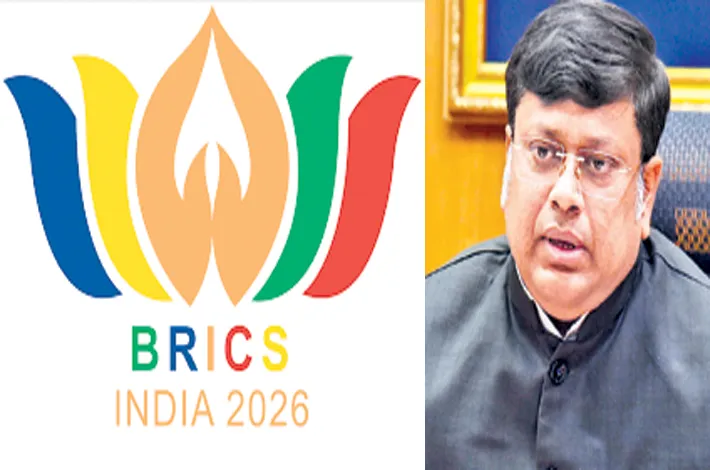
From 400-plus engagements across 30 cities to a deep-tech showcase and new tax-cooperation platforms, India’s 2026 Chairship tried to widen what a BRICS presidency
The 18th BRICS Summit, held in New Delhi on 12–13 September, closed India’s fourth chairship of the grouping, following those of 2012, 2016 and 2021. It also came as BRICS marks two decades of cooperation, now with a much larger membership and a wider geographical reach than when it began. Minister Narendra Modi described the Chairship as guided by a “people-centric and humanity-first approach”, built around resilience, innovation, cooperation and sustainability, which was also the formal theme of the year. The New Delhi Declaration reaffirmed sovereign equality, mutual respect and consensus, called for a more representative and responsive multilateral system, and thanked the Government and people of India for hosting.
Where diplomacy meets deep tech
The clearest illustration was the BRICS Bharat Innovates Exposition, held at Bharat Mandapam on 11–12 September alongside the BRICS Business Forum. Organized by the Ministry of Education with the Ministry of External Affairs, it showcased 37 Indian deep-tech start-ups and ventures to business leaders, investors and institutions from BRICS countries.
Technology, finance and the fine print
The declaration backed cooperation in science and innovation, welcomed the BRICS Incubator Network, the BRICS Science and Research Repository and work on quantum technologies, and noted further consideration of a BRICS Startup Innovation Fund. It highlighted digital public infrastructure, digital skills and resilient connectivity, including submarine cables, and supported accessible, safe and reliable artificial intelligence while acknowledging the risks.
n finance, the approach was pragmatic and incremental. Members continued technical work on wider use of local currencies for trade settlement, while recognising that regulatory systems differ and that no single model suits every member. India also put forward a BRICS Risk Lab at GIFT City’s International Financial Services Centre, aimed at building capacity in insurance and reinsurance. Less visible, but significant, is tax cooperation. BRICS tax authorities worked on international taxation, transfer pricing and revenue statistics, with the BRICS Tax Support Network and the Tax Cross-Learning Lab serving as knowledge-sharing platforms.
People, health and food
The BRICS Women Ministerial Meeting in Kochi highlighted financial and digital inclusion, skills, entrepreneurship and leadership for women. In health, the declaration endorsed a BRICS Mission for Healthy Lifestyle and a joint roadmap for 2026–2029.
On mental health it backed a Training Hub Network and a Network of Centers of Excellence, with NIMHANS as the coordinating center. On food security, members welcomed further discussion of a possible BRICS Grain Exchange.
The Global South, and the limits of uniformity
The Declaration returns repeatedly to consultation, consensus and national circumstances. That is less a limitation than a design principle. That India, under the guidance of Prime Minister Narendra Modi, was able to bring a larger and more diverse BRICS to consensus on the New Delhi Declaration is a notable diplomatic achievement. The value of an expanded BRICS lies not in uniformity but in finding the areas where practical cooperation is possible.
What comes next?
The New Delhi Summit ends India’s 2026 Chairship, but not the initiatives it set in motion. BRICS leaders expressed gratitude to India for its Chairship, and China now takes over for 2027 and will host the 19th Summit. Chairships are remembered less for what is announced than for what survives the handover. The measure of India’s year will be how many of these initiatives are still moving when the next summit convenes.