22 September, 2026 | 12:31 AM


Cash, Cards and the Indian Paradox
22-09-2026 12:00:00 AM
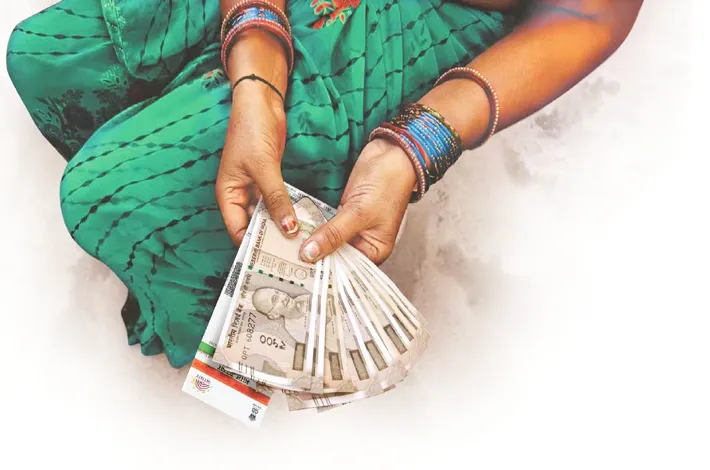
Essential categories such as fuel, railways, telecom and insurance face a flat Rs 5. Small merchants receiving up to Rs 1 lakh a month
via QR codes are exempt
metro india news I hyderabad : A popular claim circulating online puts it starkly: hand a £50 note (or its Indian equivalent) to a butcher who pays a baker who pays a candlestick maker, and after dozens of transactions the same physical cash still holds its full value for each participant. Pay by card, and banks skim 1.5%, 3% or 5% each time; after enough handovers the fees can consume the original sum. Cash equals freedom; digital rails equal extraction.
In India, where the informal economy remains vast and digital payments have exploded, this framing resonates—but the reality is more layered. India’s payment landscape differs sharply from many Western card-dominated systems. The Unified Payments Interface (UPI), launched in 2016 and accelerated after demonetisation, now handles the overwhelming majority of digital retail transactions—around 85% of volume in recent periods. In August 2026 alone it processed roughly 24.5 billion transactions worth nearly Rs 30 lakh crore.
Crucially, for years most UPI payments carried zero Merchant Discount Rate (MDR). Person-to-person transfers remain free indefinitely, and person-to-merchant payments up to Rs 2,000 (the bulk of everyday volume, over 95%) stay free even after the policy shift. From 15 October 2026, however, a 0.4% MDR applies to specified person-to-merchant UPI transactions above Rs 2,000, capped at Rs 300 for those of Rs 75,000 and above. Essential categories such as fuel, railways, telecom and insurance face a flat Rs 5. Small merchants receiving up to Rs 1 lakh a month via QR codes are exempt. Consumers themselves are not charged; the levy falls on merchants, and authorities have instructed that it must not be passed on.
Compared with traditional cards—debit MDR up to about 0.9%, credit typically 1.5–2.5%—UPI remains markedly cheaper even with the new fee. The viral arithmetic therefore applies more cleanly to credit and debit cards than to India’s dominant digital system. Card fees do accumulate across the chain and transfer value to banks and networks. UPI’s near-zero pricing for most transactions was deliberately engineered, with government incentives supporting the ecosystem, precisely to mimic cash’s frictionlessness and drive adoption among small traders, street vendors and low-income users.
The recent MDR is framed as cost recovery for infrastructure, cybersecurity and resilience after years of heavy subsidisation, not as a full extraction model. Yet cash has not withered. Currency in circulation stood near Rs 42–43 lakh crore in mid-2026, with cash held by the public growing at double-digit rates even as UPI volumes expanded.
The cash-to-GDP ratio has hovered around 11–12%, reversing earlier declines. RBI officials describe a “cash paradox”: digital modes displace cash for many transactions while the stock of notes continues to rise, especially as a store of value in rural areas, among older populations, low-income groups and small businesses. Informal sector activity—construction labour, agricultural markets, private tutoring, local repairs—still runs heavily on notes. This coexistence undercuts pure conspiracy narratives.
Banks and payment firms clearly benefit from digital volumes through float, data, lending opportunities and (now limited) MDR. Card networks have long criticised India’s zero-MDR stance on UPI and RuPay as disadvantaging them. At the same time, the state has pursued digitalisation for broader goals: formalisation of the economy, tax compliance, reduced leakage in welfare transfers via the JAM trinity, lower costs of printing and transporting currency, and financial inclusion. Digital trails make large-scale tax evasion harder; cash retains anonymity that can facilitate both legitimate privacy and illicit flows. The freedom argument retains force.
Cash requires no smartphone, electricity, network or bank account. Power outages, cyber fraud, failed authentications or account freezes can freeze digital commerce in ways physical notes cannot. Privacy concerns are real: every UPI or card swipe creates a data trail visible to banks, platforms and, potentially, authorities. For the unbanked or digitally hesitant, forced digitisation risks exclusion. Merchants facing any new cost—however small—may offer cash discounts or post “cash only” signs, especially if they fear GST notices triggered by visible digital turnover.
Conversely, the cumulative fee story overstates the Indian case for UPI. Zero or near-zero pricing for the vast majority of transactions means the “bank takes the whole £50 after 50 hops” dynamic does not materialise in daily life. Savings on cash logistics for the RBI and banks are substantial; some argue these should continue funding free rails rather than shifting costs to merchants.
Digital payments have also expanded formal credit access for small businesses through transaction history.India is therefore neither racing toward a pure cashless society nor simply handing banks a licence to extract. Policy has engineered a hybrid: UPI as a low-friction public digital utility for most retail activity, cards for credit and rewards, and cash as resilient medium of exchange and store of value.
The new MDR tests whether selective cost recovery can sustain the system without reversing the shift. Early signals suggest most volume remains unaffected, though high-value merchant payments may see some substitution.The deeper issue is balance. Cash’s zero-fee circulation and privacy protect autonomy, particularly for those outside formal systems. Digital rails deliver speed, transparency and scale that cash cannot match, but introduce intermediaries, potential fees and surveillance. India’s experience shows both can grow simultaneously.
The real policy challenge is preserving choice and keeping digital costs low enough that the freedom of cash is not eroded by economic necessity, while ensuring the payment infrastructure that now underpins daily life remains viable. The butcher, baker and candlestick maker—whether in a London allegory or an Indian bazaar—still need options that do not quietly transfer their margins to distant balance sheets.