2 June, 2026 | 5:03 AM


Telangana, Andhra Pradesh remain HIV hotspots
05-02-2026 12:00:00 AM
Andhra Pradesh reported a PLHIV count rising from 261,302 in 2020-21 to 276,633 in 2024-25, fueled by annual new infections that jumped from 2,256 in 2020 to 5,239 in 2022 before easing to 2,864 in 2024
The Union Ministry of Health and Family Welfare unveiled the latest data on the nation's ongoing battle against HIV/AIDS under the National AIDS Control Programme (NACP). The figures paint a picture of steady progress in prevention and treatment, yet highlight persistent vulnerabilities, especially in high-burden states like Telangana and Andhra Pradesh. As the country edges toward its goal of eliminating mother-to-child transmission and curbing new infections, these stats underscore the human stories behind the numbers—millions living with the virus, supported by free antiretroviral therapy (ART), but facing evolving transmission risks.
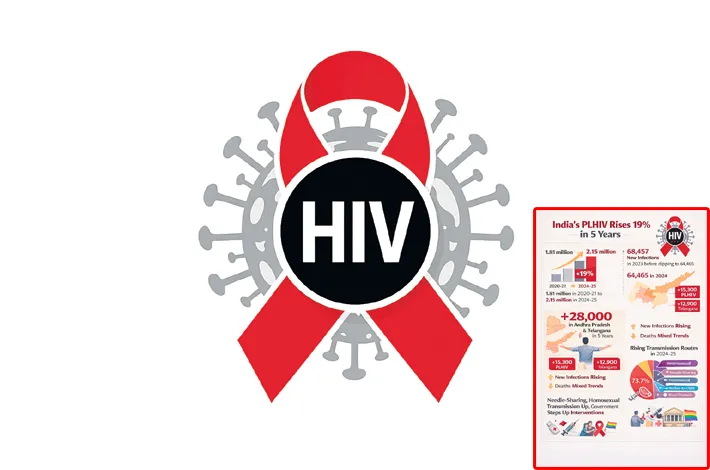
Nationally, the number of people living with HIV (PLHIV) has climbed from 1,810,122 in 2020-21 to 2,149,252 in 2024-25, a 19% increase reflecting both better detection and survival rates thanks to widespread ART access, New HIV infections fluctuated over the period, starting at 57,549 in 2020, surging to a high of 68,457 in 2023, and slightly declining to 64,465 in 2024. AIDS-related deaths followed a similar rollercoaster, peaking at 41,970 in 2021 amid the COVID-19 fallout, before stabilizing at 32,162 in 2024—a testament to improved treatment adherence. The government emphasized no ART shortages nationwide, with medicines procured centrally and distributed via an online supply chain system to over 700 ART centers, ensuring free access for all PLHIV.
Zooming into the Telugu states, where the epidemic has deep roots, Andhra Pradesh reported a PLHIV count rising from 261,302 in 2020-21 to 276,633 in 2024-25, fueled by annual new infections that jumped from 2,256 in 2020 to 5,239 in 2022 before easing to 2,864 in 2024. Deaths in the state dropped encouragingly from 7,074 to 4,364 over the same period, signaling effective interventions. Neighboring Telangana saw even sharper growth: PLHIV increased from 106,383 to 125,383, with new infections rising from 2,559 to 3,022, though deaths edged up from 1,523 to 3,035, possibly due to delayed detections in urban hubs like Hyderabad. Together, these states account for about 18% of India's PLHIV, highlighting regional hotspots amid migration, urban density, and high-risk behaviors.
Transmission modes among newly detected cases reveal shifting patterns: Heterosexual contact remains the primary route, dropping from 83.1% in 2020-21 to 73.7% in 2024-25, while homosexual/bisexual transmission rose from 2.5% to 5.4%, and infections via infected syringes/needles nearly doubled from 6.4% to 11.5%. Mother-to-child cases hovered around 3%, with blood products at 1.2%, and unknowns at 4.7%. Unsafe medical practices were flagged in the query but not quantified separately, though the data ties into broader concerns like needle-sharing among injectors.
The government's response? A mid-term NACP review in 2025 by the National Institute of Health & Family Welfare praised surpassing most targets but called for stronger state-level advocacy and monitoring of high-risk groups like sex workers, men who have sex with men, transgender persons, injectors, migrants, and truckers. Initiatives include NGO-led targeted interventions, community-based HIV screening for early detection, youth awareness campaigns, and universal prenatal testing to prevent vertical transmission. In a response in Rajya Sabha, Minister of State Anupriya Patel noted, these efforts aim to bolster safe practices and treatment access, turning the tide on an epidemic that still claims over 30,000 lives annually. With India's PLHIV numbers growing but infections stabilizing, the story is one of resilience—yet a reminder that vigilance, especially in states like Telangana and Andhra Pradesh, is key to a healthier future.