2 June, 2026 | 5:17 AM


HPV vaccination key to preventing cancer: Dr. Sandeep Kumar Tula
05-02-2026 12:00:00 AM
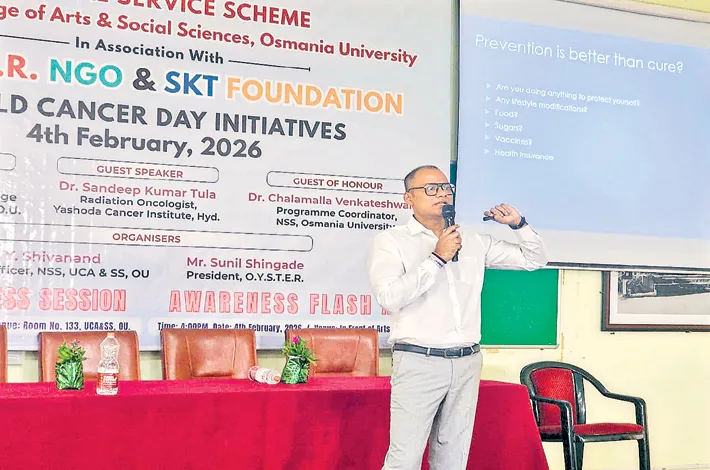
Stressing that prevention is the most effective strategy against cancer, renowned radiation oncologist Dr. Sandeep Kumar Tula on Tuesday highlighted the importance of HPV vaccination and early screening in reducing cancer-related deaths. He was speaking at a cancer awareness programme organised at Osmania University on the occasion of World Cancer Day, observed on Wednesday.
The programme was organised by the National Service Scheme (NSS), University College of Arts and Social Sciences, in collaboration with the SKT Foundation. Prof. C. Kaseem, Principal of Arts and Social Sciences, attended as Chief Guest, while Dr. Challamalla Venkateshwarlu was the Guest of Honour. NSS Programme Officer Dr. Y. Shivanand, university faculty members, SKT Foundation volunteers and a large number of students took part in the event.
Addressing students and faculty, Dr. Tula said cancers caused by the Human Papillomavirus (HPV) are among the most preventable if timely vaccination and regular screening are ensured. “Early detection and vaccination are not choices but lifelines,” he said, calling for greater public awareness and policy support.
Explaining the risks, Dr. Tula said HPV includes more than 100 strains, with high-risk types such as HPV-16 and HPV-18 accounting for nearly 70 per cent of cervical cancer cases worldwide. He added that HPV is also linked to cancers of the throat, anal canal, penis, vulva and vagina. He cautioned that HPV infections often remain symptomless for years, silently progressing to cancer.
He noted that survival rates can exceed 90 per cent when cancer is detected early, while late diagnosis sharply reduces treatment outcomes. Regular screening through Pap smears, HPV DNA tests and routine health check-ups is therefore essential, particularly for women and high-risk groups.
Outlining screening guidelines, Dr. Tula recommended mammograms every one to two years for women aged 40 to 75, Pap smear or HPV testing every three to five years for women aged 21 to 65, PSA testing for prostate cancer after medical consultation for those above 50, colorectal screening for high-risk individuals from age 50, and oral and lung screening for tobacco users.
On vaccination, he said the HPV vaccine works as a pre-emptive shield by producing antibodies that neutralise the virus before infection. Though most effective before sexual exposure, the vaccine benefits both boys and girls and can prevent up to 90 per cent of HPV-related cancers if widely adopted. He urged that it be treated as a public health priority.
Dr. Tula also advised lifestyle changes such as avoiding tobacco, staying physically active, limiting alcohol intake, eating a balanced diet, protecting skin from excessive sun exposure and taking the Hepatitis-B vaccine to prevent liver cancer.
As part of the programme, NSS students and SKT Foundation volunteers organised a flash mob on campus to raise awareness on cancer warning signs, early detection and prevention. Dr. Tula concluded by urging people to seek medical advice if symptoms persist beyond two to three weeks, stressing that early diagnosis saves lives and reduces treatment costs.