2 June, 2026 | 4:35 AM


Devarakadra prehistoric rock shelter faces quarry threat
05-02-2026 12:00:00 AM
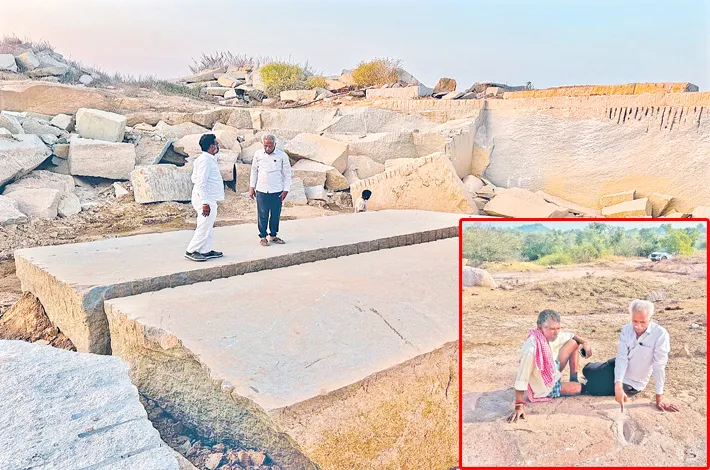
Just 50 metres away from the ancient rock-shelter known locally as “Puli Gundu” or Tiger Boulder, quarrying activities are advancing dangerously close
Deep in the rocky landscapes of Telangana, where history and heritage are etched into stone, a remarkable prehistoric site is now under grave threat. Just 50 metres away from the ancient rock-shelter known locally as “Puli Gundu” or Tiger Boulder, quarrying activities are advancing dangerously close, raising fears that this irreplaceable treasure could be lost to modern demands. Archaeologists warn that once such formations are destroyed, the memories of human ingenuity and survival they hold can never be recreated.
The Tiger Boulder, discoered on the outskirts of Basvaipalli village in Devarakadra mandal of Narayanapet district, dates back to around 4000 BCE. Its massive form, naturally resembling a tiger with its mouth open, is more than a geological wonder—it is a silent witness to the lives of Neolithic communities who once sought shelter here.
The site was identified by noted archaeologist Dr. E. Sivanagireddy, CEO of the Pleach India Foundation, during his campaign “Preserve Heritage for Posterity” on Wednesday. He explained that the grooves found on a nearby hillock were formed by repeated grinding and polishing of stone axes. “These grooves are not random scratches; they are the fingerprints of Neolithic man. Each mark tells us how early humans sharpened their knives and axes, preparing tools that sustained their daily lives. It is living evidence carved into stone,” he said.
Adding to the site’s significance, Dr. Sivanagireddy reported the presence of rock bruisings depicting bulls and other animals on an inaccessible rock adjacent to the Tiger Boulder. These faint carvings, though weathered by time, are invaluable records of symbolic expression and artistic endeavor. “The bruisings reveal the reverence early humans had for animals. They are not just drawings; they are cultural imprints that connect us to their world,” he observed. The surrounding hillocks, coupled with natural ponds, would have provided water and shelter, making Basvaipalli an ideal seasonal settlement for prehistoric communities.
Telangana has long been celebrated for its layered history, stretching from the Neolithic age to the Satavahanas, the Kakatiyas, and beyond. Sites like Puli Gundu enrich this narrative, showing that the region was not only a cradle of medieval dynasties but also a home to some of the earliest human settlements. The rocky landscapes of the state, dotted with caves, boulders, and hillocks, have preserved countless stories of human resilience and ingenuity. Yet, many of these treasures have already been lost to unchecked quarrying and urban expansion.
“We have already lost many sites to quarrying. Once a rock shelter is blasted away, it is gone forever. No amount of documentation can replace the physical presence of such heritage,” Dr. Sivanagireddy warned. His appeal to local quarry operators and authorities is clear: protect these sites from vandalism and destruction for the benefit of future generations.
Archaeologists and heritage activists are urging the government to conduct surveys and declare such areas protected zones. If safeguarded, it can stand as a living classroom, inspiring generations about the ingenuity of early humans and the timelessness of Telangana’s heritage. At a time when quarrying threatens to erase these silent witnesses of history, the discovery of Puli Gundu is both a reminder and a warning. Quarrying just 50 metres away from this prehistoric boulder is a danger that cannot be ignored, and urgent action is the only way to ensure that this heritage survives for posterity.