22 October, 2026 | 7:41 AM


Tata Motors passenger biz is now TATA.CARS
02-09-2026 12:00:00 AM
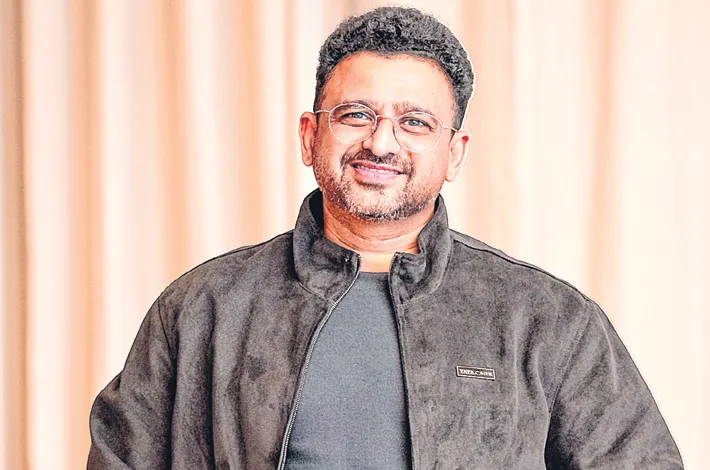
India’s second largest carmaker gets a new name, a new look and a new promise, as it targets 20 percent market share and 30 percent EV penetration within its portfolio
Ashad Hussain
Tata Motors Passenger Vehicles (TMVP) has a new name for the world to see. From this week, the company's consumer-facing identity across every touchpoint, from its website and social media handles to its showrooms and service centres, will carry a single new brand: TATA.CARS behind the name is a straightforward logic. Generations of Indian consumers never called it Tata Motors. They called it a Tata car. The brand has finally caught up with its own customers.
Vivek Srivatsa, Chief Commercial Officer, Tata Motors Passenger Vehicles, explained what the change means and what it does not. The legal entity, Tata Motors Passenger Vehicles Ltd, stays unchanged for all statutory, regulatory and investor communications. The Tata ellipse on every vehicle stays exactly where it is. Individual product brands remain untouched. What changes is everything the consumer sees, hears, and experiences when they interact with the brand.
The Timing and the Why
The timing is not accidental. Last year, Tata Motors completed a corporate demerger that separated its passenger vehicles and commercial vehicles businesses into two independently listed entities. That separation gave the passenger vehicle business both the reason and the opportunity to build its own consumer-facing identity. "Demerger ensures that Tata Motor Passenger Vehicle becomes an independent identity. And hence we wanted to create an independent brand identity," Srivatsa said.
Currently holding 14 percent retail market share and firmly positioned as the number two in the Indian passenger vehicle category, the company has set a clear ambition to reach 20 percent market share alongside 30 percent EV penetration within its portfolio. A clearer, stronger brand identity is part of how it plans to get there.
The Identity and the Promise
TATA.CARS is built around four elements. The brand promise is Nothing's Too Far, rooted in the idea that mobility is not just about covering distances but about enabling ambitions. "It bridges emotions, people's aspirations, their ambitions," Srivatsa said. "Barriers are there to be broken." The design system is called Parallel Pathways, drawn from the parallel geometry of the Tata T and the lines that mark roads, representing different journeys moving in one direction. The new corporate colour is Ambition Blue, an evolution of Tata's existing blue designed to feel more optimistic and future-facing. A bespoke typeface called Parallel Display and a new sonic identity complete the system.
The promise is grounded in what the company has already done. The Nexon became India's first five-star GNCAP-rated car in 2018, before any regulation required it. The EV push came at a time when most consumers did not understand what an electric vehicle was. "We literally had to educate every single customer," Srivatsa said. "But we knew the future of India in terms of emission-free transportation lay in EVs." The company sees Nothing's Too Far as less of a new idea and more of a formal statement of what has always driven its decisions.
Where TATA.ev Fits
One question the launch immediately raised was where TATA.ev, the brand Tata Motors introduced two and a half years ago, fits in the new world. Srivatsa answered it without ambiguity. "In terms of hierarchy, TATA.ev will be a subset of TATA.CARS. TATA.CARS is a bigger umbrella brand and TATA.ev will be subsumed under," he said. TATA.ev keeps its independent consumer-facing identity and its differentiated retail setups. What changes is its formal position within the broader brand architecture.
The EV category remains where the most rapid change is happening. "Product life cycle used to be seven to ten years. Today we have to change a product every year, otherwise consumers reject it," Srivatsa said.
A Cultural Shift Not a Campaign
There is no advertising campaign planned to announce TATA.CARS. The company's view is that a brand built on decades of trust cannot be relaunched through a single campaign. "We are not looking at the brand name change or the promise change as a one-off campaign. It is more a cultural change. Tata Trust is built over decades," Srivatsa said. Every communication going forward will carry the new colour, sonic signature, and design system. The rollout is staged. Digital channels and social handles change immediately. The physical transition across more than 1,600 sales points and close to 1,200 service centres will take between six months and a year.
The company is also shifting the register of how it communicates. Automotive marketing has long leaned on industry language that consumers do not use. TATA.CARS is a deliberate step away from that. "If you talk to an industry person, he will say a car is different, SUV is different, hatchback is different. But for consumers, a car is four-wheeled mobility. Simple," Srivatsa said. The brand intends to be human-centric and jargon-free across all its communications going forward.
The Homework That Remains
Srivatsa was honest about what the brand does not yet have. "We do not have one single perception around our brand now. It is homework for us." Safety, good-looking vehicles, and relevance to India are all strong associations. But no single idea sits above all of them yet. TATA.CARS, built on the trust of more than seven million customers, is the structure within which that idea will have to be built.
On what success looks like, he set a simple test. "If a normal customer is able to see a piece of communication or look at our retail and immediately know that it is TATA.CARS, the job is done."
Srivatsa was equally optimistic about the near term. "The momentum building up to festive season is very very positive. GST 2.0 impact continues and there is demand for all kind of power trains. This festive season we are very optimistic," he said.