22 October, 2026 | 8:33 AM


Bata’s next footwear generation
02-09-2026 12:00:00 AM
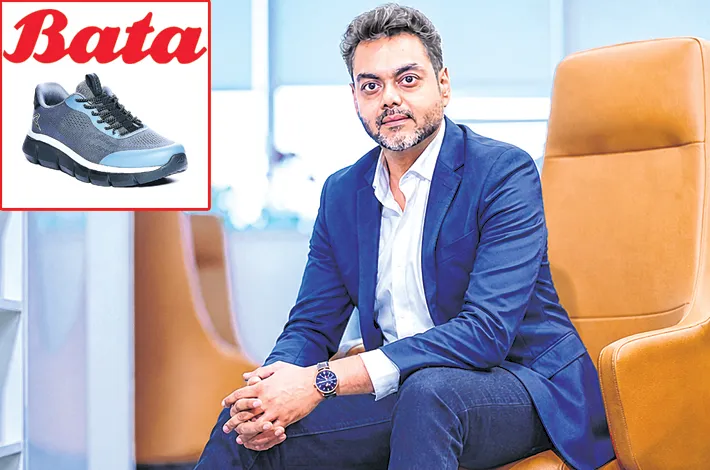
“Younger consumers don’t necessarily reject legacy brands. They reject brands that feel disconnected from their lives.”
Ankur Rastogi on Gen Z, sneakers, design and making heritage relevant.
Kalpana Ravi
For Bata, staying relevant to Gen Z is not about leaving its heritage behind. It is about expressing that heritage differently. As sneakers, athleisure and comfort-led footwear reshape consumer behaviour, the brand is using design, innovation and faster product thinking to build relevance with a new generation.
India’s footwear market is undergoing a significant shift. The consumer who once asked “kitna chalega?” is now asking how a shoe looks, where it can be worn and whether it fits into a lifestyle that moves between work, travel, leisure and social occasions.
For Bata India, this change presents a particularly interesting challenge. Few footwear brands in the country have the same depth of heritage, consumer familiarity and trust. But heritage alone does not guarantee relevance, particularly with younger consumers who discover trends through social media, influencers, sneakers and digital-first brands.
For Ankur Rastogi, Sr Vice President & Head – Regional Design and Development Hub, Bata India, the answer is not to distance Bata from its past but to reinterpret what the brand stands for.
“Heritage is an advantage, provided you don't confuse heritage with doing things the way you have always done them,” he says.
That distinction captures Bata's current design challenge. The fundamental comfort, quality and durability - remain relevant. What needs to be changed is how those fundamentals are expressed.
For Gen Z, a legacy brand can still have credibility, but it needs to feel connected to contemporary culture. That means new silhouettes, colours, collaborations, categories and retail experiences. It also means understanding that younger consumers are not necessarily choosing footwear by traditional categories.
The rise of the footwear wardrobe
Sneakers, athleisure and comfort-led footwear have blurred the boundaries between formal, casual and sports. But Rastogi does not believe conventional categories are disappearing.
Instead, consumers are buying more categories for more occasions.
There will always be a role for specialised running shoes and classic formal footwear. But between those extremes is a rapidly expanding space for versatile products that can move across work, travel and everyday life.
The sneaker is perhaps the clearest expression of this change. In India, sneaker culture still has considerable headroom. As it develops, consumers are likely to build increasingly diverse footwear wardrobes rather than rely on a few functional pairs.
That creates an opportunity for Bata. The question is not simply how to sell more sneakers, but how to participate in the cultural and lifestyle shift that sneakers represent. The modern footwear consumer wants comfort without compromising on design. They want products that work across occasions and increasingly see footwear as an extension of personal style.
This is where Bata's traditional strengths can become relevant to a new consumer.
From heritage to relevance
Bata’s heritage is a powerful asset, but Rastogi believes trust alone cannot make the brand relevant to a 20-year-old.
“Younger consumers don't necessarily reject legacy brands. They reject brands that feel disconnected from their lives.”
The strategy, therefore, is straightforward: keep the trust, rethink the expression.
That means retaining the attributes generations of consumers associated with Bata while bringing them into a more contemporary design language.
It also means recognising that today's consumer is exposed to global trends almost instantly. A silhouette, colour or sneaker trend can move from an international runway or social platform to an Indian consumer's wish list within days. For a brand with an established product-development ecosystem, that changes the definition of speed.
Learning from D2C
The rise of new-age D2C footwear brands has accelerated this transformation. These businesses have built their propositions around specific consumer niches, occasions, trends and impulse purchases.
For established brands, the response cannot simply be to imitate the D2C model.
Instead, Bata is looking at how quickly it can read consumer signals and convert them into relevant products. That has encouraged experimentation with more focused collections, drops and trend-led products.
The advantage Bata brings is different. Alongside design and innovation, it has consumer trust, a large retail footprint, e-commerce reach and decades of experience in comfort and durability.The opportunity lies in combining those assets with greater responsiveness.
Rather than trying to predict every trend month in advance, the portfolio increasingly needs different speeds. Evergreen products can provide consistency, while trend-led collections need to be developed and launched closer to the moment of consumer demand.
The objective is not to chase every trend. It is to recognise which signals are gaining momentum and act on them quickly.
Building categories, not just products
This thinking also explains Rastogi's approach to category creation.
A successful product is not necessarily a successful category. A product may sell because it is new or well marketed. A category emerges when it addresses a consumer need that has the potential to endure.
Floatz is a case in point.
Developed in the aftermath of the pandemic, the product addressed a gap between the traditional home slipper and more premium casual comfort footwear. Consumers wanted something comfortable enough to wear at home but stylish enough to step out for a coffee, a quick errand or a casual day.
Rastogi describes it as the “two-mile” need - footwear that could comfortably move beyond the home without requiring a change of shoes.
There was also a price opportunity between basic slippers and premium international comfort products. Floatz was therefore not simply another footwear design. It was built around a new usage occasion.
By 2025, the brand had reached around 1.5 million pairs and subsequently expanded into Latin America and Asia-Pacific. That international journey also reinforces a larger point about Indian design.
From India to the World
India has traditionally been viewed as a market that adopts global footwear trends. Rastogi believes that dynamic can increasingly work in both directions.
The Indian consumer is demanding and value-conscious, looking for comfort, design, durability and affordability simultaneously. That makes India a powerful testing ground for products that solve genuine consumer problems at scale.
Floatz demonstrates that a product conceived around an Indian insight can address a universal need.The opportunity, therefore, is to move beyond viewing India only as a manufacturing destination or a China-plus-one alternative.
The bigger ambition is products conceived, designed and manufactured in India that can compete globally. For Bata, India's scale is particularly significant. The country is already its largest market globally, creating a substantial laboratory for understanding consumer behaviour and developing products that can travel.
Design is also about restraint
Rastogi's design philosophy extends beyond adding novelty.
Footwear design eventually has to confront manufacturing realities, price points and consumer expectations. Every design element therefore needs to earn its place. Does it improve the product? Does it solve a consumer problem? Does it add meaningful value or is it simply there to look different?
This principle is equally relevant to sustainability.
Rather than treating sustainable footwear as a premium feature that consumers have to pay extra for, Rastogi believes sustainability should increasingly be embedded into manufacturing. Floatz, for example, incorporates around 20% recycled wasted compound back into the product.
The broader idea is that sustainability becomes more meaningful when it improves the production process without compromising comfort, aesthetics or affordability.
AI & the future of design
AI is accelerating footwear development, from trend analysis and mood boards to product visualisation and concept testing. But Rastogi believes creativity and judgement remain human. For Bata, the challenge is not simply to chase sneakers or Gen Z trends, but to build a portfolio reflecting how India lives today, more occasions, versatility and the intersection of comfort and identity. For a legacy brand, the next chapter is less about reinvention and more about reinterpretation: retaining the trust that built Bata while adding the design, speed and cultural relevance needed to win the next generation and take Indian consumer insights to the world.