22 October, 2026 | 1:36 AM


Childhood obesity on the rise in Telangana
22-10-2026 12:08:42 AM
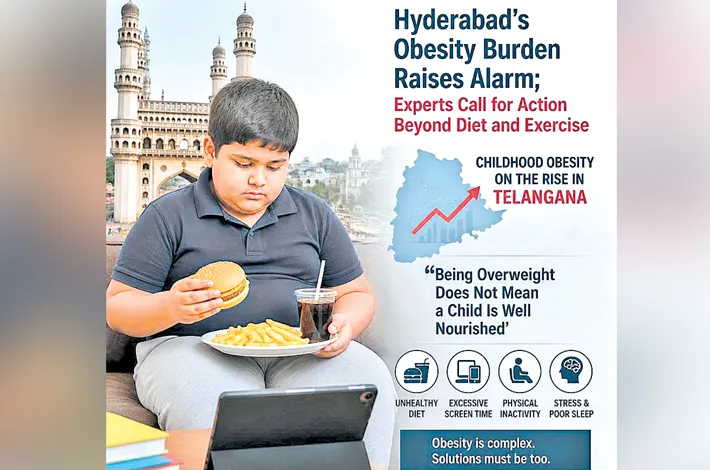
India has traditionally associated childhood malnutrition with undernutrition. However, overweight and obesity are increasingly emerging as concerns, particularly in urban areas
HEMA SINGULURI | Hyderabad
Obesity and non-communicable diseases (NCDs) are emerging as major public health concerns in Hyderabad and across Telangana, prompting doctors to call for coordinated action by families, schools, workplaces and government agencies.
Rapid urbanisation, long working hours, increased screen time and changing dietary habits are contributing to physical inactivity and excessive consumption of processed foods, increasing the risk of diabetes, hypertension and fatty liver disease.
Dr Satish Devara, Consultant Neonatologist at KIMS Cuddles, Secunderabad, said children’s nutritional needs were often overlooked, with parents relying heavily on schools to manage their food intake. While calorie intake was prioritised, protein and fibre were frequently neglected. He stressed the need for balanced nutrition, regular physical activity and dedicated exercise periods.
He also highlighted limited access to organised fitness opportunities, noting that yoga classes often involve additional charges and good-quality sports and yoga facilities remain inaccessible to many families. Adequate calorie intake alone, he said, did not guarantee good health, as children could still develop obesity and face long-term health risks.
Dr Devara suggested introducing colour-coded labels on food packages to help children identify unhealthy products. He cautioned against excessive reliance on ChatGPT and similar tools for health advice, stressing that medical concerns require professional guidance. For young adults, he recommended walking, nutritious food and a balanced diet to manage stress rather than relying entirely on mobile phones.
Dr Babu S Madarkar, Clinical Director and Chief Neonatologist at KIMS Cuddles, said childhood obesity was becoming a serious concern in Telangana, particularly as junk-food consumption and sedentary routines increased. India has traditionally associated childhood malnutrition with undernutrition. However, overweight and obesity are increasingly emerging as concerns, particularly in urban areas.
NFHS data show that overweight among children under five in Telangana rose from 0.7% in NFHS-4 (2015–16) to 3.4% in NFHS-5 (2019–21). Studies have reported combined overweight and obesity rates of 20% to 35% among schoolchildren in urban Hyderabad.
“Being overweight does not necessarily mean that a child is adequately nourished. Micronutrient deficiencies can coexist with excess body weight,” Dr Madarkar said.
Experts called for healthier school food environments, better nutrition labelling and affordable fresh produce. Maharashtra’s July 2026 restrictions on promoting and selling high-fat, sugar and salt foods within 50 metres of schools offer a possible model for Telangana. Doctors stressed that tackling obesity requires coordinated action by families, schools and policymakers to make healthier choices accessible from childhood.